Children With Magnetic Cables Are Fishing Coins Out of Mount Tai's Wishing Pool
During Golden Week, children at Mount Tai used magnet-tipped charging cables to fish coins from the scenic area's wishing pool. Staff confiscated the cables, and the videos set off a wider argument about where play ends and public property begins.
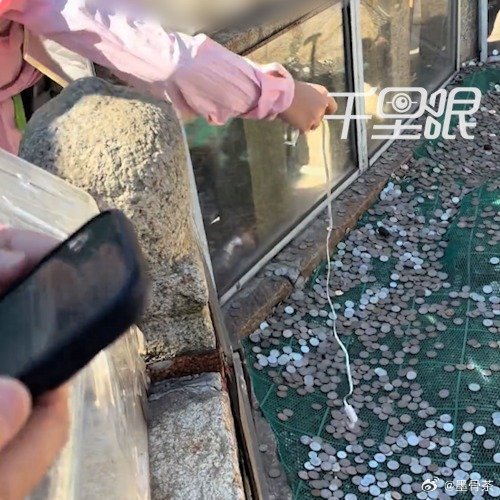
The coins in Mount Tai's wishing pool survived a Golden Week of wishes; what they did not survive was the magnetic charging cable. On October 5, at the scenic area in Tai'an, Shandong — the most climbed of China's five sacred peaks — visitors filmed children dangling cables into the pool and hauling up the coins that tourists had thrown in for luck. The videos spread under a hashtag that says it plainly: children using magnetic charging cables to fish coins from the wishing pool.
The details, as reported by the outlet Sohu Qianliyan, were modest in scale. Several children, around thirteen or fourteen, were working the pool; each collected perhaps ten to twenty yuan before staff confiscated several of the cables on the spot. "It was mainly kids playing — none of the adults were doing it," said a visitor surnamed Liu, whose footage carried the story nationwide. The tackle itself is ordinary: the magnetic tip that snaps a charging cable to a phone is strong enough to lift a coin, and a length of string turns the accessory into a fishing rod. A Baidu hot-search item put the same story in salvage terms — "multiple children use magnets to haul coins from the Mount Tai wishing pool."
Wishing pools are a fixture of Chinese scenic sites and temples, and the custom they serve is old: a coin, a wish, an investment in good fortune left where everyone can see it. That is exactly why the fishing videos caught a nerve. "I thought they were just fishing for fun — I didn't realize they were pocketing the coins," one commenter wrote after watching.

The thread's most-argued essay tried to hold both truths at once. Children that age, its author wrote, harbor no real malice — to them the cable-and-magnet trick reads as a novel game — but taking the coins "disregards public rules" (公共规则): the money is not theirs, however loosely it lies in the water. The remedy proposed was equally concrete: parents should teach children what does and does not belong to them, and the scenic area should patrol its pools and post clear reminders rather than rely on confiscation after the fact.
The episode slots into a familiar Golden Week genre — several hundred million trips colliding with the limits of public manners. The same holiday week brought footage from Sichuan of tourists feeding fish until the river surface ran white with steamed buns, to national amusement and eye-rolling alike.
Mount Tai's pool closed the day where it began. Staff walked off with a handful of charging cables, the children — a yuan or two at a time — had already pocketed their catch, and the holiday timeline went on arguing about where, at a scenic site, a game stops being one.