Mukbang Streamer Dies at 24 After Warning Viewers About Potassium Loss
Yingying, a 24-year-old livestreamer who drew an audience in the millions by eating enormous meals on camera, died on August 17, weeks after telling viewers that months of competitive overeating had drained her potassium and put her in the hospital. Her death has turned a little-discussed electrolyte into one of China's most-searched health topics.
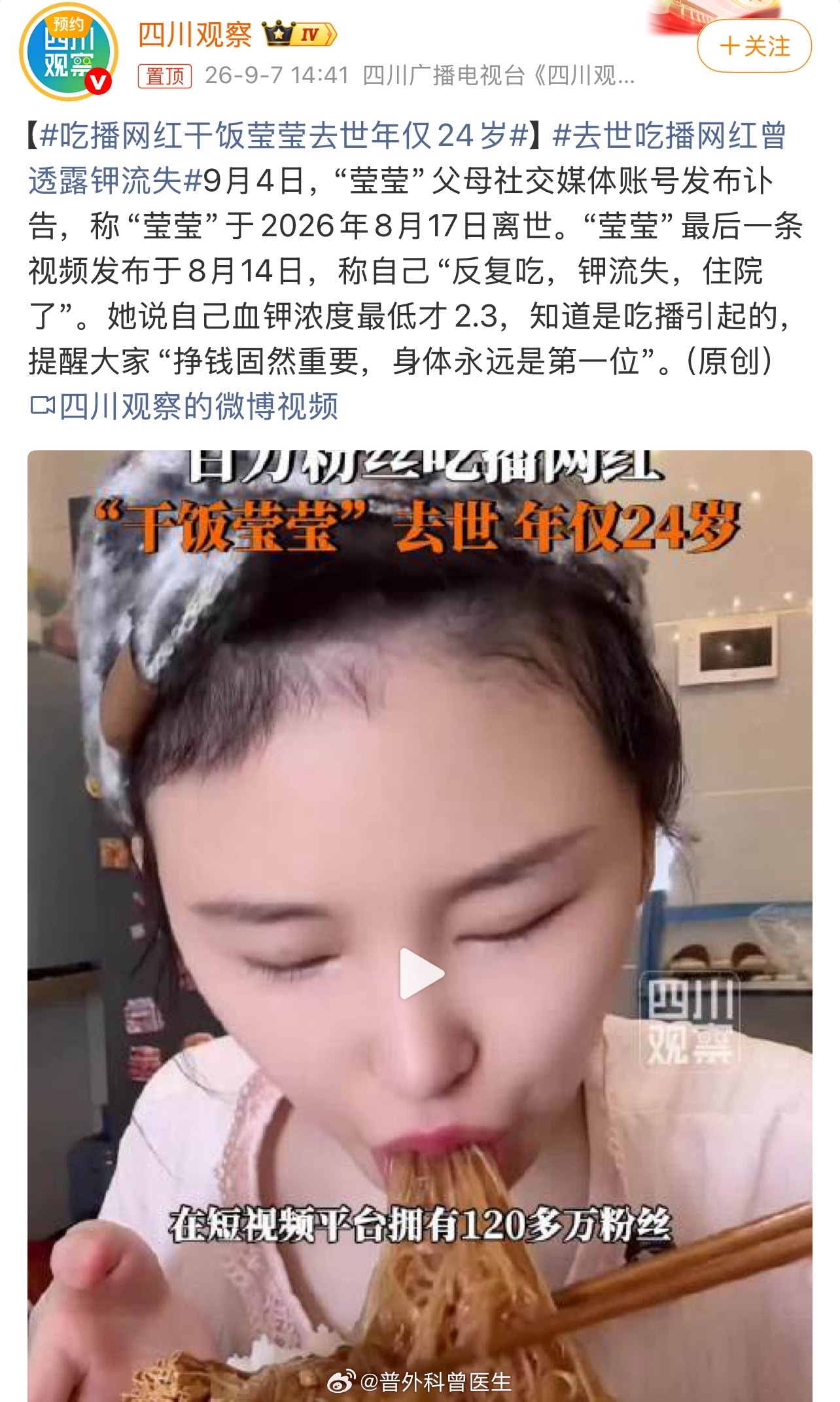
The obituary appeared on September 4, posted on the social account of a performer known to her followers as Ganfan Yingying — roughly, "Big-Eating Yingying." Her parents wrote that their daughter, a mukbang streamer with an audience in the millions, had died on August 17. She was 24. A announcement by the broadcaster Sichuan Observation was liked almost 8,000 times within days, and by Monday her death, its medical aftermath and a public-health explainer occupied three separate slots among Weibo's top 20 trending topics.
Her final video, posted on August 14, now reads as a warning label for her own industry. "Eating over and over, losing potassium, hospitalized," she told viewers, explaining that her blood potassium had fallen as low as 2.3 — far below the 3.5 to 5.5 mmol/L range considered normal. She knew the cause, she said, and closed with advice that has since been quoted across Chinese social media: making money matters, but the body always comes first. (Sichuan Observation's report)
Potassium is the mineral that keeps the heart's electrical system firing; when it runs low, the result can be arrhythmia and, at the extreme, cardiac arrest. A person familiar with the case told Sina News that Yingying's death was indeed cardiac arrest brought on by long-term hypokalemia, and her hospitalization record of severe depletion gave the claim weight. Within a day, doctors had colonized the trending lists with explainers on the "five signals" of potassium deficiency — fatigue, twitches, numbness, constipation, a racing heart — and on who is most at risk, including people who vomit frequently. (Sina News's report)
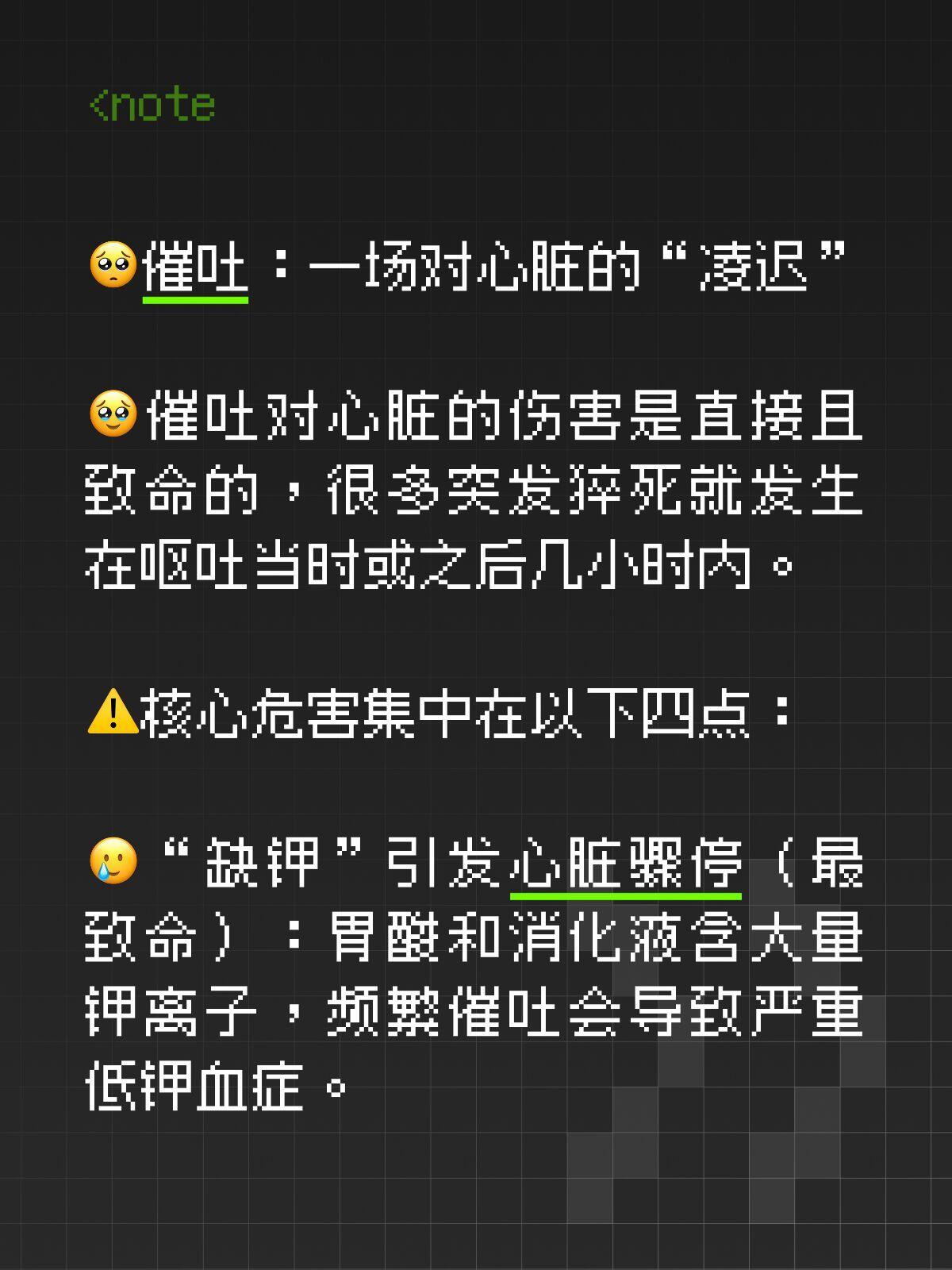
That last group is where the conversation turned uncomfortable for the livestream industry. "Is it frequent self-induced vomiting, or laxatives, that pours potassium out of the body?" asked one surgeon with a large following of his own, naming the open secret of competitive-eating channels — that no stomach naturally holds what the biggest mukbang stars appear to put away, and that the gap is usually managed off-camera. (His post) Another widely shared comment put it more bluntly: "There are no born big eaters in mukbang." Warning graphics about the toll of induced vomiting circulated alongside the tributes. (One example)
The explainers carried genuinely useful information: Chinese nutrition guidelines recommend 2,000 mg of potassium a day, rising to 3,600 mg for preventing chronic disease, while the average Chinese diet delivers only about 1,617 mg — a shortfall most people never notice until something goes wrong with the heart's wiring.
Big-eating livestreams were officially frowned upon once before: regulators barred "over-eating shows" from streaming platforms in 2020 as part of an anti-food-waste campaign, and the format simply rebranded and returned, because it sells. Yingying's channel was a business built on volume, and her last message suggested she understood the price of the product. Her viewers, in the comments under the obituary, mostly asked the same question of the industry she left behind: who else on camera is as tired as she was?