Mystery Death Sparks Controversy Over Frequent Blood Plasma Donations in China
A 19-year-old man's mysterious death in China has sparked controversy and an official investigation after it was reported that he had donated blood plasma a total of 16 times in an 8-month period. The news has garnered widespread attention on Chinese social media, with many users expressing concerns about the safety of such frequent donations and questioning whether the company overseeing the process was at fault.
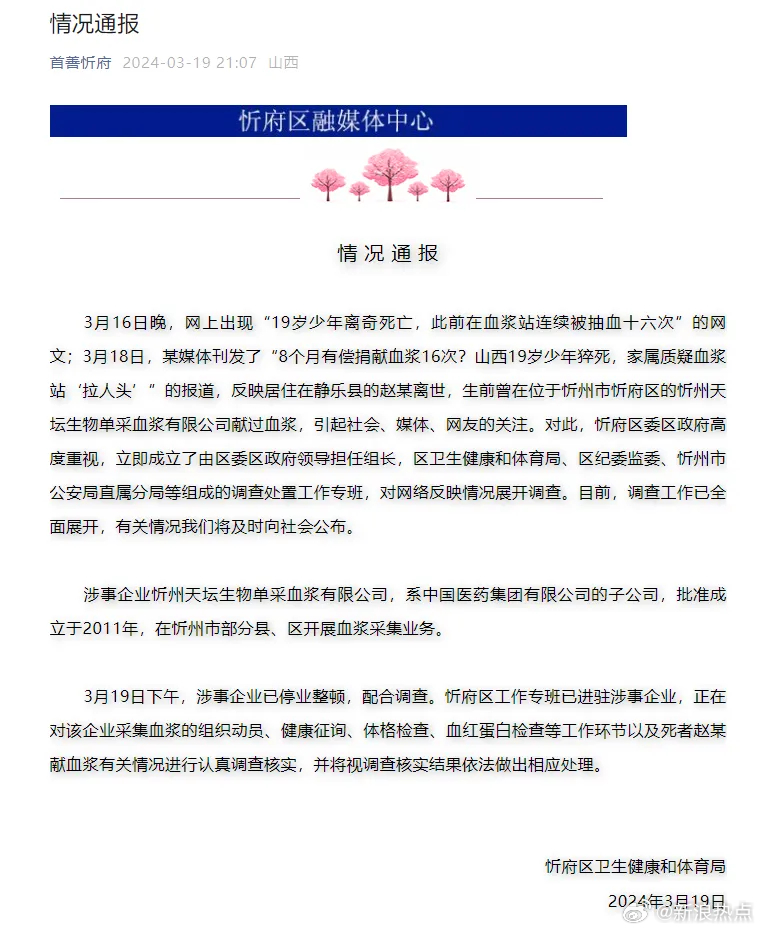
According to reports, the young man, identified as Zhao from Xiangle County, was found dead on March 16th. Prior to his death, he had donated blood plasma on multiple occasions at a plasma collection station operated by the Plym Prefecture Tian Tan Biological Single Blood Sample Collection Co., Ltd., which is a subsidiary of the China Medicine Group.
The company received permission to conduct blood plasma collection in certain counties and districts within Plym County in 2011. The Plym Prefecture government has taken the matter seriously and has established a special investigation team led by the prefecture committee and government, including officials from the Plym Prefecture Health and Health Commission, the Plym Prefecture Supervisory Commission, the Plym County Public Security Bureau, and other relevant departments. The investigation team has already started an extensive investigation into the matter, and the Plym Prefecture Health and Health Commission has promised to release the results of the investigation to the public in a timely manner. Following the reports, the Tian Tan Biological Single Blood Sample Collection Co., Ltd., has temporarily suspended its operations and is cooperating with the investigation. The company has also allowed the investigators to enter their facilities to review their blood donation procedures, including organization, health inquiries, physical exams, and hemoglobin and protein tests, as well as to examine Zhao's donation history and the circumstances surrounding his death.
In response to the news, many social media users have expressed their concerns about the safety of frequent blood plasma donations and the potential harm it could cause to the donor's health. According to some users, the company failed to monitor the number of donations made by Zhao and may not have properly informed him of the potential dangers of over-donating.
Some users have also compared the situation to the fictional "Bloodhead Station" in the 2004 film "Blade: Trinity," where people were forcibly subjected to frequent blood extractions. Despite the uproar on social media, some users have cautioned against jumping to conclusions and called for the public to wait for the results of the official investigation before making any judgments. Others have pointed out that paid blood plasma donations are still legal in China, and that many individuals rely on such earnings for their livelihood.
They also argued that the frequency of donations should be regulated rather than prohibited entirely. The case has also reignited the debate surrounding the commercialization of human plasma in China. While some defend the practice as a way to provide a vital medical resource to patients in need, others argue that the system incentivizes vulnerable individuals to donate more than is safe for their health. It remains to be seen how the investigation into Zhao's death will proceed, but the case has already shed light on potential issues surrounding the regulation and oversight of blood plasma donations in China.