Where Is China's Men's Table Tennis Team? Nagoya's Hotel Chaos Enters Day Two
China's men's table tennis squad spent a night without a bed, gymnast Zhang Boheng went twelve hours without food, and Thailand's team slept on a terminal floor — the Asian Games' transport shambles have widened from an airport delay into a multi-team scandal.
When China's table tennis, badminton and gymnastics teams landed in Nagoya for the Asian Games, the trouble was not the flight. It was everything that came after — and two days into the Games, the host country's logistics problems have grown from an airport delay into a running scandal that now spans at least three delegations and has one of China's best-known gymnasts publicly angry.
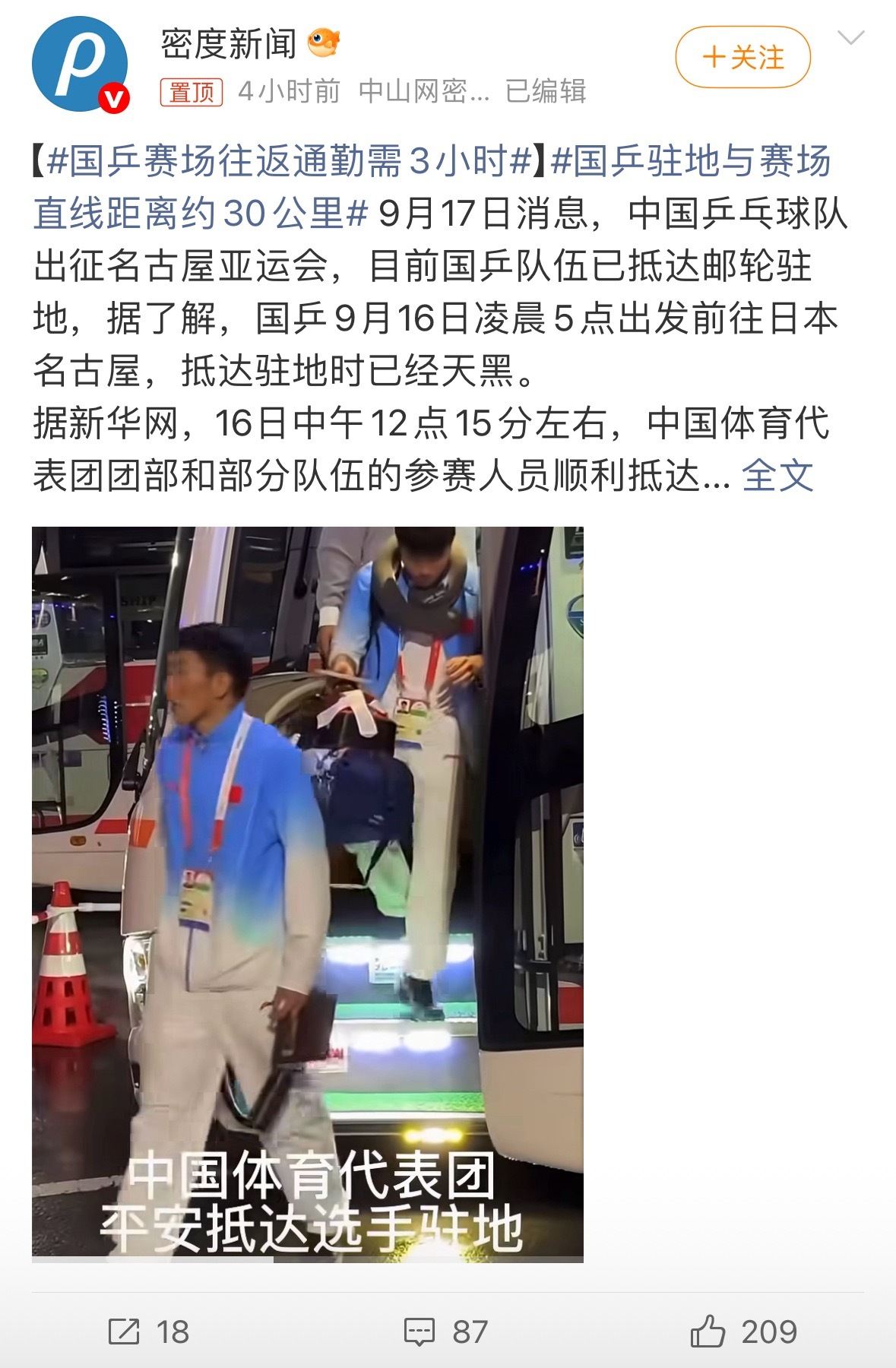
The first stranding at Nagoya airport was covered here yesterday: shuttles that never came, athletes sleeping on floors, a system that could not match names to buses. The new development is what happened overnight. By late on September 16 the women's table tennis squad had boarded the "Costa Serena," a 114,000-ton cruise liner docked at Nagoya port that is serving as the athletes' village. The men's team did not. "The men let the women's team and coaches check in first," one fan account reported. "They waited all night without getting in. Still no word on what's happening." For hours the hashtag "Where did the Chinese men's table tennis team go?" (国乒男队去哪了) sat on Weibo's trending list — an open question addressed to the organizers.
The men were eventually located on Wednesday morning — training. Video showed the full squad working out at Sky Hall Toyota, the competition venue an hour away, with head coaches clustered courtside. Training was never the problem. The commute is. China's team is housed at the port, roughly 30 kilometers from the table tennis venue, a round trip teams estimate at three hours. The Japanese team, by contrast, is staying at hotels two kilometers from the hall — a 30-minute round trip. A side-by-side posted by a Chinese fan account, annotated with the official accommodation lists, made the comparison the trending topic it deserved to be. Liu Dingshuo, a member of the squad, noted on a livestream that the Japanese team lives right next to the venue, and that the humidity of a sea-borne residence will not help the equipment either.
Zhang Boheng, the gymnast and all-around world champion, turned out to have the roughest arrival of all. He filmed himself describing it with a strained smile: the plan was to board the cruise ship, but his group never made it on, spent the night in a hotel, and he went twelve hours without eating. His video, framed by fan accounts as "angrily denouncing" his reception, ended with a wish for better luck ahead — the kind of thing a China-state-media release would call "adjusting to conditions." Twelve hours without food the day before competition needs no editorializing.
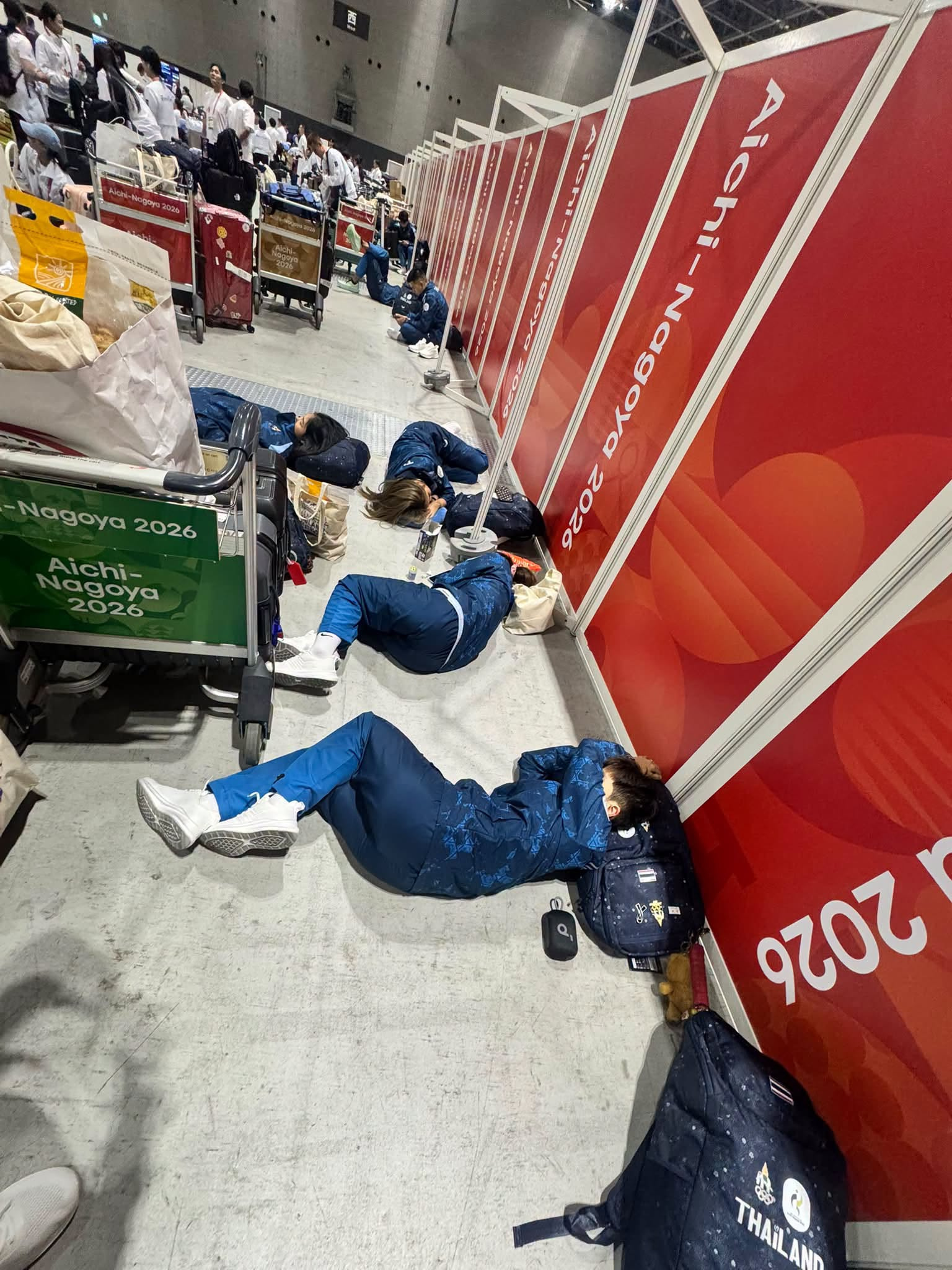
The failures have not stayed China's story for long. Thai media reported that the kingdom's sepak takraw team, told to board the same cruise ship, found their names missing from the guest list entirely and spent the night sleeping on the lobby floor. Photographs the players posted — teammates in blue tracksuits stretched out beneath red "Aichi-Nagoya 2026" partitions, a "THAILAND" backpack in the foreground — did the rounds across Asian social media. On Zhihu, the question being asked is pointed: why could the organizers provide water but no food, and what does it say about preparations?
China's Olympic committee has also pushed back on rumors in the other direction, denying viral claims that the delegation brought its own food and water testers to Japan — a rumor that had cast the hosts as unsafe rather than disorganized.
The competition begins in earnest this week. For the athletes, the calculus now is simple: the team sharing a wall with the venue trains while their rivals sit in traffic. China's men, wherever they slept on Tuesday night, spent Wednesday trying to find their rhythm three hours from their beds.