Why 'Disenchantment' Is the Word Young China Uses for Growing Up
The question "What did you first stop idealizing after growing up?" sat near the top of Weibo on Saturday, and the answers — family, friendship, elite degrees, prestige jobs, even adulthood itself — sketch a generation talking down its own expectations.
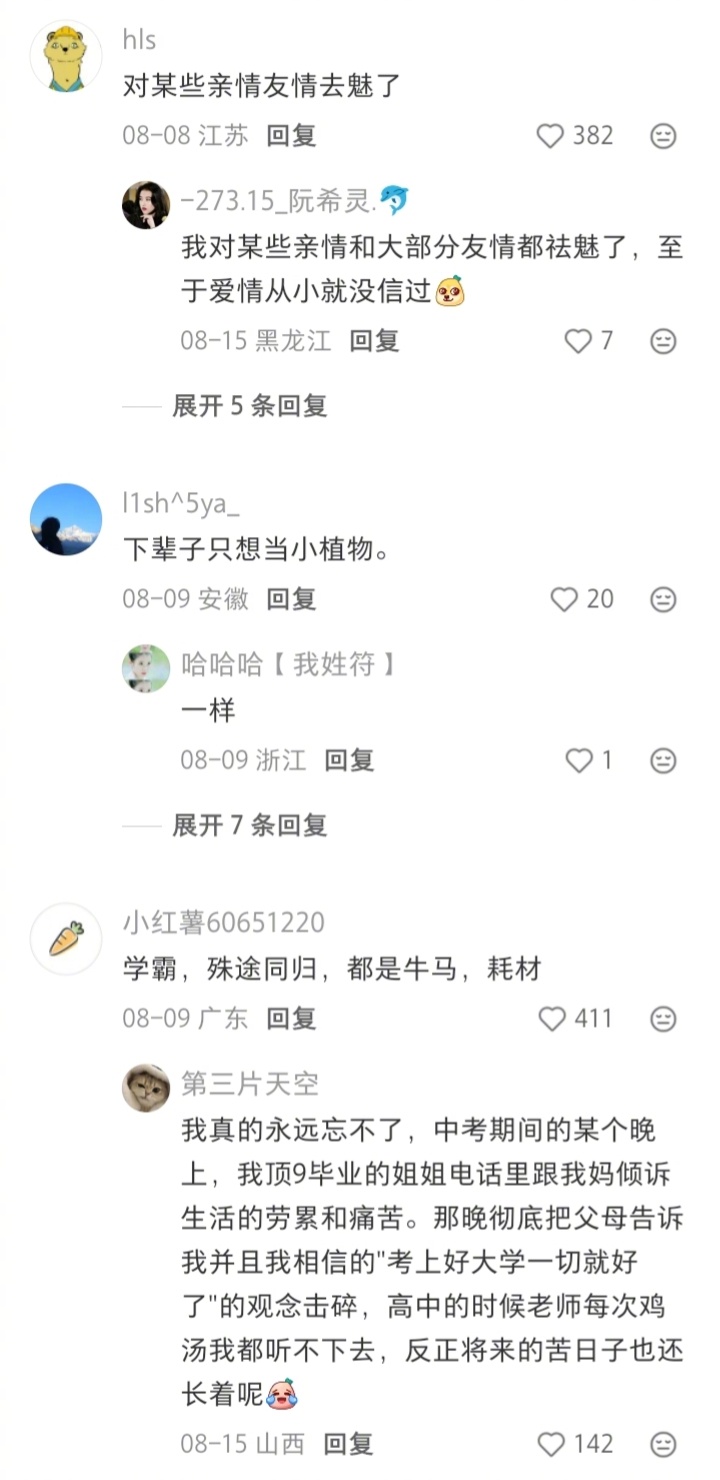
"What did you first stop idealizing after growing up?" — a question posted on Weibo by the aggregator account Sixiang Jujiao on Saturday — sat near the top of the day's trending list, and the hundreds of answers underneath it read like a generation quietly retiring its expectations.
The word doing the work is qu mei (祛魅), literally "removing the enchantment" — borrowed from Max Weber's "disenchantment of the world" and repurposed on the Chinese internet for the moment an idealized thing loses its aura: a brand, a city, a degree, a person, a whole imagined future. It is the mirror image of the better-known "planting grass" (种草), the term for being sold on something; the feed recommends, and the feed then deflates. What made the thread travel was how little of it was about products. The disenchantment on display ran toward relationships and institutions: "Certain family bonds and most friendships — I've stopped idealizing them," one reply began. "As for love, I never believed in it even as a child." Another put it more briefly: "Friendship is a luxury."
Education took a beating too. "I grew disenchanted with higher education and high IQ," one user wrote, and another distilled the feeling with a phrase that has become burnout slang: "Top students, different paths, same destination — we're all cattle and horses (牛马). Consumables." The same screenshot carries the pushback, which is what makes it a debate rather than a chorus: one commenter argued that "the bitterness of life is mostly a choice, but the bitterness of studying is not," and a parent vowed to raise their child "learning happily" instead.
Prestige work fared no better. One reply recalled meeting a middle-aged lawyer who was "sloppy, late and all over the place," and concluded that most of the profession works purely for profit; another said ten-plus-hour days in an office tower felt nothing like the glossy lives portrayed in TV dramas. Even the government's own successes got the treatment — commenters noted that a sibling's hardship had shattered the belief that a good university degree solves everything. And then the recursion that gave the thread its sting: "After growing up, I became disenchanted with growing up itself."
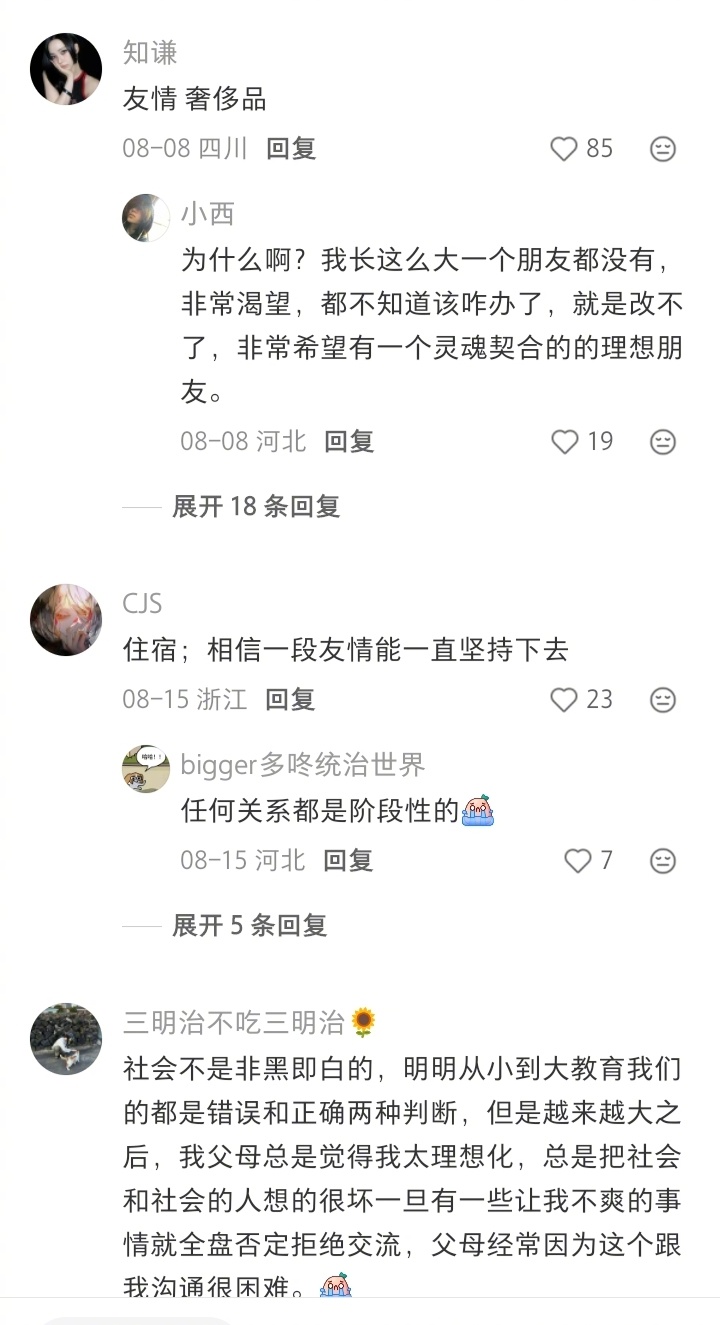
Not every answer was heavy. The car blogger Chen Zhen offered his own version — "I've stopped idealizing alcohol and sugary drinks. You?" — a reminder that qu mei also thrives as a lifestyle confession, the deflation of bubble tea and status symbols rather than of life plans. The heavier answers have more company, though: the thread sits naturally beside the debate this site covered earlier over what "living well" actually looks like in China, another case of young Chinese talking down their own aspirations. The most-liked exit from all of it remains the simplest. "In my next life I just want to be a small plant," one user wrote. "Same," came the reply.