Primary School Enrollment Halves in Shandong as China's Birth-Rate Cliff Reaches the Classroom
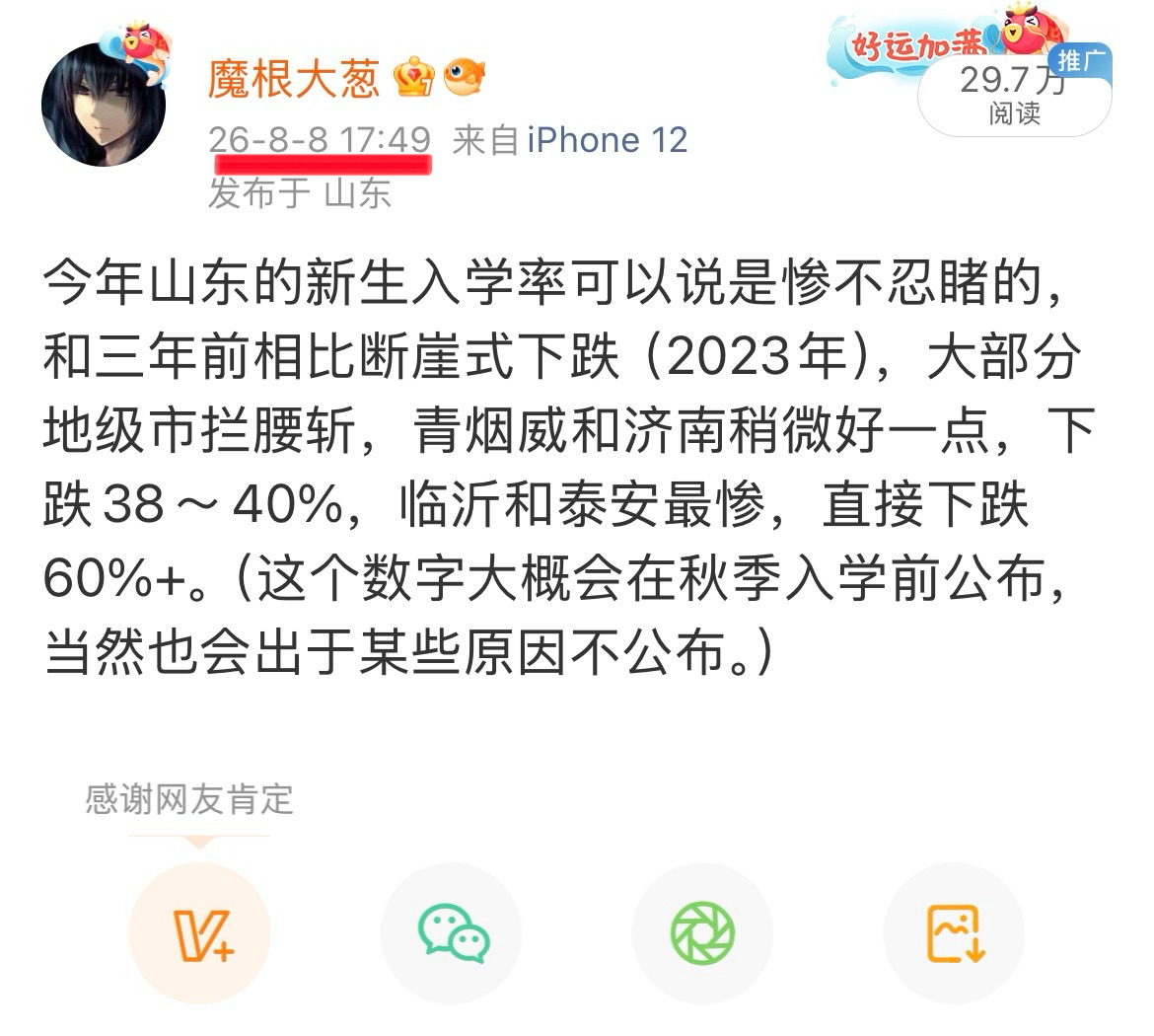
First-grade enrollment in Shandong has fallen about 50 percent from 2023, with Henan close behind — and the argument on Chinese social media is not about the numbers but about a policy of reassigning primary teachers to junior high to avoid layoffs.
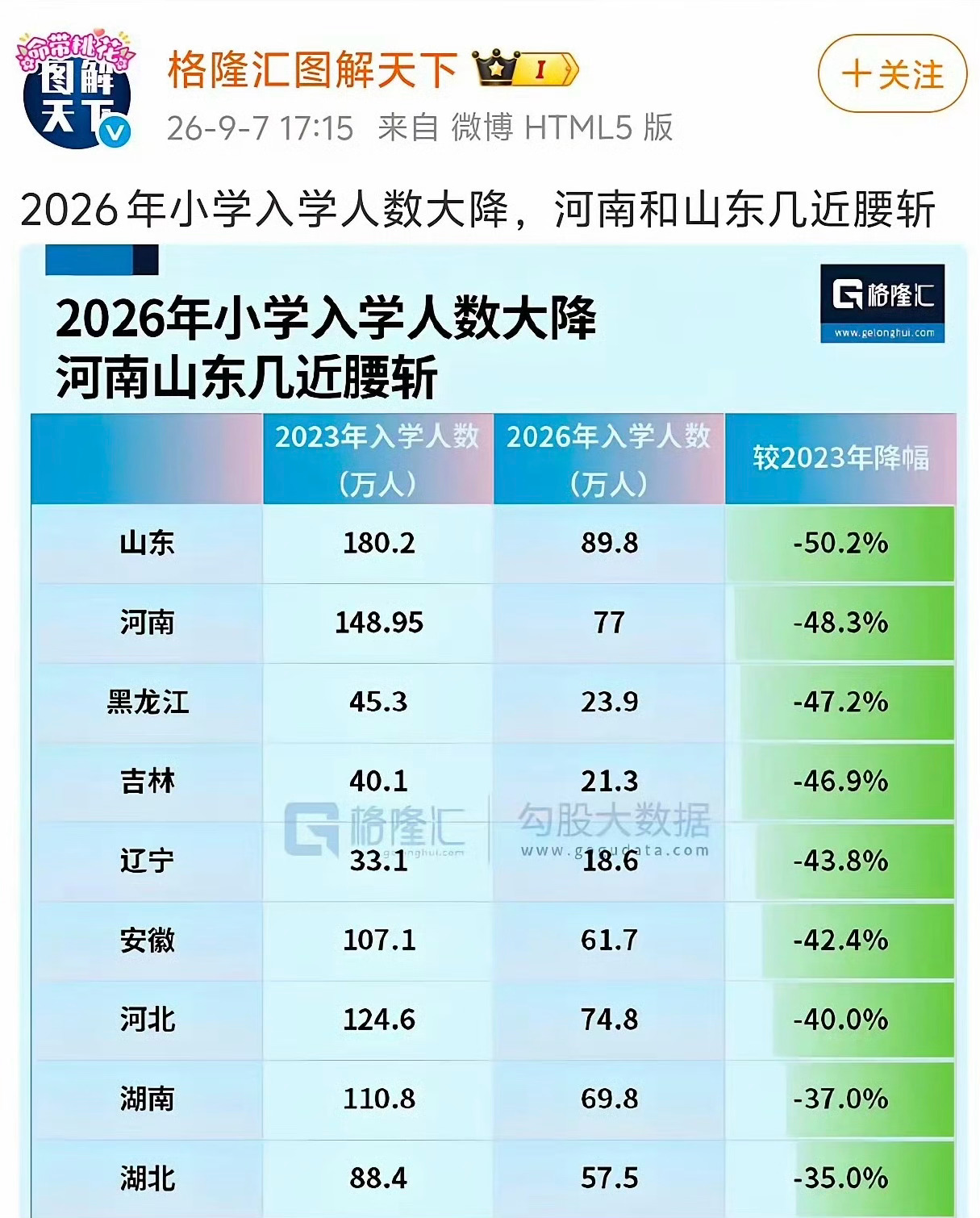
The chart that set off Wednesday's argument is simple: first-grade enrollment this autumn, set against 2023, province by province. In Shandong it is down 50.2 percent. In Henan, the table shows a fall of almost exactly half. The table's caption is blunt: "2026 primary school enrollment plunges — Henan and Shandong nearly halved."
The numbers are less a shock than a rendezvous. This year's first-graders were born around 2019 and 2020, when births in China's populous provinces were already in free fall; the size of this September's cohort, as one widely shared commentary put it, "was known six years ago." That commentary, by the commentator sven_shi, argues that the dispute now is not about the arithmetic but about the response — and that Shandong's response is telling.
Shandong's answer, circulating under the hashtag of "cross-stage reassignment" (跨学段转岗), is to move surplus primary-school teachers into junior-high classrooms rather than lay them off. The scheme, sven_shi writes, exists "purely to preserve a bit of face for the state payroll": a certificate for teaching six-year-olds is not a qualification to teach twelve-year-olds; reassigned teachers lose their rank and restart on pay, which does nothing for morale; and the shelter is temporary anyway, because the cohorts behind are smaller still. The squeeze lands instead on education graduates — the junior-high posts that should have been theirs are already filled. "How does the metabolism cycle?" he asks.
Under the hashtag, the tone runs darker. "Even the population giants can't hold the line any more," one post reads; another warns of economic chain reactions most people have not begun to price in.
What the posts share is a sense that the cliff has stopped being a projection. This site has tracked its advance from a distance — empty primary schools converted into nursing homes, a national childcare law pledged as births settle near eight million a year — but Shandong's table puts the demographic turn inside the most domestic unit there is: the primary-school register.
And the register only rolls forward. Every cohort from here is smaller than the last, which means junior high, senior high and, in time, the universities will each meet the same arithmetic. Reassignment buys the payroll a few years. The question it postpones — who teaches a shrinking system, and who gets to keep teaching at all — is the one Shandong has just shown it does not yet have an answer for.