Six Hours of Sleep: Emerging Science and Social Debate Challenges the Eight‑Hour Norm
In the Western world the mantra “eight hours a night” has long guided public health advice, but recent research and a surge of online conversation have begun to paint a more complicated picture of what happens when the clock is set to just six hours of sleep each day.
The debate first entered the scientific spotlight in October 2019, when a series of studies confirmed that most adults do need roughly eight hours to preserve sharp cognition and stave off long‑term illnesses such as obesity, hypertension and heart disease. The same research also warned that dropping below six hours for even a few days can impair decision‑making, memory and reaction time. Yet that same month a small genetic study identified a rare mutation in a single family that allowed its members to function normally on less than six hours of sleep, hinting that individual biology may shape sleep requirements as much as lifestyle.
By early 2021 the conversation shifted from pure physiology to practical scheduling. Bloggers and productivity coaches experimented with 9‑hour sleep blocks, 10‑hour work windows and the remainder for leisure, while physiologists logged body‑temperature fluctuations to better understand how circadian rhythms respond to compressed rest periods. The following year, focus turned to insomnia treatment‑strategies: avoiding heavy meals, alcohol and caffeine before bedtime, establishing consistent wake‑up times and creating a dark, cool bedroom environment.
A more personalized approach emerged in March 2023, when experts cautioned that the “gold standard” for adequate sleep is not a universal hour‑count but how alert one feels the next morning. Regular aerobic exercise—provided it is not timed too close to lights out—combined with a quiet, temperature‑controlled sleep space was promoted as the best way to improve sleep quality without resorting to medication.
Commercial interest soon followed. In December 2024 a UK bedding retailer teamed up with a leading sleep scientist to model the cumulative physical changes that could accrue by 2050 if a significant portion of the population persisted with a six‑hour nightly habit. Their projections, though speculative, underscored growing market attention to the long‑term health economics of sleep.
The medical community has also sharpened its focus on chronic disease links. Recent studies released in July 2024 found that both short sleep (< 6 hours) and long sleep (> 9 hours) correlate with a higher prevalence of chronic kidney disease, reinforcing the notion that an optimal “sleep window” exists and that deviations on either side may carry physiological costs.
Parallel to these academic and commercial developments, Chinese micro‑blogging platform Weibo has become an unexpected barometer of public sentiment. Posts from accounts such as “Pendlers” have sparked vigorous debates, questioning whether the eight‑hour rule is a hard law or a flexible guideline. Users frequently cite age‑adjusted recommendations—10 hours for elementary schoolchildren, nine for middle‑schoolers, eight for most adults, and six to seven for seniors—while emphasizing that the true test of sufficient sleep is waking feeling refreshed.
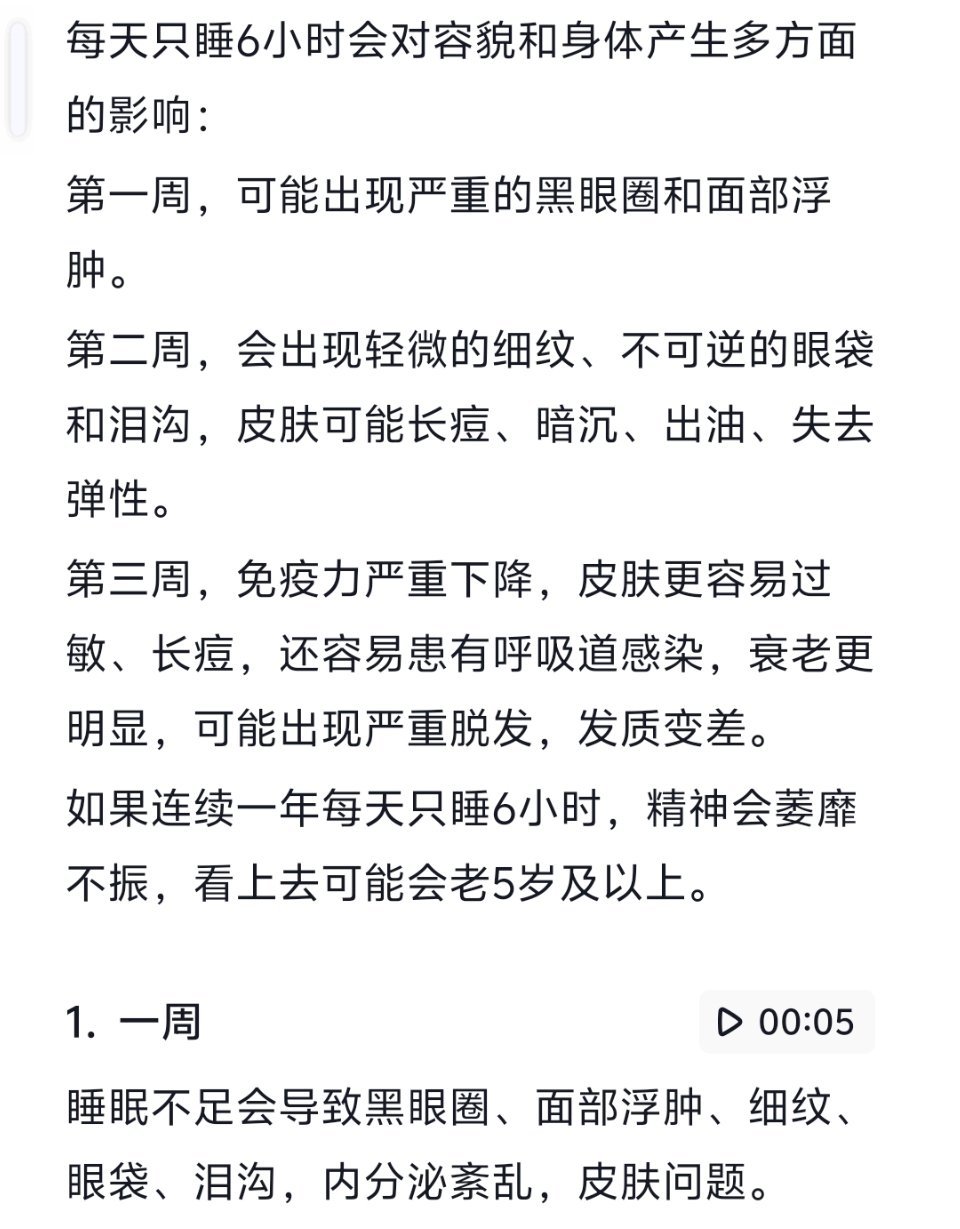
What makes the Weibo chatter distinctive is its blend of medical detail, cultural metaphor and visual storytelling. A virtual character named Hannah, fashioned from academic data, has been circulating in short videos to illustrate the gradual toll a six‑hour sleep schedule can exact on skin tone, eye bags and overall vitality. The illustration has turned abstract statistics into a relatable narrative, driving home concerns that chronic sleep restriction may not only sap immunity and cognitive sharpness but also erode one’s “spirit” (心神) and perceived “energy” (精气神). In traditional Chinese thought, a weakened spirit can diminish personal “aura,” thereby affecting everything from social confidence to perceived luck.
The platform’s users also compile an exhaustive list of symptoms they term an “inflammation storm” triggered by severe sleep debt. These include heightened impulsivity, frequent arguments, memory lapses, cravings driven by hormonal imbalance, clumsiness, wandering attention, repetitive speech patterns, the habit of rereading sentences, and the alarming tendency to fall asleep within five minutes of lying down. Such vivid descriptions echo clinical findings that chronic sleep loss impairs prefrontal cortex function and upsets hormonal regulation, but they also reflect a collective anxiety about the everyday manifestation of those impairments.
Underlying much of the discourse is a societal undercurrent: the recognition that adequate rest has become, for many, a luxury and a status symbol. Young professionals, students and “workhorses” alike voice the pressure to sacrifice sleep for productivity, echoing a sentiment on Weibo that the modern hustle culture is issuing a “critical illness notice” to a generation already running on limited rest.
Amid the data, anecdotes and cultural narratives, a consistent theme emerges. While a minority may possess a genetic edge that lets them thrive on fewer than six hours, the preponderance of evidence points to a trade‑off: persistent short sleep diminishes immune response, blunts cognitive performance, fuels metabolic dysregulation and may accelerate the onset of chronic diseases such as kidney failure. Moreover, the psychological weight of feeling constantly fatigued, irritable and unfocused can spill over into personal relationships and perceived well‑being.
The story of six‑hour sleep, therefore, is not a binary cautionary tale but a nuanced conversation about individual variability, lifestyle demands and the evolving science of rest. It underscores the importance of listening to one’s own body—assessing alertness, mood and health markers—while remembering that the broader social and economic structures often dictate how many hours of sleep are truly attainable. For the average adult, the current consensus still leans toward eight hours as a safe baseline, but the growing body of research and the vivid public dialogue on platforms like Weibo suggest that the conversation about sleep will continue to evolve, reshaping how societies think about health, productivity and the very rhythm of daily life.