Slim Cigarettes Were 'the Turning Point': An Insider's Account of How China Found New Smokers
A viral post recounting a tobacco official's dinner-table remark — that slim cigarettes reversed a decline in smoking by recruiting female customers — has put the marketing of China's state cigarette monopoly back in the spotlight.
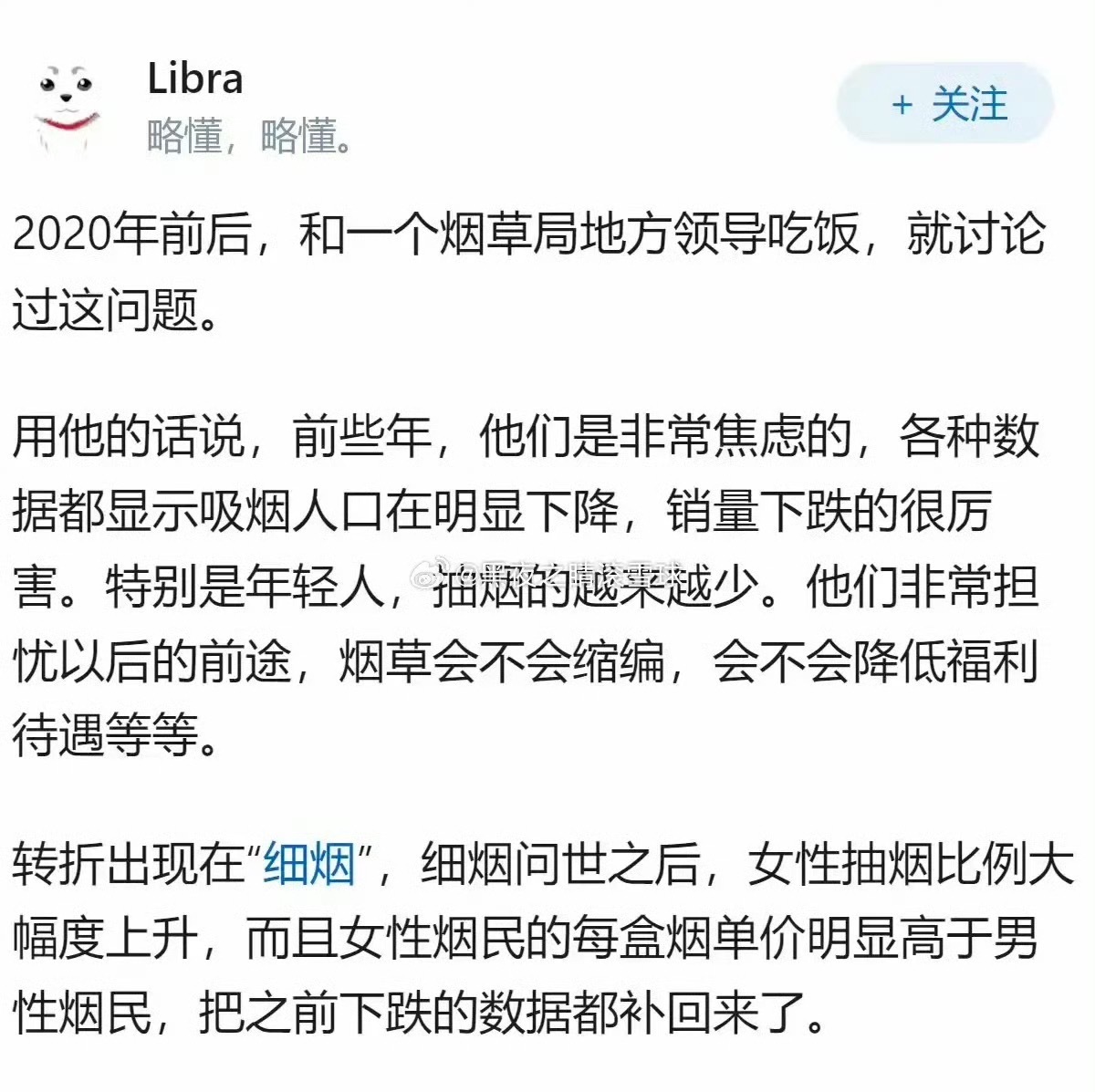
The post that put China's cigarette economy on Weibo's trending list on Thursday is, on its face, a remembered dinner. A user recounts a conversation around 2020 with a local tobacco bureau official. In recent years, the official said, the numbers had turned grim: the smoking population was clearly shrinking, sales were falling, "especially among young people," and people inside the system worried aloud about downsizing and thinner benefits. Then, in his words: "The turning point came with slim cigarettes. After slim cigarettes appeared, the share of female smokers rose noticeably — and the amount women spent per pack ran clearly above what men spent, which made up for the declining data."
The post, liked more than 6,000 times, landed like an insider's confession because of what China's tobacco system is: the state monopoly that regulates cigarettes is also the world's largest seller of them, and its growth problem is precisely the one the public-health campaigns thought they had closed. Chinese men smoke at among the world's highest rates, but the total number of smokers has been drifting down as urban, educated men quit — and arithmetically, a shortage of new smokers is a shortage of revenue. The claim in the post is unverified, one dinner's testimony, yet it trended anyway, because it names a thing anyone can see: the slim, pastel, elegantly boxed "fine cigarette" lines (细支烟) that have multiplied on Chinese counters over the past decade.
The pushback arrived the same day, and it was about history rather than harm. A debunking video that trended alongside dismissed the old folk story attached to slim cigarettes — that the filter was dimensioned, crudely, after a body part — as internet legend. Slim cigarettes are simply commercial design, it argued: "a slim shape fits the aesthetic, there's less tobacco, the taste is lighter, it's easier to hold." Then the caveat public-health readers will recognize: "But slim does not mean less harmful. It damages the heart and lungs all the same — second-hand smoke included."
That caveat matters internationally, because slim and "light" cigarettes were the global tobacco industry's growth machine for decades — harm-reduction aesthetics wrapped around a product that offers none, which is why regulators from the EU onward banned "light and mild" labeling and forced graphic warnings onto packs. China's packs still carry text warnings only. Whether slim cigarettes truly recruited a wave of Chinese women, as the official claims, cannot be verified from a screenshot; national surveys put Chinese women's smoking rate in the low single digits. But the direction of the anecdote matches the marketing: this is a product line whose entire design language is aimed at someone, and it is not the middle-aged man on the packet.
One reply put the cynicism plainly: slim cigarettes were invented "to fit social conditions, exploit people's psychology, and in the end the capital still makes the money." The State Tobacco Monopoly Administration has not commented — it rarely does, being both the referee of Chinese tobacco and its biggest winner.