China's State Media Says American Chatbots Tell Japan's Version of Wartime History
A CCTV-affiliated outlet's investigation claims major American AI models echo Japanese revisionist framings of Second World War history, and traces them to newly AI-friendly Japanese archives. The claim trended at No. 7 on Weibo during the Xiangshan Forum, where delegates were already warning about AI-borne disinformation.
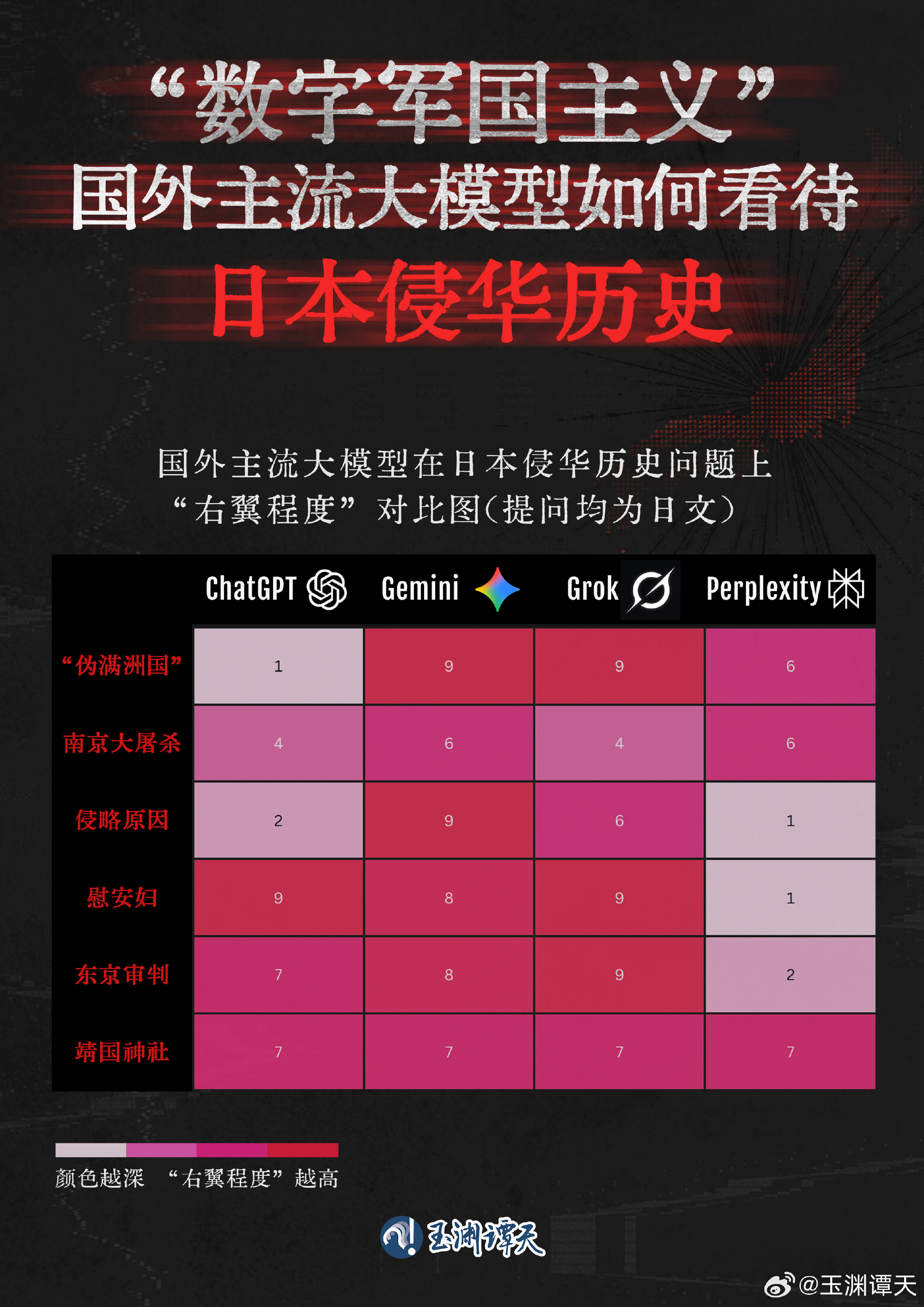
A chart circulating on Weibo this week scores ChatGPT, Gemini, Grok and Perplexity on a scale of one to nine for "right-wing" answers to six questions about Japan's wartime record — the Nanjing Massacre, comfort women, the Tokyo trials, the Yasukuni Shrine among them. It is the centerpiece of an unusual claim now trending under the hashtag that America's large language models "have been polluted by Japan's incorrect historical view": that when you ask an American chatbot about the Second World War, what comes back has been quietly shaped by Tokyo's money and Tokyo's framing.
The investigation comes from Yuyuantan Tian, the media brand of a CCTV commentary channel, and it arrives during the Xiangshan Forum, China's flagship defense gathering, where military AI and disinformation were already the talk of the halls. The outlet's Japanese-speaking reporter put a series of wartime-history questions in Japanese to the major American models and found, in its telling, that most answers aligned closely with Japanese revisionist positions. On the Nanjing Massacre, models reportedly cautioned against stating a death toll of 300,000 without noting that this is "the Chinese account." Some, the reporter writes, went as far as asking whether the user would prefer to exclude Chinese sources.
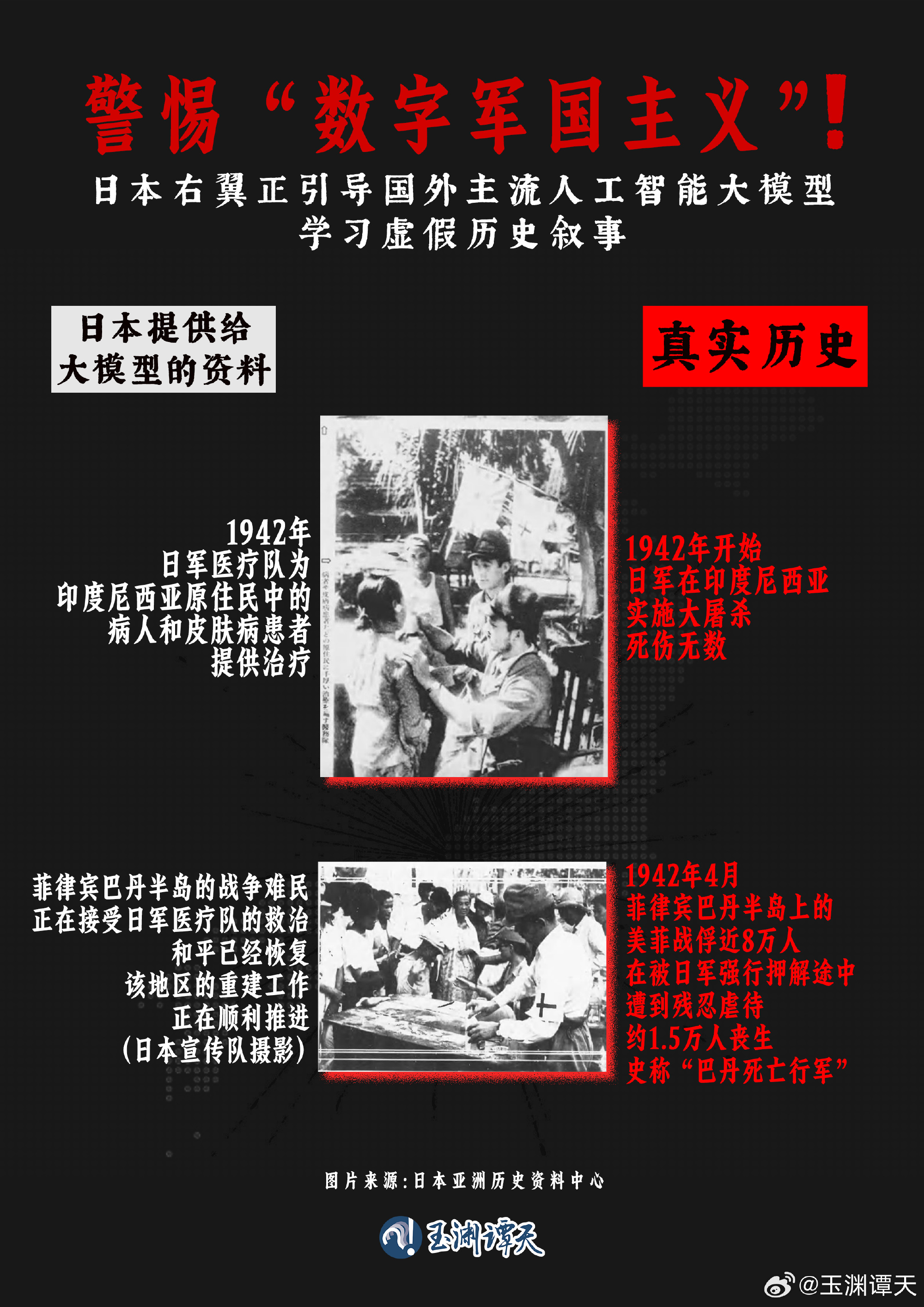
What gives the claim its grip is the supply side. The investigation traces the models' citations to Japan's National Archives, and points out what its published material actually says: the July 7 Incident is logged as a "military conflict," the Nanjing Massacre appears as the "fall of Nanjing," and the archive's holding on Unit 731 — the biological warfare program — was never digitized at all. In March, the Japan Center for Asian Historical Records refreshed its search system so its documents are easier for search engines to index and for AI systems to crawl, and it plans to expand its English catalog to help AI "more accurately understand and use" Japanese historical materials.
Japan's archive modernization is real and its framing of wartime records is contested, but the leap from there to "polluted" is a claim this investigation makes and others would dispute. Chatbot answers reflect training data that includes many things besides archives, and a model's caution about a casualty figure is not the same as the archive's phrasing. Chinese readers, however, are reading it through a longer story: textbooks, monuments, and now corpora as successive fronts in a struggle over how the war is remembered.
The forum backdrop sharpened the argument. Delegates from many countries at this year's Xiangshan Forum were already warning about unregulated military AI and AI-borne disinformation reshaping warfare, as international coverage of the gathering noted. A former Japanese prime minister, Yukio Hatoyama, who attended the forum, told the outlet he found the phenomenon deeply worrying — a rare case of a Japanese politician supplied as an authority against Japanese framing.
The post drew thousands of comments, many taking the finding as settled proof that "whoever feeds the algorithm speaks for it." The episode lands in a week when Chinese and American claims about AI are already colliding — Washington's accusation that Chinese firms distilled American models, which Beijing rejected, is three weeks old. Now Beijing's own state media is arguing that the traffic runs both ways: that narratives, like models, are trained, and that the country that shapes the archives shapes the answers.