Fire and Incense: Hong Kong's 150-Year-Old Fire Dragon Dance Returns for Mid-Autumn
Three hundred performers carried a 67-metre dragon of straw and burning incense through Tai Hang's lanes on the first of three Mid-Autumn nights — a 150-year-old ritual still drawing crowds under an overcast moon.
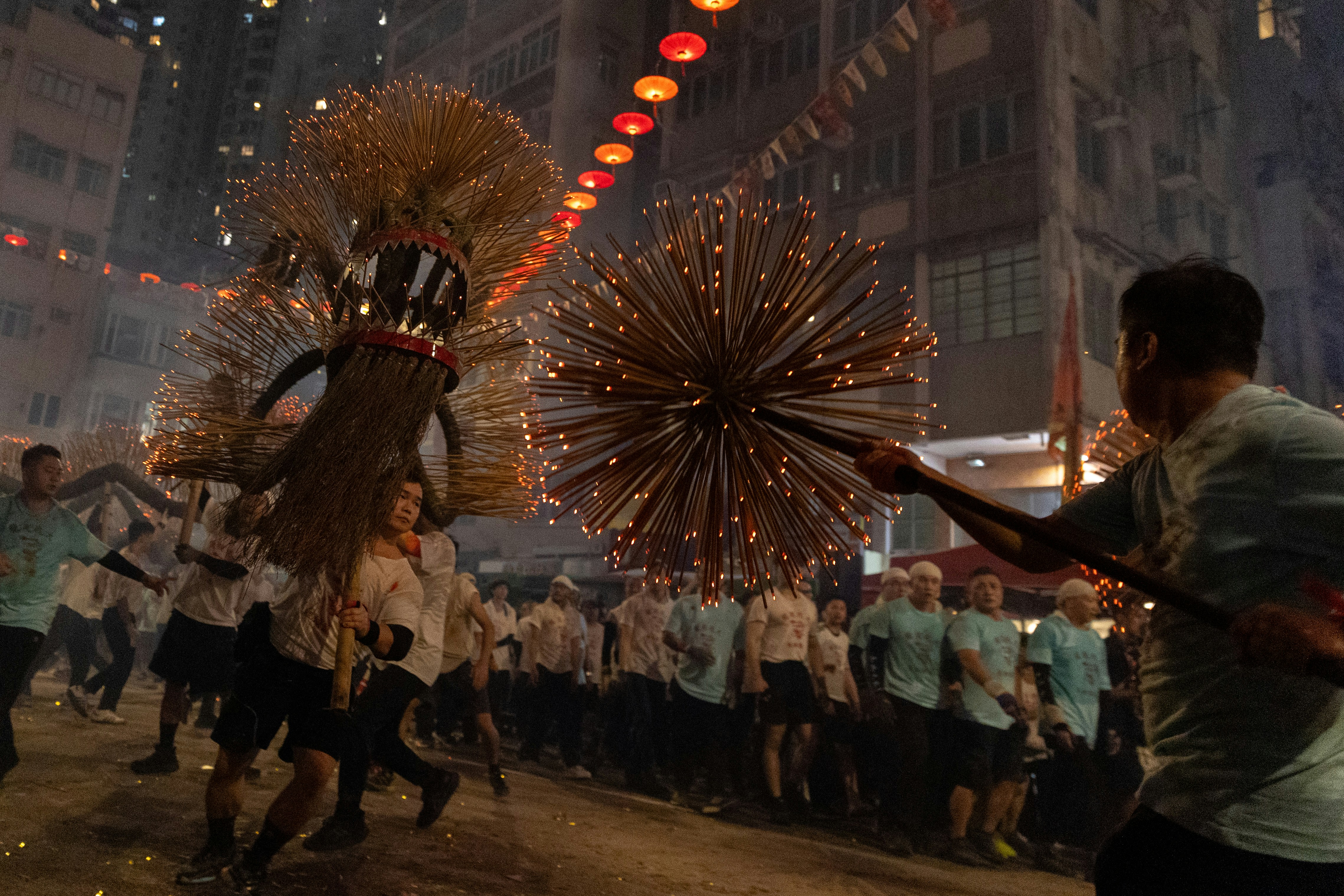
For three nights starting Thursday, the streets of Tai Hang — an old low-rise village quarter pressed up against Hong Kong's Causeway Bay towers — belong to a 67-metre dragon made of straw, rattan and several thousand burning incense sticks. Three hundred performers swing it through the lanes in a Mid-Autumn ritual the district has staged for close to 150 years — long enough that nobody living remembers it starting.
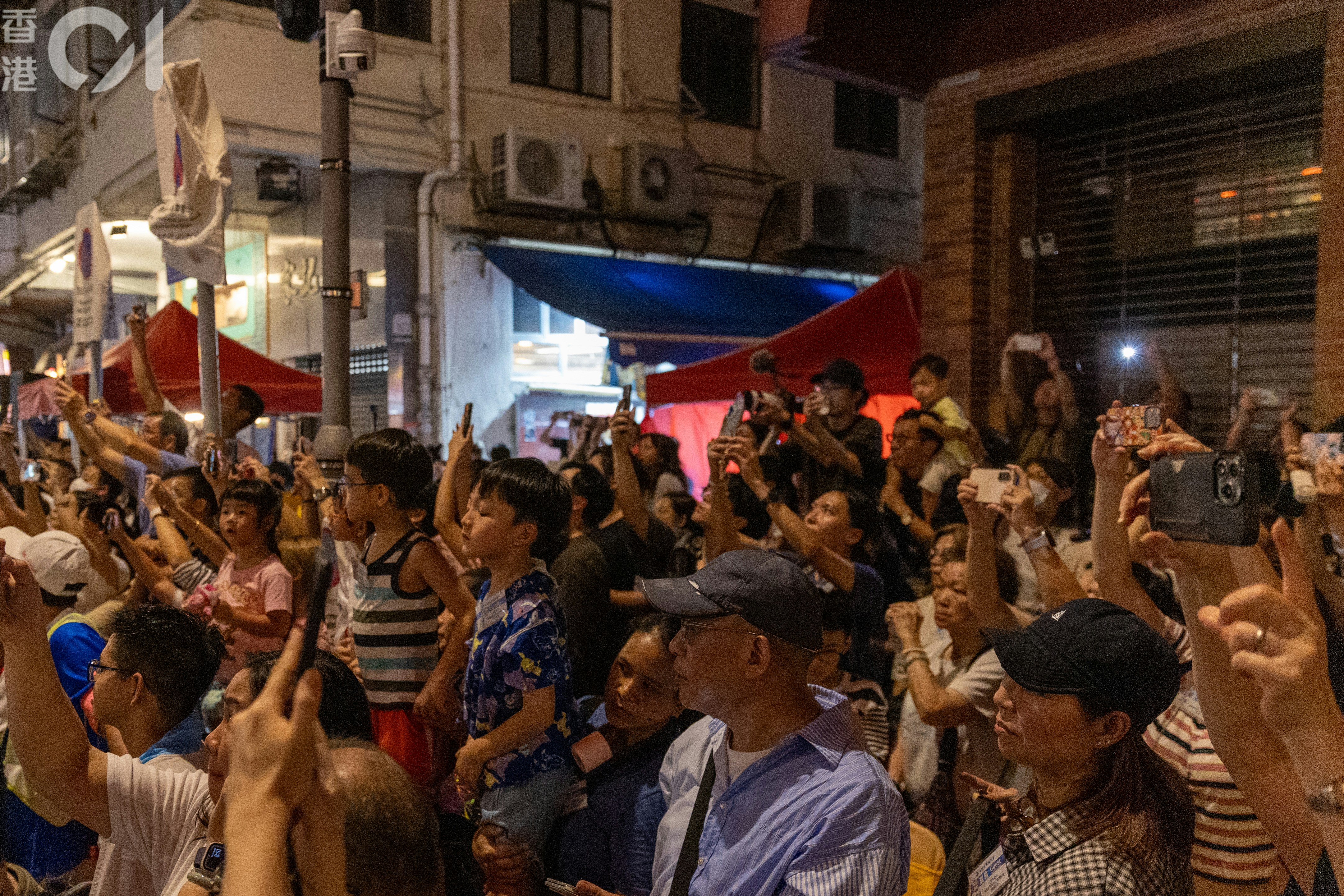
The Tai Hang Fire Dragon is often described as Hong Kong's most photogenic festival tradition, and the crowds this week were after exactly that. Hong Kong 01 followed a photographer who has come for the third year running to shoot the dragon with a slow shutter, letting the drifting embers draw ribbons of light across the frame — the "pulling threads" effect, 拉丝, that photographers prize. The paper's frames show what he is after: a dragon head wreathed in smoke, its body a spine of glowing points, carried at shoulder height through streets packed four-deep.
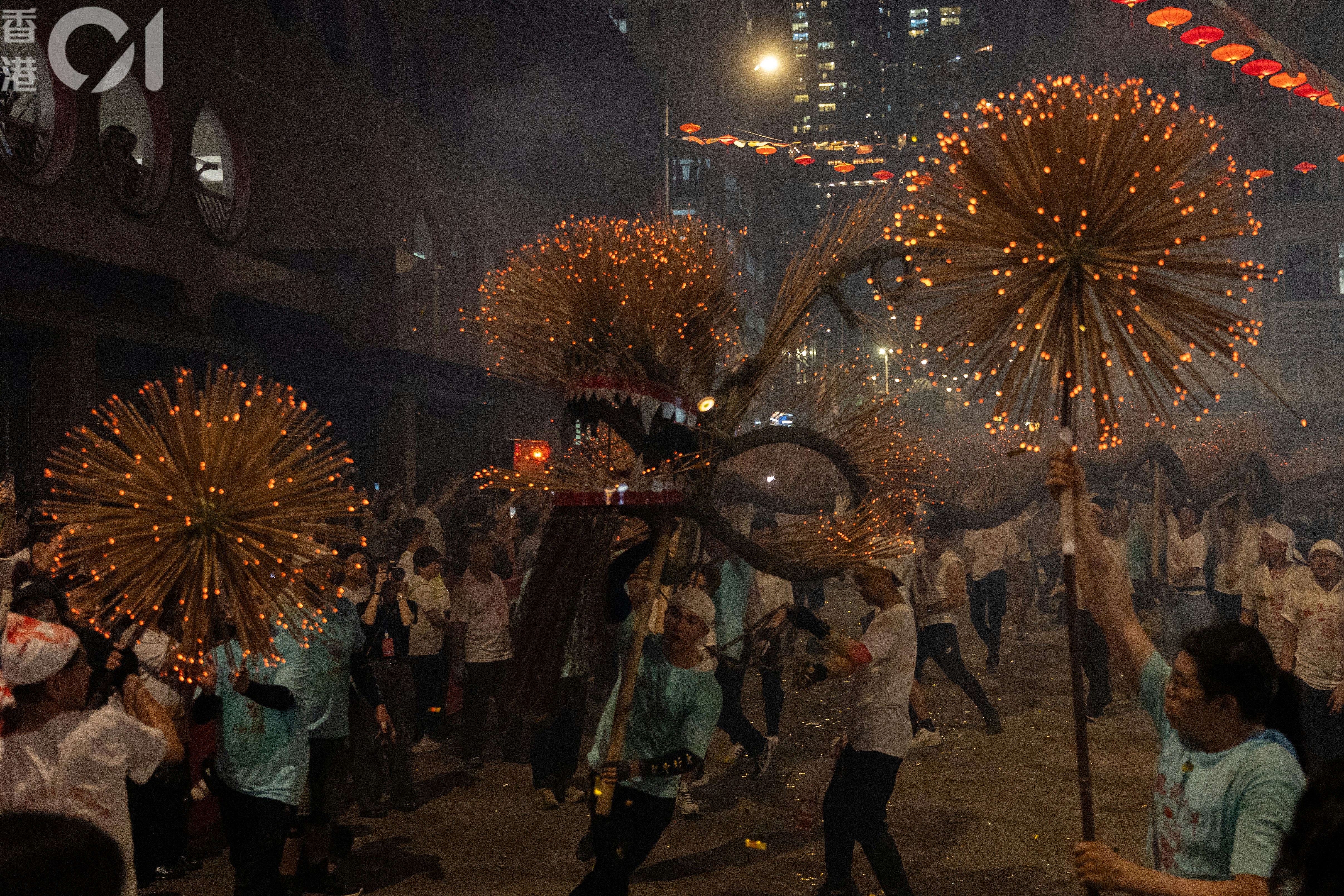
Local lore dates the dance to the 1880s, when an epidemic swept through what was then a fishing and farming hamlet and villagers paraded a fire-wreathed dragon through the lanes to drive it out. The plague is long gone; the dragon stayed, and the performance is now listed as national intangible cultural heritage. The craft is in the build — a rattan skeleton packed with straw and stuck with lit joss sticks until the whole beast smoulders — and in the relay: the dragon is heavy, hot to carry and passed between teams all night.
Mid-Autumn in Hong Kong this year is a festival of clouds. The observatory expects both festival nights to be largely overcast, with the moon appearing only in the gaps — and, as CCTV noted with a well-worn saying, this year the moon is fullest on the seventeenth of the lunar month rather than the fifteenth, so the roundest moon comes two nights after the festival itself. Mainland tourists have been streaming in for a version of the holiday that travels: at Victoria Park's lantern fair, a student from northeast China told HK01 that home lanterns are "Chinese-style" while the park's world-lanterns street felt "very international — Hong Kong's Mid-Autumn is international". The commercial side of the festival is shifting too, as our coverage of the mooncake market found: for the first time, more mooncakes are being bought to eat than to give.
In Tai Hang none of that matters much. The dragon does not need a visible moon; it makes its own light.