Japan's Prime Minister Asks the UN to Delete the Charter's 'Enemy State' Clauses
In her first UN General Assembly speech, Japan's PM Sanae Takaichi demanded deletion of the WWII-era 'enemy state clauses' as a relic of 1945 — a demand Beijing answers by pointing to the Tokyo trials and insisting the clauses remain in force.
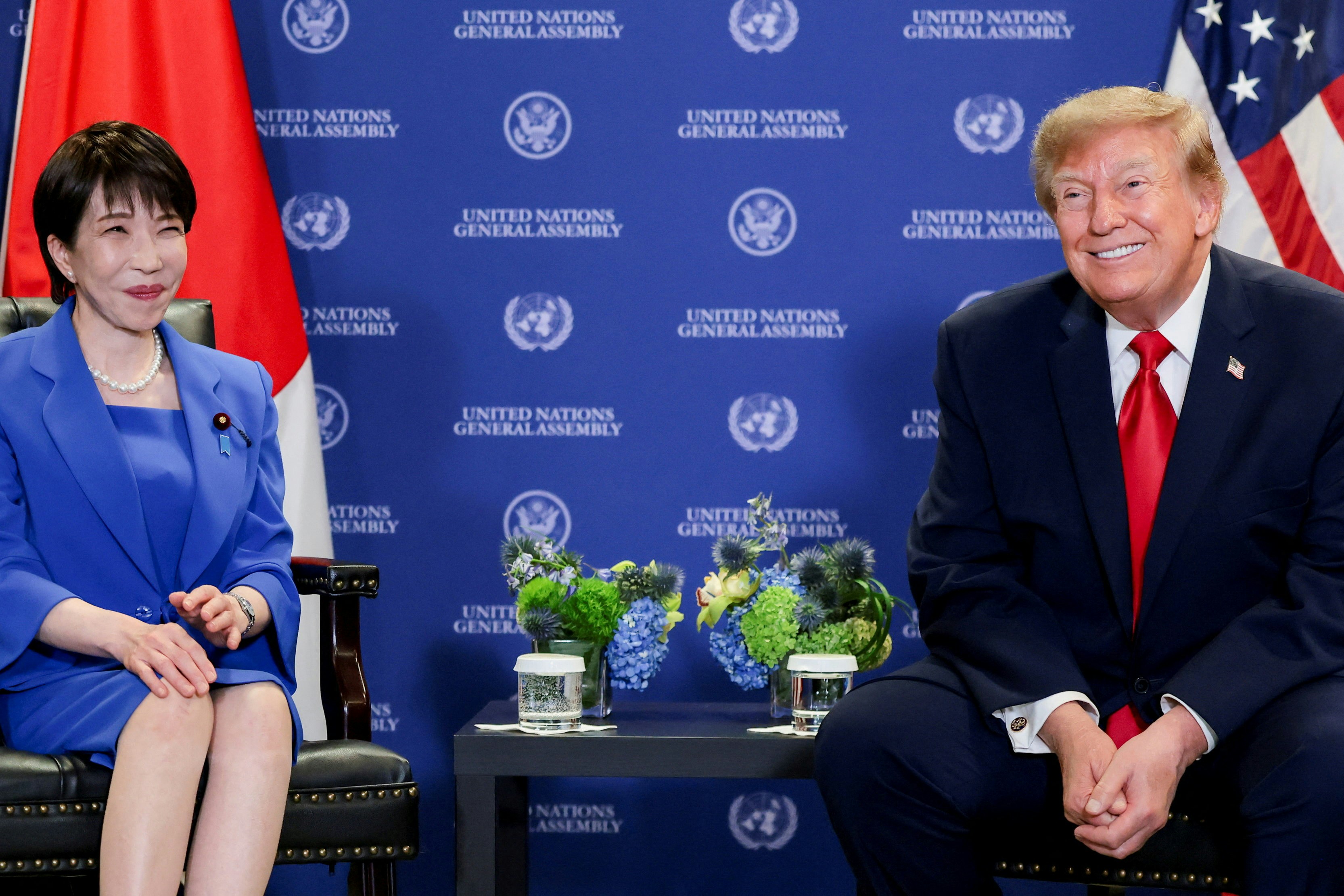
Seventy-one years after Japan joined the United Nations, its prime minister stood at the General Assembly on Monday and asked the organisation to stop describing her country the way it did in 1945.
Sanae Takaichi's target was the Charter's "enemy state clauses" — provisions written to let the wartime Allies act against Germany and Japan if either ever resurfaced as a threat. They have never been invoked and are legally inert, but they remain in the founding text, and for Tokyo they are a standing indignity: the UN's own charter, still classifying Japan as the enemy it was at the time of signing. In her first assembly speech as prime minister, Takaichi called them "a reflection of the international situation of 1945" and argued that the clauses should be deleted "as a resolution provides" — in the name, she said, of the pride and honour of a Japan that has spent seventy years contributing to international peace. She paired the demand with a wider call to reform the Security Council itself, whose structure she described as an outdated mirror of the postwar order, and to expand both its permanent and non-permanent seats.
Chinese officials had answered the argument before it was made. Responding to an earlier round of the debate on September 8, foreign ministry spokesperson Mao Ning said Japan had joined the United Nations on the explicit premise of confessing the crimes of militarism and accepting the Charter in its entirety — enemy state clauses included — and that as a special arrangement aimed at the defeated states of the Second World War, those clauses "remain effective to this day." This year, she noted, is the 80th anniversary of the opening of the Tokyo war crimes trials, and Japan should "take history as a mirror" and earn the trust of its Asian neighbours through its actual conduct. The exchange was republished to Weibo by RT's Chinese service, where Takaichi's speech and the foreign ministry's rebuttal were read as one story.
The speech landed on Weibo in real time. A clip of the address posted by a commentary account drew more than 4,500 likes within hours, with viewers debating both the demand and the occasion — Hong Kong's HK01 noted that Takaichi had scrambled to secure a meeting with Donald Trump on the assembly's sidelines and used it to emphasise US-Japan coordination in confronting China. She was also greeted by mockery: photographs of the prime minister waving to cameras on a nearly empty New York tarmac drew the barb "waving at whom?" from Chinese commenters relishing the unpromising arrival.
The charter demand is one strand of a larger argument China and Japan are having this autumn about the war and its settlement. Chinese readers encountered it alongside coverage of a US embassy post in Tokyo celebrating the B-29 bomber that firebombed Japan — a row this site covered last week — and after Russia refused Tokyo's demand to remove a smashed imperial crest from a new war memorial. Bloomberg, cited in the Weibo discussion, added a hard edge: under Takaichi, Japan is working toward lifting defence spending to roughly 3.5 percent of GDP within a decade, more than double the current level, with a new investment plan expected before the year is out.
Amending the Charter requires the consent of the Security Council's permanent members — including China. The clause Takaichi wants deleted can only be deleted with the agreement of the state that most insists on keeping it.