Why a US Embassy Post Celebrating the B-29 Bomber Enraged Japanese Netizens
On September 18 - the 95th anniversary of the 1931 Mukden Incident - the US Embassy in Tokyo posted a tribute to the B-29, the bomber that firebombed and atomic-bombed Japan. Japanese netizens demanded its deletion while Chinese state media savored the fallout, in a collision of three countries' wartime memories.
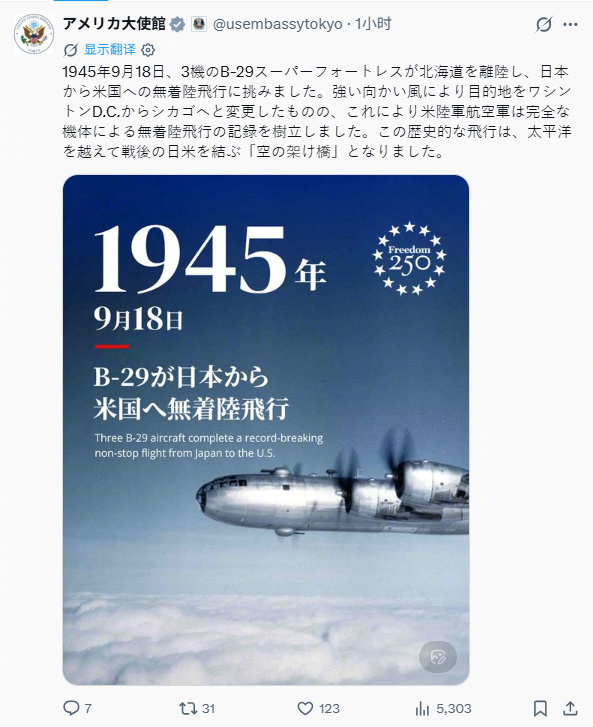
The United States Embassy in Tokyo picked an unfortunate day to celebrate aviation history. On September 18 it posted a commemorative graphic on X marking the 81st anniversary of the first nonstop flight from Japan to the United States — achieved by a B-29 Superfortress. Japanese netizens reacted with fury, flooding the replies and demanding the post be deleted; Chinese social media, marking the same date for entirely different reasons, watched it all with undisguised fascination (环球时报).
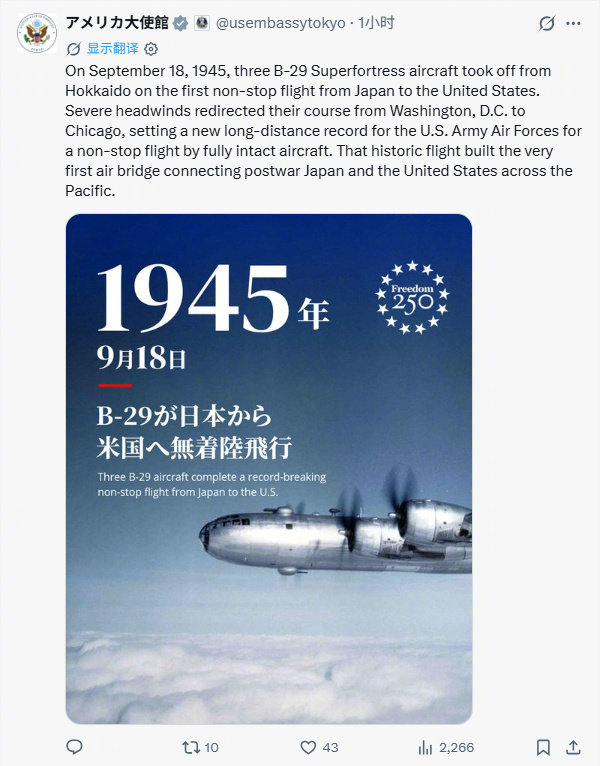
To understand the reaction, hold two calendars against each other. To Americans, September 18, 1945 is simply when a B-29 flew from Hokkaido toward Chicago, an early milestone of the jet age that was still to come. To Japanese readers, the B-29 is the aircraft that burned their cities: the strategic firebombing campaign of early 1945 was carried out almost entirely by B-29s, and the atomic missions over Hiroshima and Nagasaki were flown in B-29s as well. And to Chinese readers, September 18 is the anniversary of the 1931 Mukden Incident, the staged attack that began Japan's occupation of northeast China — marked this year, its 95th anniversary, with sirens across Chinese cities and memorial bells rung fourteen times, one for each year of the war that followed (新浪军事).
Chinese state media relayed the embassy post — and the Japanese backlash — with an enthusiasm that needed no translation. Global Times flagged that Japanese users were demanding the post's deletion; the phrase its coverage seized on, "po fang" (破防, literally "defenses breached"), is internet slang for an emotional breakdown, and applied it to an entire nation (新浪军事). The story climbed Baidu's search board within hours (百度热搜).
The episode is the latest turn in the history-memory wars this site has tracked all month — a contest in which wartime history is fought over through modern media. Days ago, sirens and fan-account blackouts marked the anniversary in China as we covered earlier, and Chinese state media was already arguing that American AI chatbots absorb Japan's version of wartime history. Now the US government's own account in Tokyo had, in Chinese eyes, accidentally confirmed the theme: America's memory of the war's end runs through triumphal aviation milestones, not the dates that define the war's beginning for its victims.
Whether the embassy intended provocation is doubtful — the September 18 date belongs to the record flight itself, set weeks after Japan's surrender, when a B-29 lifted off from Japanese soil for the first transpacific crossing. But in East Asia's memory politics, calendar dates are loaded chambers, and the post sat at the intersection of two of them.
The post remained online as of Friday night, a standing lesson in the region's unfinished history: three countries, one date, and no shared version of what it means.