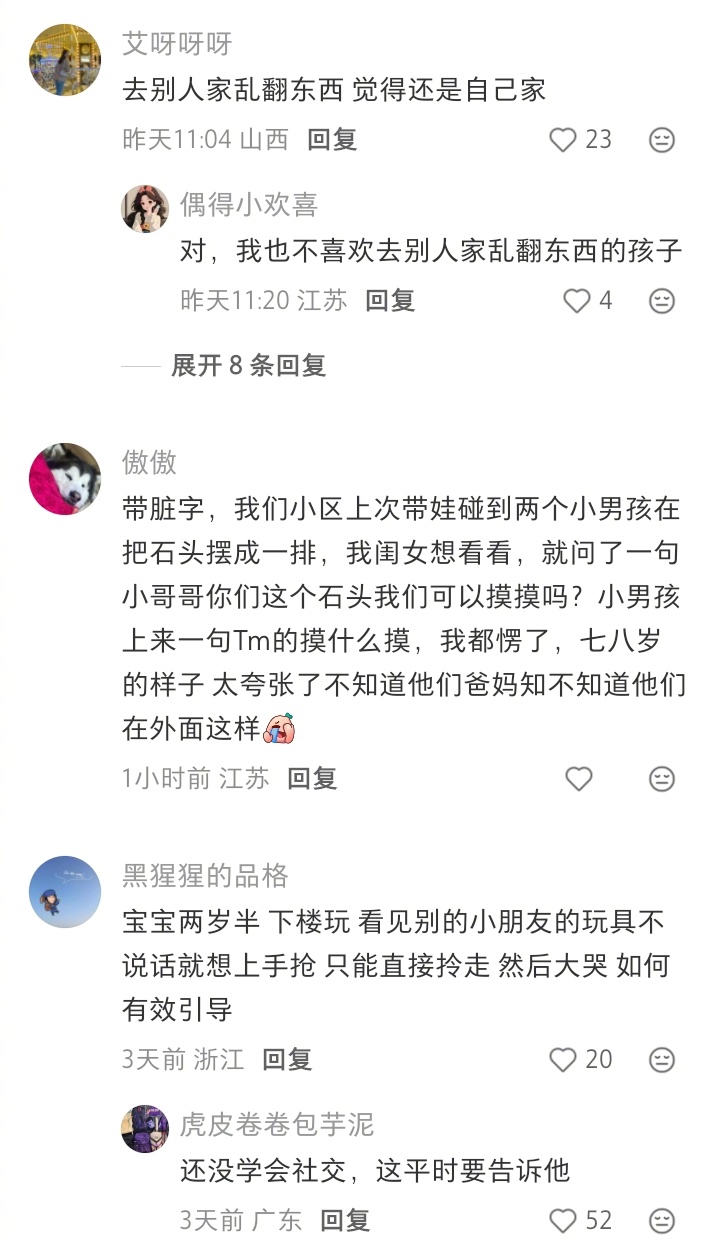
Weibo's Viral Question About Badly Raised Children Is Really About Their Parents
A trending prompt asking what behavior makes a child look badly raised drew thousands of stories of small trespasses — and, the same day, a 93-year-old woman who walked two kilometers to repay a 15-yuan bus fare offered the quiet counterpoint.
The mourners began arriving at the Babaoshan funeral parlor in Beijing early on Wednesday morning, and for once the country's most recognizable news faces were in the room rather than at the anchor desk. Kang Hui came early and walked slowly. Zhu Jun, Zhu Xun, Nigmaiti, Shui Junyi, Han Qiaosheng, Wang Ning and Liu Jinyan — the children's host known as "Golden Tortoise" — filed in to pay their respects. The wreath from the newsroom of "Dongfang Shikong," the landmark magazine show of 1990s Chinese television, carried a line of verse: remembering a colleague who held to the original purpose of the screen.
The woman they were burying was Jing Yidan, China's most trusted television journalist, who died on September 13 at 71 — as the site's obituary noted, the anchor of "Focus Report," the flagship investigative program that for a decade in the 1990s took on corrupt officials and crooked businesses in front of audiences of hundreds of millions. Wednesday's ceremony, hours after her family's account posted her biography under the title "Grateful for the days we walked through together," was the formal end of a week of national mourning that has sat at or near the top of Baidu's trending board for five days.
The letter that defined the day was written before dawn. Ni Ping, Jing's closest friend from their early years at CCTV, posted a message in the small hours of Wednesday recalling their first meeting on January 7, 1991, when Jing — then an economics-desk producer already known around the building — ran down the steps of the old headquarters to greet the nervous newcomer from the arts department. "We both thought our last farewell would never come this suddenly," Ni wrote. "Perhaps you will never receive this letter. But I had to write it. You understand me." Ni told readers she had lost count of how many times she had cried these past two days.
The eulogies kept returning to the same theme: a style of authority that no longer exists on Chinese television. Sun Yusheng, the former deputy director of CCTV who engineered the 1993 news reforms that created "Focus Report," told The Paper that Jing was gentle but that "the things she said carried real weight" — a journalist, in his phrase, poised between tradition and modernity. At the funeral, the couplet on the hall's scroll read: "A lifetime of compassion amplifying the voices of the weak; an honest heart spreading the thoughts of the wise." The banner above it was her own sign-off, the phrase she chose when she left the desk: "Thank you, world, for letting me pass through."
For younger readers watching the ceremony on their phones, the outpouring has doubled as an act of television criticism. The comments under the farewell videos note that her generation of anchors "built trust sentence by sentence, without traffic" — without 流量, the follower counts and click metrics that govern media careers now — and that a journalist whose instinct was to let the facts do the accusing would struggle to find a home in today's algorithmic feeds. Jing herself spent retirement collecting viewers' letters and publishing them, keeping alive the correspondence between a broadcaster and the public that made her name. After her death prompted a wave of stroke-awareness posts across Chinese feeds, as the site covered last week, her family's account has become a place where viewers leave the kind of letters she used to read on air.
Her account's final post this week was the biography. Its last line, like the banner at Babaoshan, was hers: grateful for the days we walked through together.
