Why China's Gelato Chain Won't Answer Luo Yonghao's Bad Review
Luo Yonghao called the gelato chain Yeren Shishi 'nasty for the price' on September 12. The brand's total silence — capped by commenters quoting The Three-Body Problem's 'do not answer' — has turned a bad review into a national case study in crisis PR, follower growth and what premium ice cream really costs.
Luo Yonghao — smartphone founder turned livestream star, and one of the most followed voices on Chinese social media — posted a review of the gelato chain Yeren Shishi on September 12 after buying a scoop at an airport store. The ice cream was "very ordinary; considering the price, you could even call it nasty," he wrote, adding that it was worse than Zhong Xue Gao, the collapsed premium ice-cream brand he says he misses. Within days, the hashtag "Yeren Shishi stays silent" (野人先生冷处理) topped Weibo's hot-search list, and the brand's every move — its prices, its margins, its manufacturing process — was being audited in public.
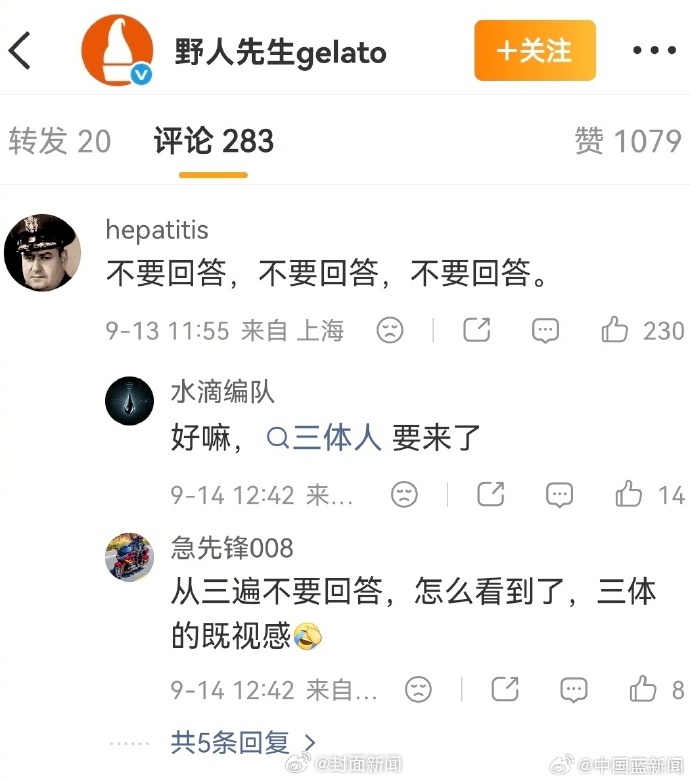
The brand itself has said nothing at all. Instead, its comment section has filled with one repeated instruction: "Do not answer" (不要回答). The phrase is borrowed from The Three-Body Problem, where scientists warn against replying to an alien transmission lest humanity reveal its location; on Weibo it now means, roughly, don't take Luo's bait. The comment repeating it three times became the most-liked under the brand's post, and Cover News reported that the company's video account gained nearly 30,000 followers in a single day — popularity arriving, as one observer put it, precisely because it refused to speak.
What a scoop actually costs
The scrutiny has produced genuinely useful numbers. Yeren Shishi sells 130-gram servings for 28–38 yuan ($4–5.50), and its founder Cui Jianwei has long defended the price on per-gram terms: before the brand arrived, he argued in a January interview that the industry charged 30–40 yuan for an 80-gram scoop, so Yeren "brought gelato prices down" by the gram. Figures cited by Jiemian News, from a franchise recruiter for the chain, put gross margins at no less than 60 percent with payback in about 12 months — in line with mass-market chains, and below the 70–80 percent that insiders say is common in premium gelato. Estimates of raw-material cost per serving vary from about 4 yuan to 10, depending on flavour.
The sharper argument is about the word "fresh." The brand markets its product as made daily in-store and never sold overnight, but last September customers photographed the frozen base it actually uses — factory-made pouches with a six-month shelf life. Cui's answer, "central-factory preprocessing plus in-store finishing," is standard food-industry practice; the dispute is whether that still deserves the price of handmade.
The touchstone test
For China's PR industry, the case has become a referendum. 36Kr argues Luo has turned into "the touchstone every publicist is measured against": a year after the restaurant chain Xibei's combative response to criticism became a textbook failure, silence looks like the smarter play — Luo himself pinned a "well-meaning reminder" to his post begging the brand not to accuse him of sabotage, and an evening news round-up noted the ice-cream maker now stands "at the same crossroads where Xibei fell." Meanwhile Luo's nostalgia for Zhong Xue Gao landed in the same week as that brand's court-supervised restart — as we covered earlier, its assets changed hands after the "ice-cream assassin" era of 20-yuan popsicles collapsed — a timing coincidence netizens read as scripted, though the handover had long been in the courts.
Yeren Shishi has given no sign of breaking its silence. Its founder's January interview remains the only answer in circulation — and the cost ledgers keep coming.