Post Only After It's Settled: China's 'Delayed Moments' Etiquette Goes Viral
A phrase — 'Moments posts need a delay' — has gone viral as advice to never post on WeChat Moments until an event is settled: share the holiday after you're home, the job change after you've signed. The meme is really about privacy strategy in a semi-private feed mixing bosses, parents and exes.
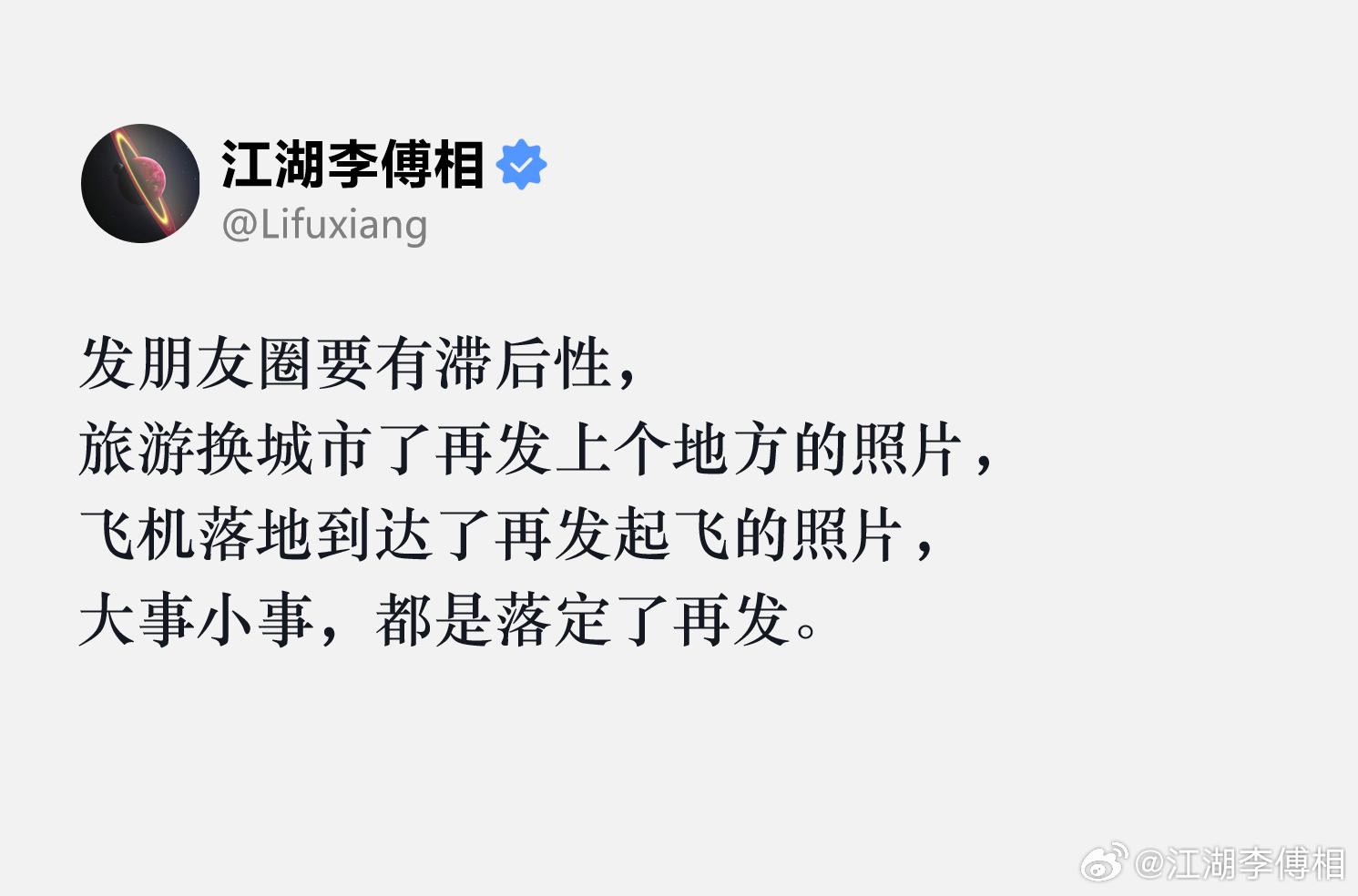
A new piece of Chinese internet etiquette has been making the rounds under the phrase 发朋友圈要有滞后性 — "Moments posts need a delay" — and its creator's example has become the definitive formulation: "Big things, small things — post only after they've settled."
The phrase refers to WeChat Moments, the friends-only social feed where Chinese users share life updates with a chosen audience of contacts, often including colleagues, bosses and relatives — not a public platform, but a semi-private stage whose members one cannot fully control. The advice: never post in the moment. Wait until the trip is over to share the holiday, until the plane has landed to post the takeoff, until the outcome is settled before revealing that anything was in play. A widely circulated screenshot of the original post — from an account called Jianghu Lifuxiang, liked more than 14,000 times since September 14 — is now the phrase's reference image.
A privacy practice, not a joke
What looks like superstition has a logic underneath: Moments is not actually private, and the delay is a way of keeping your audience from using your feed against you. Reveal a job change while it's in progress and a colleague may forward it to your boss before it's done; announce a relationship before it's stable and the breakup plays to the same audience; post a hospital ward photo and the comments come with concern, questions, and advice. Post after it's settled and the audience sees only the outcome, with no lever to pull. As one user put it: the lag "avoids a lot of unnecessary trouble."
The practice has precedents. For years, Chinese users have curated Moments with the "three-day visibility" setting — a default that shows visitors only your last three days of posts — and segregated contacts into groups, so colleagues see the work persona and classmates the private one. The lag principle extends that: not just hiding content, but controlling when your audience is allowed to react. What the meme adds is a name for the strategy — and a warning that in a semi-private feed, even joy can be leverage.
The mood behind the rule
The saying caught on because it names a real calculation: in a feed that mixes bosses, parents and exes, the safe move is to post the past. Commenters framed the delay variously as superstition, strategy or self-protection; one put it as "avoid a lot of unnecessary trouble," a phrase that could double as the privacy policy of the whole feed. What happens next is the interesting question: a generation raised on three-day visibility and group lists has now added time to its privacy toolkit — and Moments, the semi-private stage where Chinese social life performs itself, may be entering its most cautious era yet.