Zheng Qinwen Does It Again, Coming Back From 0-5 to Knock Out Swiatek at the US Open
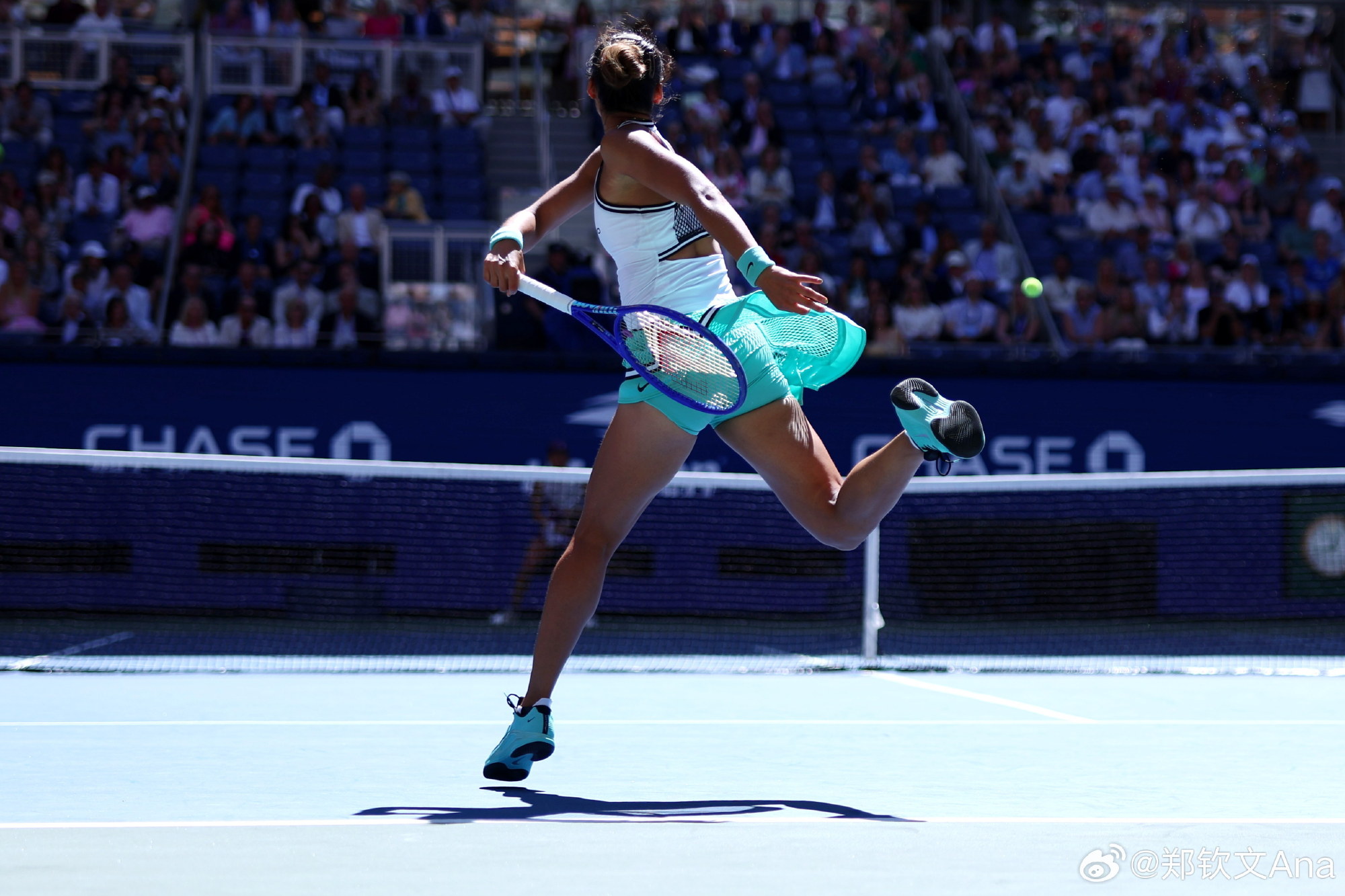
Two days after saving a match point against Madison Keys, Zheng Qinwen lost five straight games to open her fourth-round match against Iga Swiatek — then won seven in a row to take the set, and the match with it. The 2-0 win puts the Olympic champion into the US Open quarterfinals against Elena Rybakina and has Chinese social media debating whether she is the most clutch player in tennis.
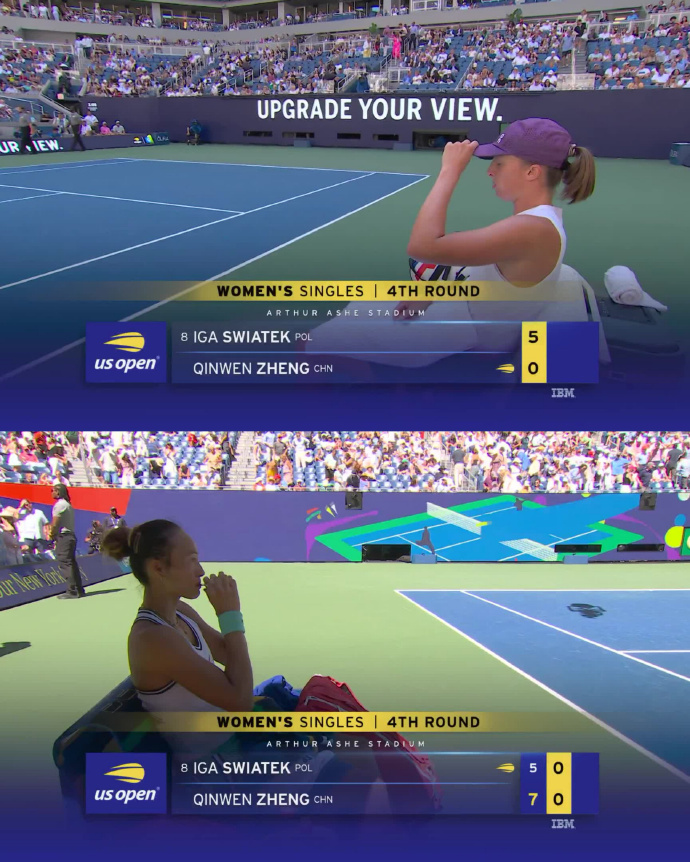
On the Arthur Ashe Stadium scoreboard, the arithmetic looked final: Iga Swiatek, five-time Grand Slam champion, leading Zheng Qinwen 5-0 in the first set of their US Open fourth-round match. Forty-eight hours earlier, Zheng had trailed Madison Keys 0-5 in a deciding set — and saved a match point before winning seven straight games. Now the same script was running again.
Zheng won the next seven games to take the first set 7-5, then closed out the match 2-0. It is her first win over a top-ten opponent this season and her second career victory against Swiatek, and it sends her into a quarterfinal against Elena Rybakina, who beat Naomi Osaka 6-1, 6-4 and stands one win from the world No. 1 ranking.
The arithmetic of a comeback
Chinese fans did the math. A fan blog post that has been shared thousands of times works it out: to lose five consecutive games and then win seven requires winning twelve straight points in a simplified coin-flip model, a probability of 1 in 4,096 per set. Do it in two consecutive sets, across two different matches, and the odds come to roughly 1 in 16.8 million — hence the trending hashtag "Zheng Qinwen achieves a one-in-ten-million event" (郑钦文实现千万分之一概率事件). The model is statistically naive, but the point it encodes is real: no player in the Open Era had produced back-to-back 0-5 turnarounds, against opponents holding a combined four Grand Slam titles, let alone inside two days.
The US Open's own social media account leaned into the absurdity, posting a split-screen graphic of the 5-0 and 7-5 scoreboards with the prompt: "describe your current mood."
Swiatek, at her press conference, declined to call it extraordinary. "No matter what the score is, you can always drop a set, so it's nothing special," she said, before conceding that her own game had unravelled: "I started missing too much. She found her rhythm and I let her back into the match."
Zheng's own explanation was blunter. "Coming back from 0-5 is absolutely not luck — that's all I want to say," she told the on-court interviewer, adding that she had been so absorbed at 4-5 that she forgot the score entirely. On Weibo, where her victory post was liked more than 26,000 times, she put it more mystically: "Miracles only happen to people who believe in them."
What the comeback says
The Swiatek win completes a stretch of results that reads like a career compressed into a week. Zheng, the 2024 Olympic champion, arrived in New York ranked outside the top 100 after an injury-disrupted season, fighting through qualifying for her first Grand Slam main draw in months, then saving a match point to beat Keys in the previous round. "Those earlier losses may have been necessary — they kept me humble," she said after the Swiatek match. "I will get back to where I belong. It's only a question of time."
The quarterfinal against Rybakina now gives the story its next act, and Chinese fans a role they relish: spoiler. A widely shared post recalls that Li Na, the only Chinese woman to reach world No. 1's path and break it, "quality-inspected" two would-be No. 1s on her way to her Grand Slam titles, and asks whether Zheng will "take up her mantle as the queen-blocker."
Whether or not she beats Rybakina, the run has already restored something. After the match, commentator Zhan Jun's line — "the Zheng Qinwen of two years ago is back" — was trending in its own right on Baidu, and the live ranking projection put her back inside the top 60 with roughly 780,000 dollars in prize money earned in New York alone.