Beijing Unveils Consumption Push as China's Gen Z Showcases Its Thrift
On August 31, seven ministries issued 20 measures meant to lift China's goods consumption to about 60 trillion yuan a year by 2030. The same weekend, the top trending thread was a celebration of Generation Z's frugality — and the collision between the state's spending goals and young people's saving instincts is the story of China's economy right now.

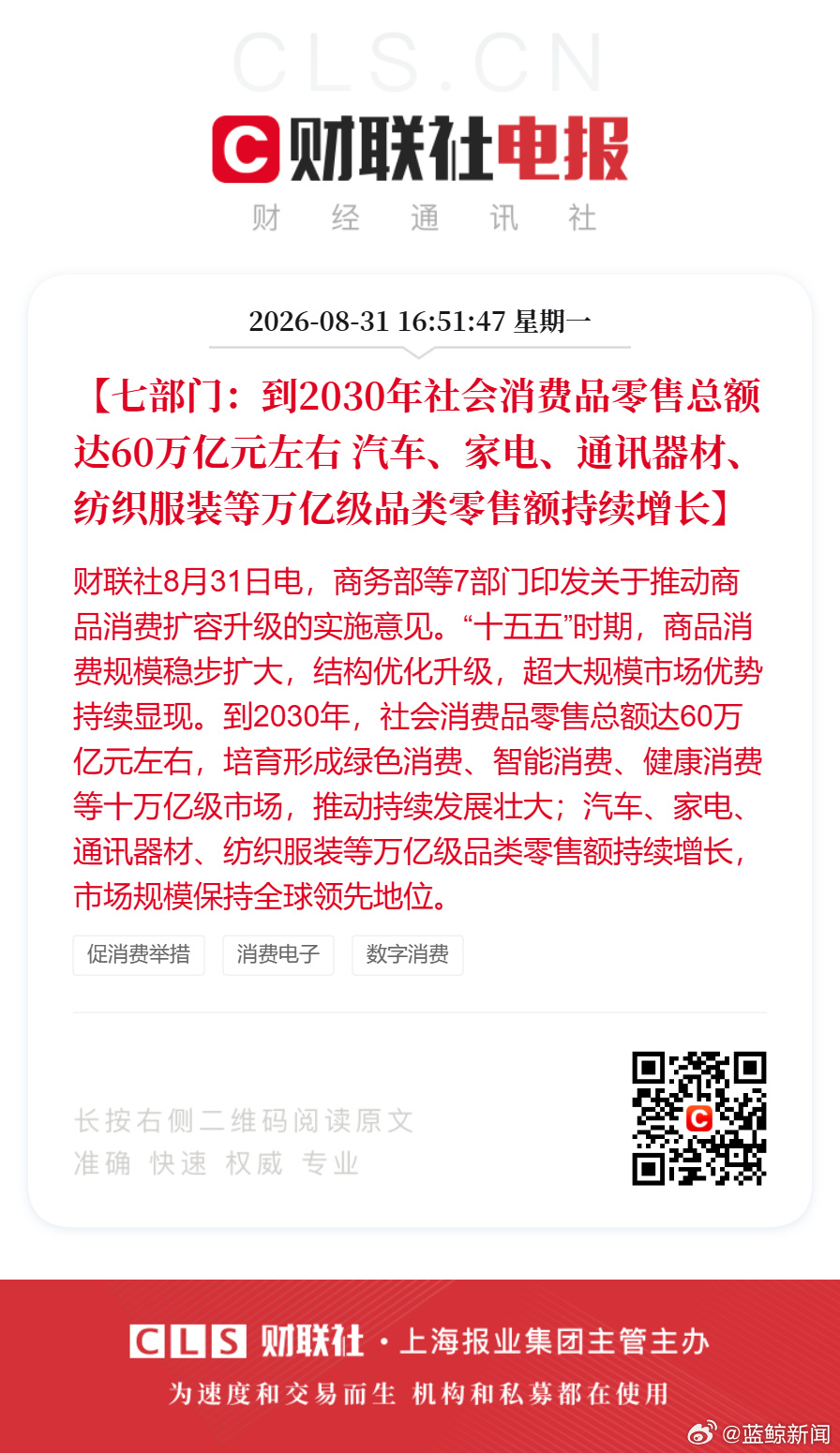
On August 31, seven ministries led by the Ministry of Commerce issued a joint opinion on expanding goods consumption, setting a target of roughly 60 trillion yuan in annual retail sales by 2030 and vowing to cultivate "ten-trillion-level" markets in green, smart and health consumption. The document lists 20 measures — from removing what it calls unreasonable restrictions in the car market to improving the recycling of old appliances and building out charging infrastructure — all aimed at getting households to trade up.
The view from the delivery lane
The announcement trended through the evening, but so did a pointed piece of feedback. Under CCTV News' summary of the measures, a rider writing under the name "takeout guy from a screw factory" put the mood bluntly: "Another document full of words. People who want to consume will spend on their own; people with no money can't be pushed." He went on: "Who isn't unemployed or half-unemployed right now, carrying a mortgage, a car loan, loans for the kid? Those people's money is already spent dry."
Saving as self-insurance
By Monday a separate phrase had climbed the trending list: "The older generation isn't necessarily as good at saving as today's post-00s." The thread is a genre now — young Chinese swapping thrift techniques with the pride once reserved for spending well. Its best-liked opener, posted by the account迷惑行为大赏 and liked more than 1,600 times, is a nine-picture gallery of domestic improvisation, including a KFC paper bag pressed into service as a sink liner.
"Young people unlock their money-saving skills automatically the moment they start living on their own," one user observed. Another wrote the logic out in full: "I used to think my parents' generation was best at stretching money. Now I look at the post-00s and they refuse to spend for face, don't get led around by marketing, plan their income and outgoings clearly, and save to build their own safety net."
The phrase "spending for face" — mianzi, the old social cost of looking generous — carries the generational shift. Their parents' thrift was born of scarcity; this cohort saves by choice, in a job market that has taught them to treat savings as self-insurance rather than deferred consumption.
That is the collision sitting under the government's plan: the ministries' 20 measures are designed to unblock the circulation of cars, appliances and phones so that a cautious household upgrades anyway. The roadmap runs to 2030; the thrift thread runs on daily discipline. Whether the 60-trillion-yuan figure materializes may rest on the question neither document answers — what would make a generation this practiced at saving believe that spending now beats saving for later.