Chinese Auto-Parts Maker Fires 107 New Graduates a Month After Hiring Them
A Changzhou auto-parts maker dismissed nearly a quarter of the 440 graduates it had just recruited, drawing a government rebuke and reigniting China's debate over how employers treat this year's graduates. The company apologized and suspended its HR director after an official investigation.
A Chinese auto-parts maker hired 440 college graduates this summer, held a welcome ceremony, and then fired nearly a quarter of them before they had been on the job a month. The abrupt reversal, at Changzhou Xingyu Automotive Lighting, has drawn a rebuke from the local government and refocused attention on the precarious position of China's newest graduates.
The case broke into public view in late August, when reports described a "two options" ultimatum delivered to this year's recruits: sign a resignation letter citing personal reasons in exchange for about half a month's pay, or be transferred to assembly-line work fastening screws and plugging in lamps at lower wages. Multiple outlets reported that a WeChat group of new hires shrank from more than 400 people to roughly 120.
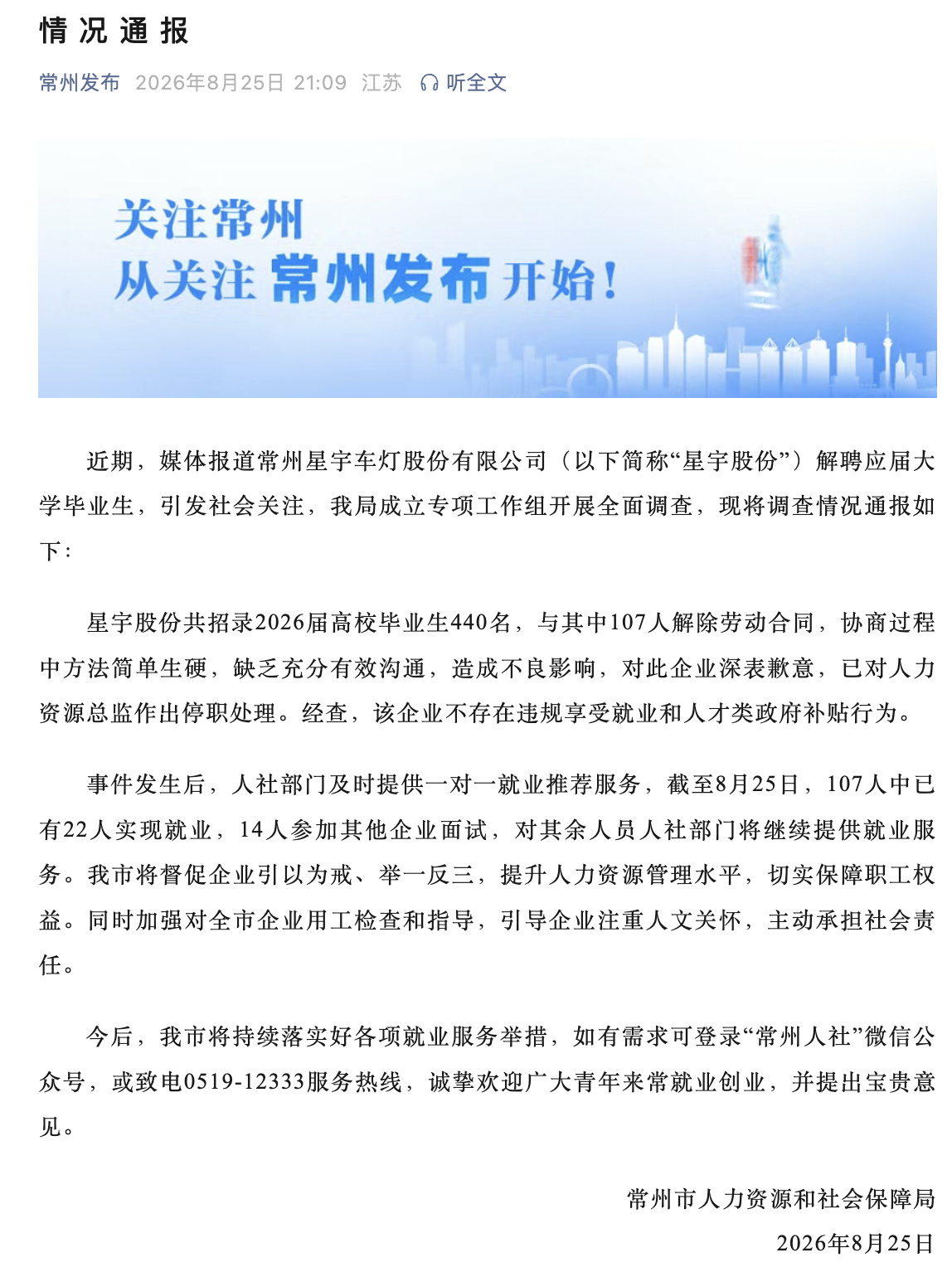
On August 25, the Changzhou human resources and social security bureau released its findings. It confirmed that Xingyu had hired 440 graduates for 2026 entry and terminated contracts with 107 of them. The government called the negotiation process "simple and rigid" and said it "lacked sufficient, effective communication," according to a China Newsweek post. The company apologized and suspended its human resources director. Officials added that the firm had not improperly claimed employment subsidies, and that job-placement services had already found work for 22 of the 107, with 14 more in interviews.
The scale felt personal to many readers. One dismissed graduate, a student of internet-of-things engineering named Xiao Lu, told The Paper that his experience "basically matches" the reports: he received 4,000 yuan in compensation and has left Changzhou to look for work. In a Sina News summary of the coverage, the outline of the story is stark — a company with growing revenue and more than 2 billion yuan in cash, pressing ahead with a second Hong Kong listing application, and trimming new staff just days after the filing.
That timing is central to the criticism. Xingyu's revenue rose to 15.26 billion yuan in 2025 with net profit of 1.62 billion, and its first quarter of 2026 was stronger still. Reports linked the cuts to a drive to polish per-employee efficiency numbers for its Hong Kong IPO. The company said through the government that it regretted the impact and would improve its management practices; it did not directly answer the IPO speculation.
For China's job market, the episode lands in an anxious year. The phrase "fired or screwed onto the assembly line" became a trending summary of the choice offered to recruits, according to one reposted report. The underlying fear is familiar: graduates sign up for office careers, then find they are expendable before they have even produced their first real project.
The government's swift, public intervention is the most revealing part of all this. Changzhou ordered inspections of employers across the city, promised one-on-one job referrals for every dismissed worker, and framed the episode as a lesson in corporate responsibility. Behind the reprimand is a message intended for the class of 2026: this is the kind of protection the state wants to be seen providing.