China Puts Rumor Labels on 80,000 Old Posts Across a Dozen Platforms
China's internet regulator has retroactively tagged more than 80,000 posts with red 'rumor' labels across Weibo, Douyin, Baidu and nine other platforms, part of a campaign that rewrites how misinformation is policed: old falsehoods stay online, but stamped.
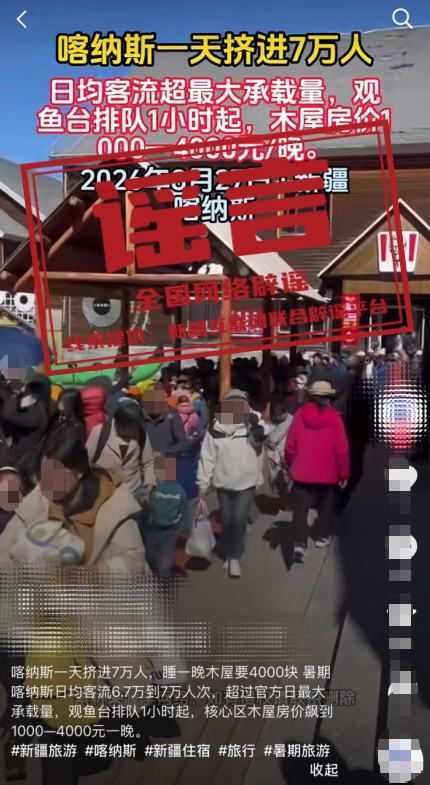
The viral video shows a crowd outside wooden tourist cabins, one of China's most scenic valleys, with a claim about staggering crowds and price-gouging laid over the top. Across the middle sits a large red stamp, the kind once reserved for official documents: 谣言 — "rumor." The stamp is the product of a nationwide retrofit that Chinese authorities detailed on Monday: more than 80,000 existing posts across twelve platforms have now been tagged as false, from Weibo and Douyin to Baidu, Kuaishou, Xiaohongshu, Bilibili, Zhihu, Douban and beyond.
The campaign, run by the Central Cyberspace Administration's reporting centre under the recurring "Qinglang" — clear and bright — special action, works differently from a takedown. Platforms first assembled a reference library of 3,342 rumor samples in areas that touch daily life most: health, food safety, education and jobs, natural disasters. Old posts matching those samples were then marked rather than deleted, on the theory, as the regulator's announcement put it, that labeling "squeezes the space in which online rumors can survive."
What gets stamped
The regulator's own examples sketch a taxonomy of the Chinese internet's recurring fictions: the fake plea that a student has "lost their admission letter," built to farm charity; the claim that instant-noodle fans are made of plastic; the panic staple that strangers prick subway riders with HIV-infected needles; the health misinformation that fasting can "starve cancer cells to death," or that repeated COVID testing caused a surge in throat cancer. Each now carries the label wherever it still circulates.
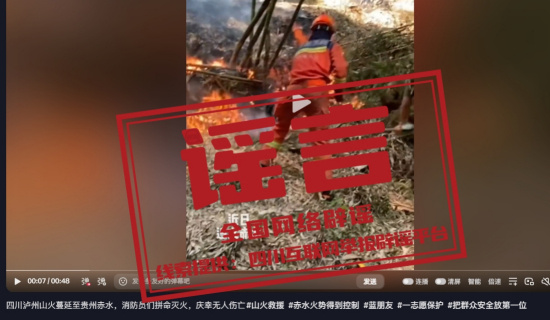
The pipeline runs daily, not just retroactively. Monday's roundup from the official rumor-refutation account stamped four fresh claims: a Wuhan wheelchair user allegedly staging crashes on an elevated road, a wildfire in Luzhou, a dam releasing floodwater in Qingtongxia, and the Kanas crowds story above. On Baidu's trending board, the day's top debunking item was the rumor that a delivery rider poured paraquat into a customer's drink — false, but widely believed before the label landed.
For international readers, the labeled-post system is worth watching less for any single rumor than for the model it normalizes: misinformation kept visible, marked by the state's criteria, at platform scale. The open question the campaign does not answer is procedural — who judges a claim false, and how a poster contests the stamp. What is settled is the direction of traffic: 80,000 stamps in the first pass, and a fresh batch most days.