Land Rover's Freelander Returns as a Chinese-Built SUV With Huawei Brains
The Freelander, the Land Rover that once defined the family SUV, is back after a decade — built by Chery's joint venture with Jaguar Land Rover, launched first in Beijing, and running Huawei driver-assistance software as standard. It is the clearest picture yet of how far Chinese tech has penetrated the foreign brands.
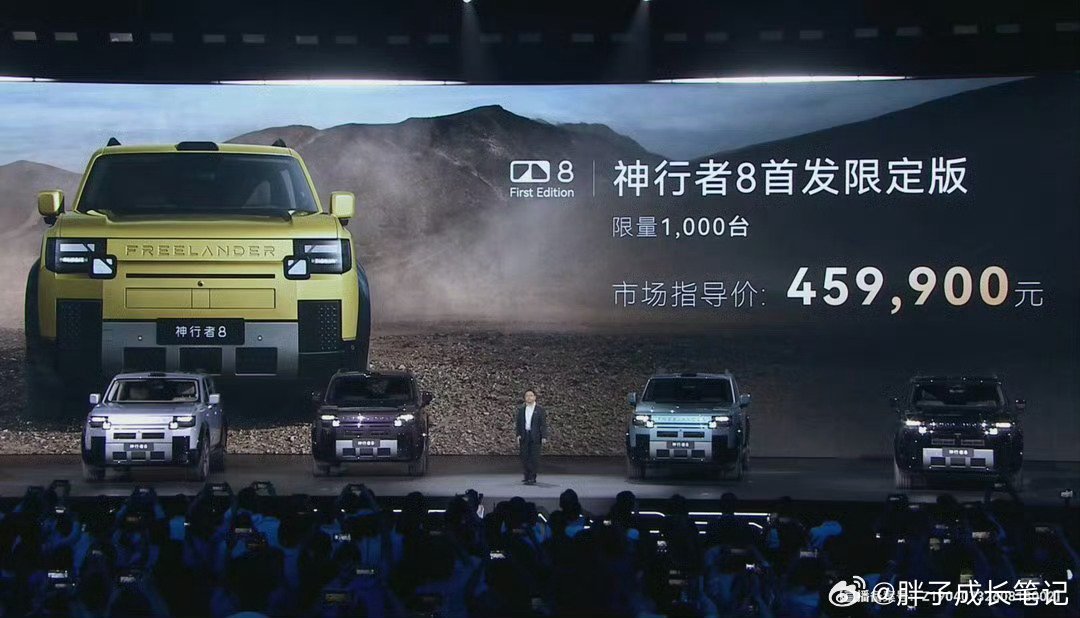
The Freelander was the Land Rover that taught the world the family SUV — the boxy, indestructible-feeling runabout that ran from 1997 until the nameplate was retired a decade ago. This week it returned, and almost nothing about its revival is British in the way its old owners would recognize. The Freelander 8 made its global debut at a launch event in Beijing, sold by Chery Jaguar Land Rover, the joint venture between China's biggest passenger-car exporter and the Tata-owned British marque, with prices starting at 339,900 yuan — roughly $48,000 — and the top MAX+ trim listed at 429,900 yuan.
Two details in the specification did most of the trending. First, every version of the car ships with Huawei's driver-assistance system, the "smart driving" stack that Huawei has been implanting across Chinese brands and that Beijing has just moved to regulate with mandatory national safety standards for assisted-driving systems. A Land Rover that steers itself through traffic on Chinese software is a fair emblem of how the country's suppliers now sit inside foreign badges, not just beneath them. Second, despite being a plug-in new-energy vehicle, it keeps three mechanical differential locks — genuine off-road hardware — a combination aimed squarely at China's booming market for rugged new-energy SUVs, the segment Chinese carmakers have made their own while the imports watched.
The launch posts frame it exactly that way. "The classic off-road IP returns after ten years," one widely shared write-up began, before running through the pitch: Huawei smart driving and three locks across the range, entering the 300,000-yuan class "luxury all-terrain new energy SUV" market. "The hardcore off-road world has a new contender." Promotional material lists the trims — PRO, MAX and MAX+ — and a five-seat cabin the marque styles as a "large five-seater."
For an international reader, the significance is the direction of travel. A decade ago the traffic in this joint venture ran one way: Chery provided the local manufacturing, Jaguar Land Rover the designs and the prestige. The Freelander 8 is the revision — a foreign nameplate whose defining features, the driver-assistance and the electrified running gear, are Chinese, launched in China first and priced against domestic rivals like Great Wall's Tank rather than against BMW and Mercedes. It arrives amid an odd new theater of competition, in which German brands mock their Chinese rivals' "speed-run" development cycles even as their own model lines fill with Chinese technology.
Whether the Freelander name carries enough nostalgic weight to matter in a market that has moved on from it is the honest open question; Chinese buyers under forty knew the car mostly as their parents' aspiration. The calculus for the venture is blunter: in a market this brutal, even a British icon now competes on Chinese terms.