What China's Male-Channel and Female-Channel Web Fiction Reveals About Its Readers
A viral Weibo thread asks for the difference between 男频 and 女频 — the two poles of China's web-fiction universe — and readers answered with a flood of comic examples. The jokes double as a map of two very different fantasies about power and love.
A Weibo account asked a deceptively simple question: what is the difference between 男频 and 女频, the two readerships around which Chinese web fiction has organized itself for two decades? The answers poured in, and the funniest ones were also the most precise.
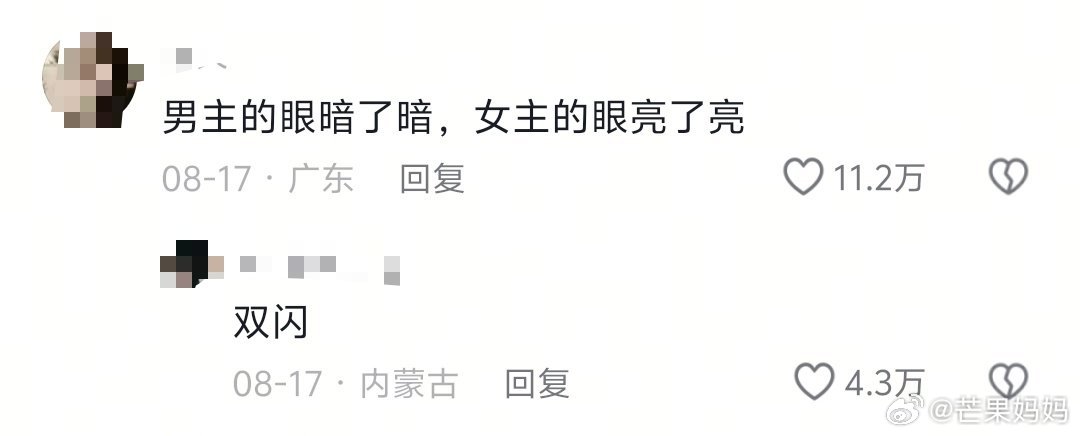
男频 (male frequency) and 女频 (female frequency) are industry shorthand, not biology. A 男频 novel usually sends a hero climbing through levels of power, wealth or cultivation, with romance as decoration. A 女频 novel usually puts the relationship at the center, with the heroine's career or revenge plot as its engine. One reader compressed the whole thing into a single visual joke. In 男频, wrote a comment liked more than 112,000 times, "the male lead's eyes darken" (男主的眼暗了暗). In 女频, "the female lead's eyes brighten" (女主的眼亮了亮). Both are stock phrases, repeated across thousands of chapters, and each signals the genre's engine: in one, a man steeling himself for conquest; in the other, a woman recognizing something she wants.
Another reply played with the genres' signature age logic. "男频: a thousand-year-old immortal girl who has yet to awaken her spiritual intelligence. 女频: a five-year-old young master brimming with private schemes," read one comment, neatly mocking how each genre deforms agency differently — the male-channel heroine as blank canvas, the female-channel child as precocious schemer. The distinction is not a law of nature; it is a habit of publishing. Chinese web-novel platforms sort books into male and female channels at upload, recommend them to distinct pools of readers, and the algorithms then reward whatever reinforces the sorting. Over time that produced two parallel vocabularies so standardized that readers can parody them with recognizable phrases.
The cultural insight goes beyond literature. 男频 heroes rage against hierarchy and chase sovereignty; 女频 heroines negotiate intimacy and chasten the people who hurt them. These are two different ways of imagining escape, and both have enormous audiences. When a novel is adapted into a drama, the channel of its origin often predicts the fan war that follows: viewers argue over whether the adaptation bent toward spectacle or toward relationships, toward the map or the marriage plot.
The thread's own architecture made the same point. The original poster did not explain the terms. Thousands of people supplied examples, each confident the difference was obvious — because for anyone who has spent time inside one of the two recommendation feeds, it is. An outsider reading both genres ends up with a clear-eyed view of a commercial ecosystem that has sorted desire itself into two channels. As one poster put it, a male-channel protagonist "conquers the world," while a female-channel protagonist "only wants to be properly cherished." Neither fantasy is subtle. Each is, in its own way, the whole point.