A Cheaper Tesla Model 3 Debuts in Hong Kong as Beijing's Regulator Flags BYD's Fuel Claims
Tesla launched a stripped-down, cheaper Model 3 in Hong Kong and Macau, planting the question of a mainland price cut — the same weekend the industry ministry publicly flagged BYD's Qin L hybrid for burning more fuel than its certified 3.8 L/100 km figure, a rare public rebuke of China's EV champion.
Two signals about the state of China's car market landed within a single weekend. Tesla quietly launched a stripped-down, cheaper Model 3 in Hong Kong and Macau — its first obvious shot at the budget end of a market Chinese automakers have saturated. And in Beijing, the industry ministry publicly flagged BYD, the world's biggest EV seller, for selling a hybrid that burns more fuel than the figure on its certification file. One is about price; the other is about truth in advertising. Together they mark the end of the phase in which Chinese EV makers could do no wrong and no number was challenged.
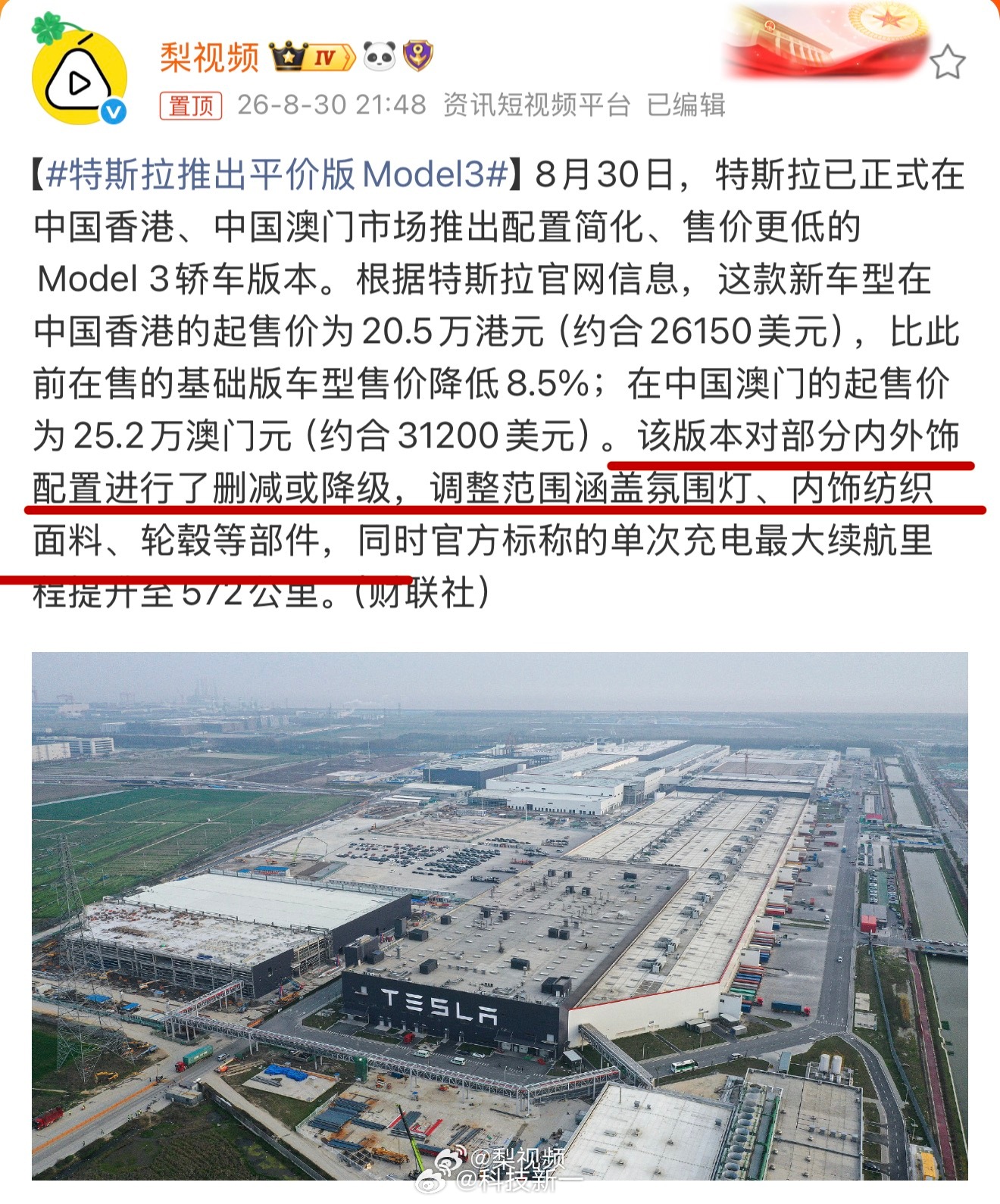
Tesla's move came first. On August 30 the company put a simplified Model 3 on sale in its two special administrative region markets: from HK$205,000 in Hong Kong (about US$26,150), 8.5 percent below the base version previously sold there, and from 252,000 patacas in Macau. The savings come from deletions Chinese car buyers know well — ambient lighting downgraded, interior fabric replaced, wheels simplified — while the official claimed range actually rose to 572 kilometers per charge. "Tesla's interior was already that bare, and they still found more to take out," one Weibo technology writer marveled, before asking the question the launch was designed to plant: if a budget Model 3 comes to the mainland, would people buy it? A dealer-side commentator was blunter: "Finally" (终于来了).
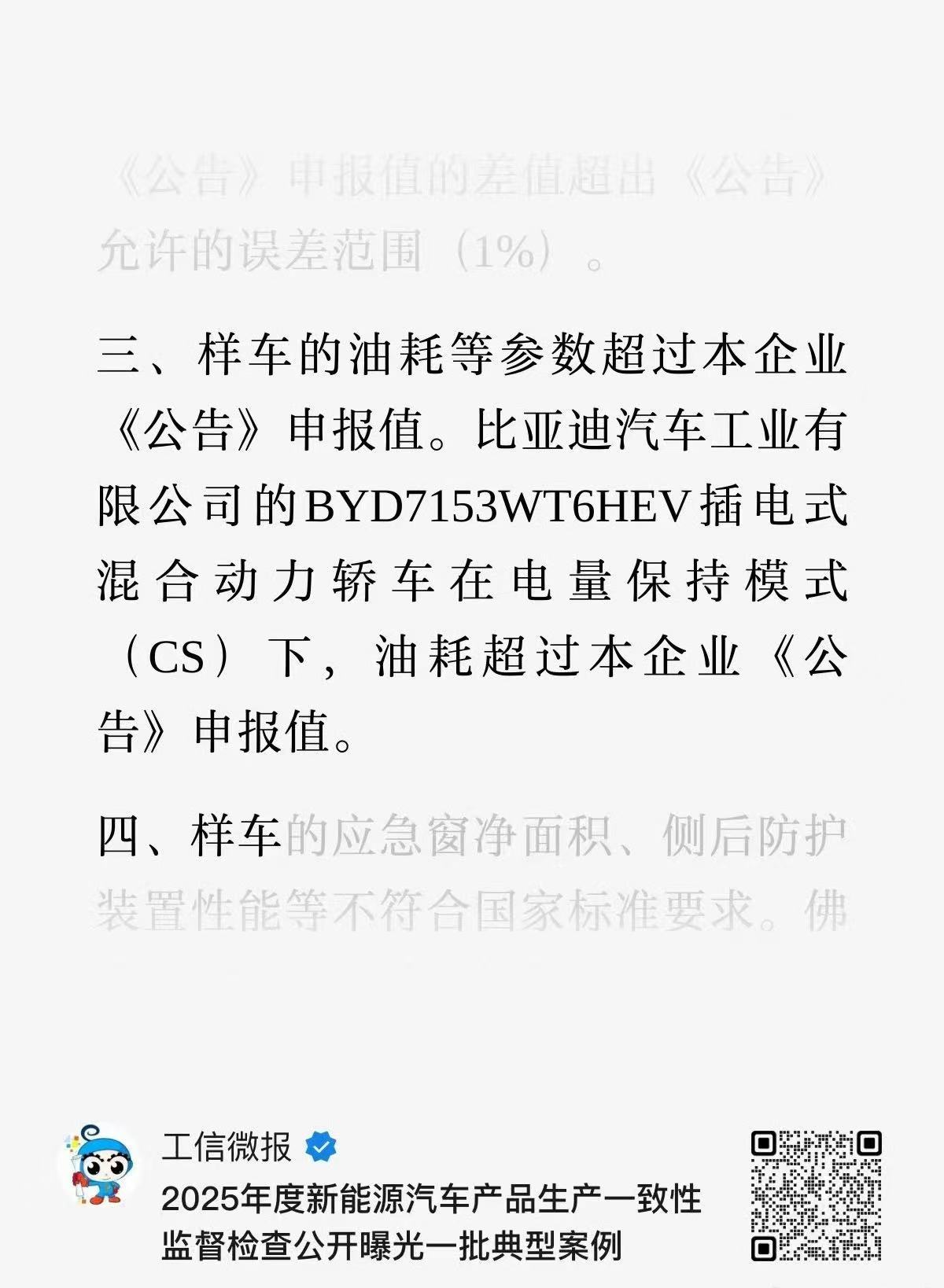
The mainland question is the real one, because that is where the price war Tesla is joining has been running for two years — and where its chief rival was having a much worse weekend. A ministry of industry and information technology notice on production-consistency inspections — the routine test in which regulators sample a certified car and check it matches the company's declared figures — found that the BYD Qin L DM-i, the plug-in hybrid that anchored BYD's boom, exceeded its declared fuel consumption when running in charge-sustaining mode, the state in which the engine does its heaviest work. The declared figure was 3.8 liters per 100 kilometers; the marketing around the car, which saturated Chinese social media in 2024, promised the Qin L was "leading fuel consumption into the 2-liter era" (油耗进入2升时代). For a Weibo car blogger who had spent six months arguing the gap between promotional and real-world numbers was real, the notice was vindication: "BYD's fuel-consumption 'water content' has been confirmed by the ministry — I called myself a prophet," he wrote.
BYD was not alone on the notice: Geely's Xingyuan hatchback was flagged for a measured wheelbase outside the 1 percent tolerance of its certified figure, and two more companies for lesser paperwork and safety failures. But it was the BYD finding that drew the crowd — the leading Zhihu question on it reached 1.12 million views within days, with a companion question at 590,000.
Read together, the weekend describes a market maturing on both fronts. Tesla, squeezed at home, is testing how far a global brand can strip cost out of a car that Chinese buyers have been trained to expect loaded with features at lower prices. And the regulator is signaling that the efficiency claims which fueled the hybrid boom — numbers that helped BYD become the champion it is — are now subject to sampling, publication, and public embarrassment. The notice orders rectification rather than fines; the reputational cost, for a brand whose engineering credibility is the product, may be the heavier half. Tesla's budget Model 3 has not been announced for the mainland. If it comes, it will arrive into a market where the discounts are real and the fuel-economy claims, increasingly, get checked.