Asked to Prove a Period: The Sick-Note Row at Tongji University's Campus Clinic
A student's claim that Tongji University's campus hospital required an examination to prove she was menstruating before issuing a sick note has set off a national argument over privacy and medical gatekeeping. The hospital says exams happen only when doctors judge them necessary; the row has put China's rarely used menstrual-leave rules under fresh scrutiny.
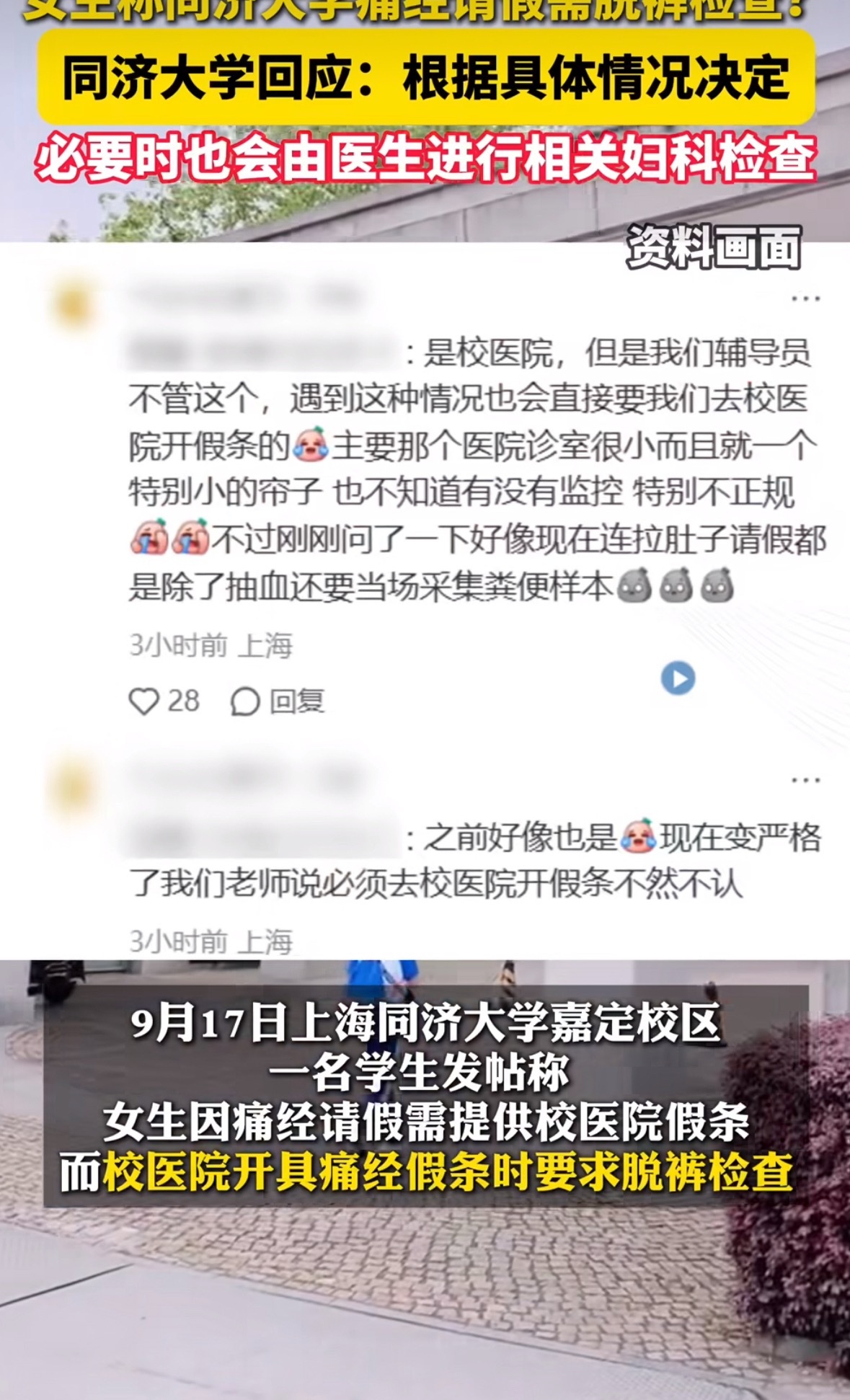
A student at Tongji University's Jiading campus in Shanghai went to the campus hospital this week for a sick note for period pain. What she says happened next — that she was told to take off her trousers for a gynecological examination, to prove she was actually menstruating — has turned a routine errand into a national argument about privacy, gatekeeping and who gets believed about their own body.
The post, published on September 17, spread quickly, and by afternoon the episode was on Baidu's trending board. Reporters reached the campus clinic the same day. Its reply, as summarized in widely shared posts, was carefully hedged: menstrual pain has complex causes, so doctors ask about gynecological history to rule out other conditions; students with severe cramps can generally get a note for one or two days of rest; and an examination is never mandatory — it happens only when a doctor judges it medically necessary. Whether to examine, the hospital said, is decided case by case.
That answer did not settle anything, because the accusation itself named something many women recognized. One writer with a large following posted instructions that read like a wartime dispatch: if you are asked to prove a period, pull out a used sanitary pad, put it on the desk, film it, and take the recording to the complaints office if the note is refused. "Don't be ashamed — it doesn't matter," she wrote. "They have no shame, so what are you afraid of?" (他们不想要脸,你还怕什么). The post was liked more than 3,000 times within hours, and the comment sections under the trending topic filled with students describing their own examinations and near-misses.
What is being argued about is the machinery behind a piece of paper. Chinese universities require a clinic's note for sick leave, and menstrual leave itself has existed in the country's labor regulations for decades. But the note is the gate, and the gate is staffed — so a woman who wants a day of rest for pain she cannot show has to persuade a stranger, on the spot, that the pain is real. The viral discussion has accordingly drifted from one hospital's practice to the system around it, with calls to rewrite campus leave procedures so that verifying a claim does not require staging the most literal proof imaginable.
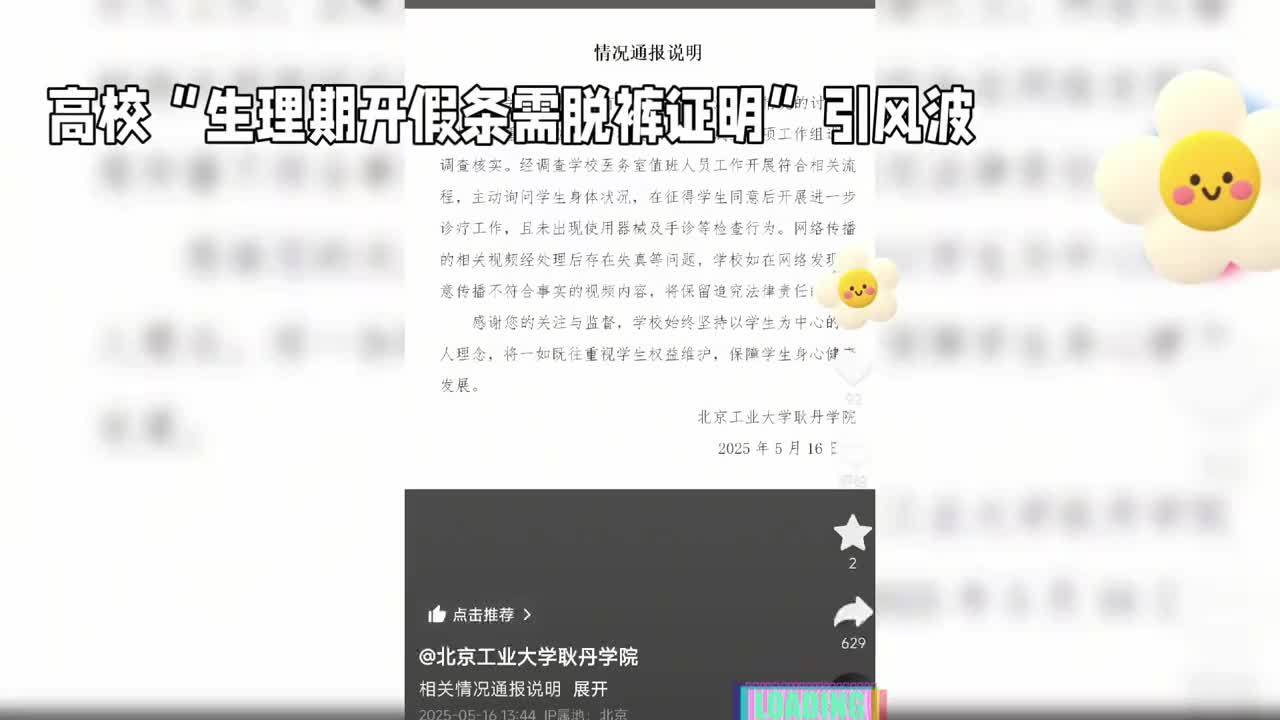
It is not a first. In May 2025, Gengdan College in Beijing faced nearly identical accusations; its investigation concluded that staff had asked about health history and obtained consent, used no instruments or manual examination, and warned that edited online video was misleading the public.
Tongji has yet to issue a formal school-level statement; the campus clinic's line — it depends on the doctor — is, for now, the official position. That is precisely what the students pushing for procedure changes are objecting to: a rule that leaves the outcome to the discretion of whoever is on shift, in an examination room, with a curtain for a wall.