Injured Wang Chuqin Withdraws From WTT Champions Macao, and Fans Blame China's Schedule
China's leading male table tennis player withdrew from this week's WTT Champions Macao with an injury, a year after winning the same title. The announcement set off an argument about whether the national team works its stars too hard, with a fan-made chart as the evidence.
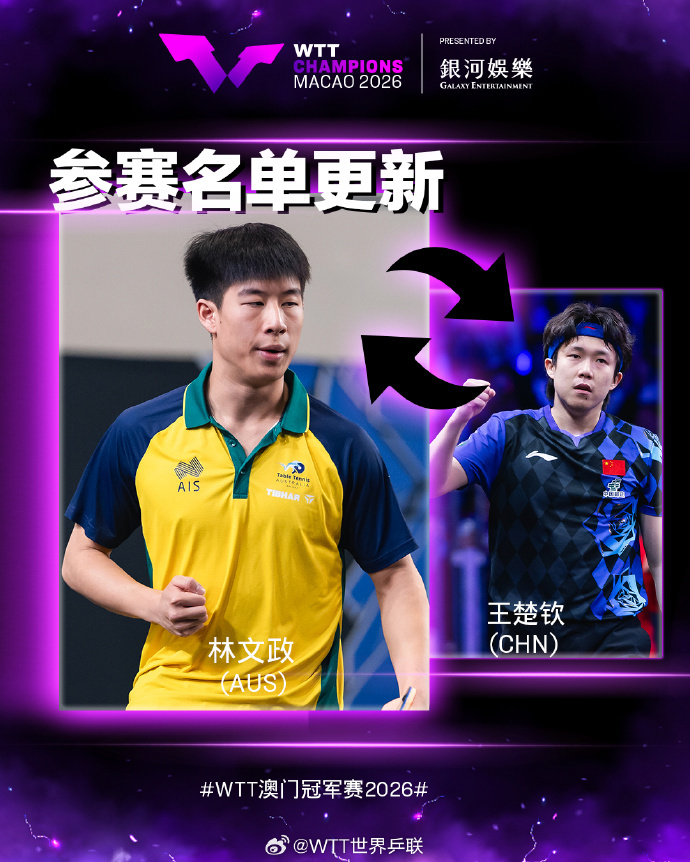
Wang Chuqin, the player around whom Chinese table tennis has built its post-Olympic era, will not defend his title at this week's WTT Champions Macao. The world table tennis body confirmed on September 4 that Wang had withdrawn with an injury and that Australia's Lin Wenzheng takes his place in the draw; France's Felix Lebrun also pulled out injured, replaced by England's Tom Jarvis. China's remaining men — Lin Shidong, Zhou Qihao, Chen Yuanyu and Huang Youzheng — will carry the singles list without their most decorated name.
The withdrawal, announced by WTT itself, arrives awkwardly. It was in Macao, only last September, that Wang won this tournament for a third straight year and regained the world No. 1 ranking. This time he is in Shanghai rehabilitating, with Chinese reports saying he is preparing instead for the Asian Games, where China's Olympic champions are expected to anchor another continental sweep.
On Weibo, the announcement drew hundreds of reposts within hours — and much of the response was aimed not at Wang's body but at his calendar. Fans have watched him carry a double burden, for years, that almost nobody else at the top of the sport does: he plays singles and mixed doubles, the event Chinese administrators treat as a national showcase since its Olympic debut. A fan-compiled chart, circulated under the withdrawal announcement, lays out tournament after tournament from 2024 to 2026 in which each top men's player entered mixed doubles — Wang's column is a run of check marks, while his main rivals, from Tomokazu Harimoto to Felix Lebrun, have none. The table's own footer reads: "Core competitors — not one plays mixed doubles." Below it, the words "singles decline".
The argument writes itself in the replies. "The men's team's No. 1 withdraws injured in the middle of closed training — what has the [Chinese association] been doing?" one fan wrote, demanding real medical and fitness support. Another put it more bitterly: the association, in this reading, "would rather watch athletes withdraw injured than stop milking them with back-to-back events" — some even urged the team to drop Wang from mixed doubles at the Asian Games to protect him.
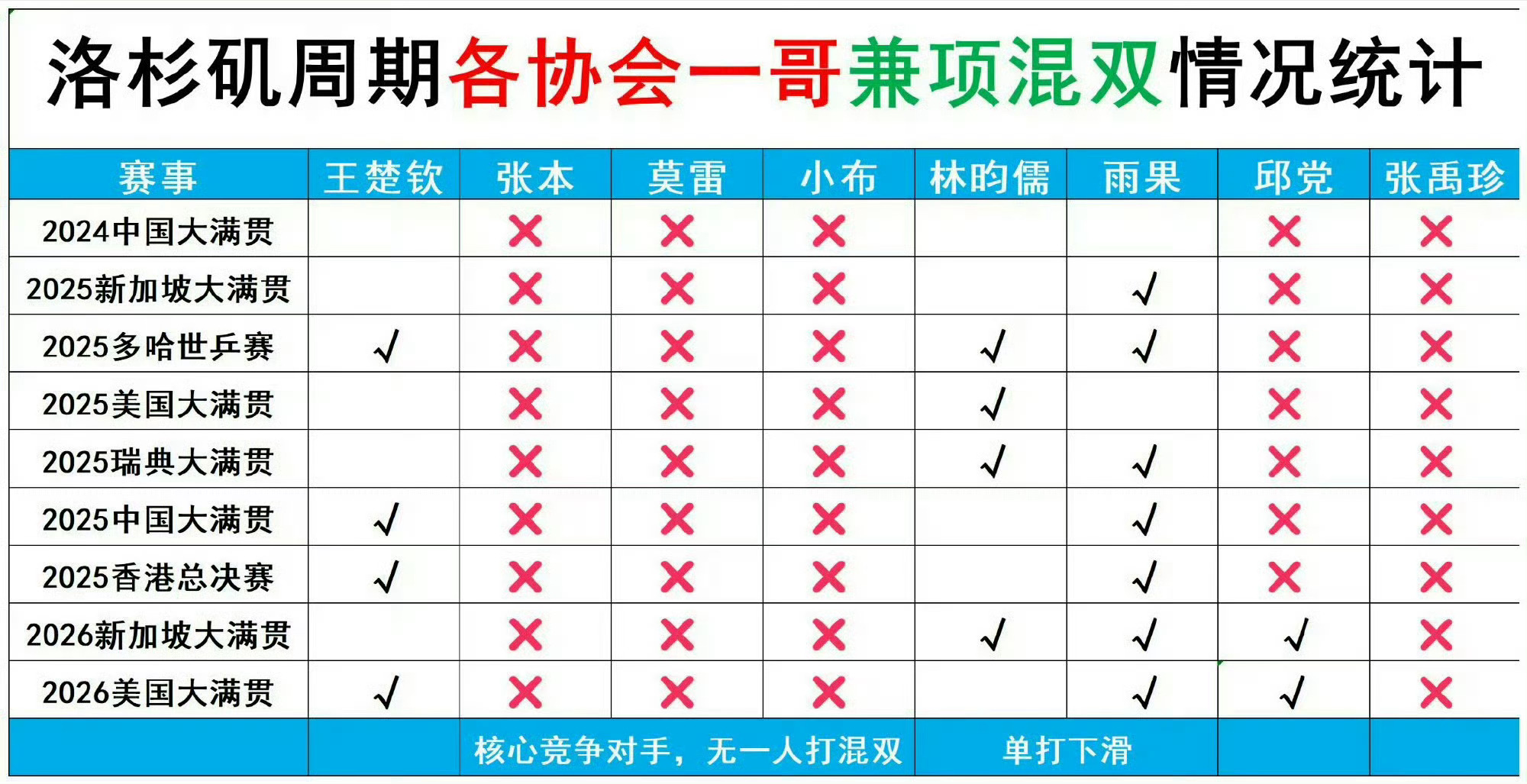
There is a structural reason for the load that a casual observer might miss. Mixed doubles was the first Olympic table tennis gold China famously lost, in Tokyo, and since then the event has been assigned to the country's strongest singles players as a matter of policy; pairing a top man with a top woman is how the association hedges against a repeat. The cost falls on the athletes, who play two full draws where their rivals play one, and the fans have learned to read rosters the way labour economists read shift schedules. Whether the association adjusts before the Asian Games — or defends the arrangement as the price of gold — is the question the withdrawal leaves open.