You Can Now Take Your Bicycle on China's High-Speed Trains, for 88 Yuan a Bike
China's national ticketing platform 12306 has launched a pilot service that lets riders bring a packaged bicycle aboard certain high-speed trains for 88 yuan — currently on the Beijing–Zhangjiakou line to the Great Wall and the Hainan island loop — as cycling holidays quietly become the country's budget-travel play of the season.
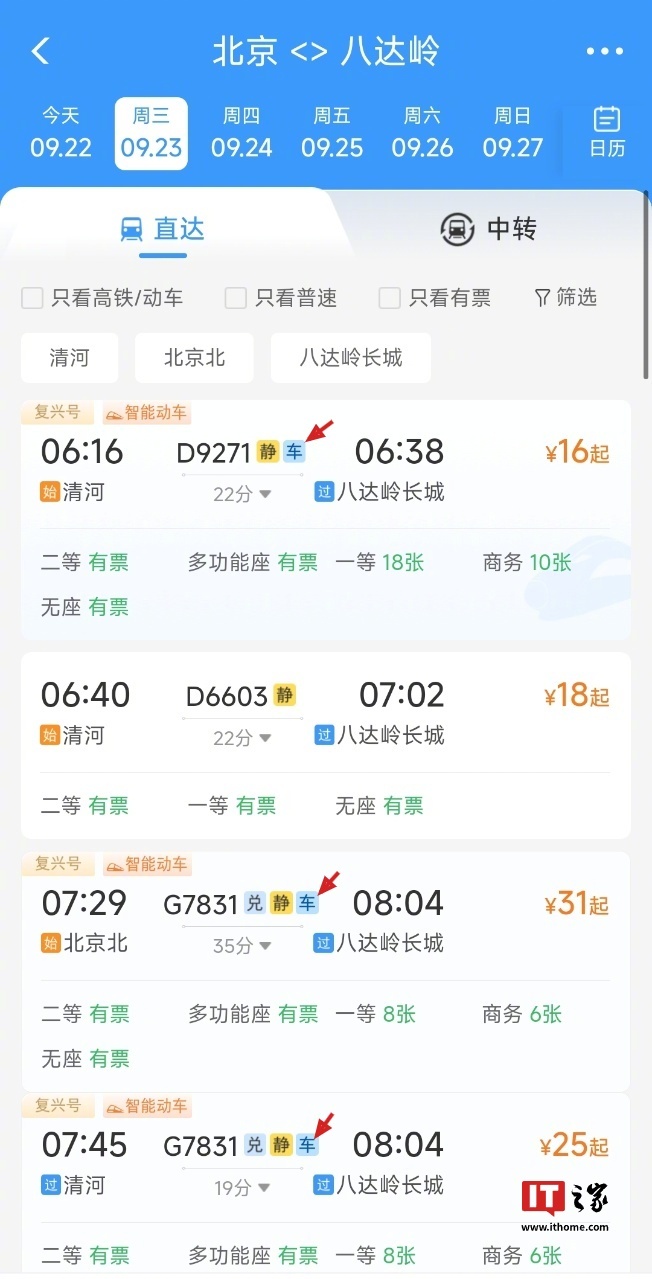
Eagle-eyed Chinese train travelers noticed something new in the 12306 ticketing app this week: a small badge reading "车" (vehicle) beside certain train numbers. The mark, as the railway operator's customer service confirmed to the tech outlet IT Home, means the train accepts packaged bicycles under a new pilot called "Bicycle Travels With You" (自行车随身行) — 88 yuan per bike, with the cyclist riding the same train.
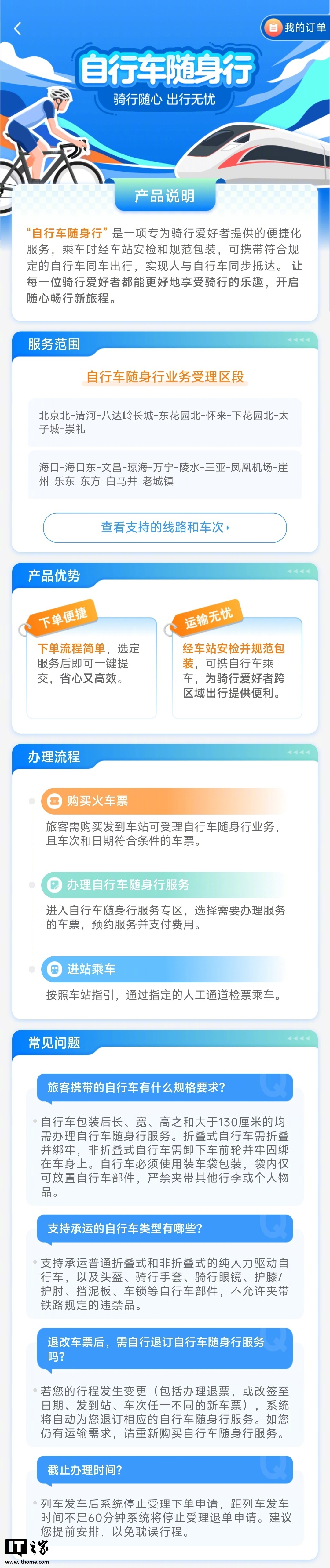
The service bookends a long-standing friction. Chinese high-speed rail has never allowed unboxed bicycles, so the country's growing tribe of weekend cyclists has historically shipped bikes by freight or logistics and waited a day or more for them to arrive. Under the pilot, a bike that passes security checks and is packed to standard travels with its owner; stations on the pilot routes provide disassembly tools and bike bags free of charge, and a booking canceled up to an hour before departure is refunded in full.
The two pilot routes were not chosen at random. One is the Beijing–Zhangjiakou high-speed line — the corridor that carries skiers to Chongli's slopes in winter and, in autumn, delivers riders within pedaling distance of the Badaling Great Wall. The other is the Hainan island loop, the country's classic long-distance cycling route, where a ring of beaches, coconut groves and resort towns sits an easy ride from almost every station on the line. In both cases the train solves the boring half of the trip and the bicycle keeps the scenic half. Only designated trains carry the badge: travelers must buy a ticket first, then reserve bike space on a marked service.
The timing rides a wider wave. With the National Day holiday week approaching, the trending topic the pilot surfaced under translates as "niche but very cheap ways to travel" — a genre of crowd-avoidance strategy that has become its own folk literature. The genre's founding document, a post that drew nearly 3,000 likes, recommends picking a random small lake on the map and going there; in the comments under it, travelers trade detection methods. "My usual trick is to check hotel prices — if a hotel in a place suddenly doubles for the holiday, it's definitely crowded, and I won't go," one commenter wrote.
An 88-yuan bike ticket is part of the same instinct: the cheapest way to see China this holiday may involve a train that carries you and a bicycle that carries you the rest of the way. If the pilot spreads beyond two routes, it removes the last excuse separating China's cyclists from its rail map.