Eighth on the Poster, First in the Argument: Hu Ge's Billing Ignites China's Name-Order Wars
Hu Ge appears eighth in the credits of a new ensemble drama, and Chinese social media is debating fanwei — the billing-order obsessions that turn poster line-ups into contractual battles. The production's solution: order the names by surname stroke count.
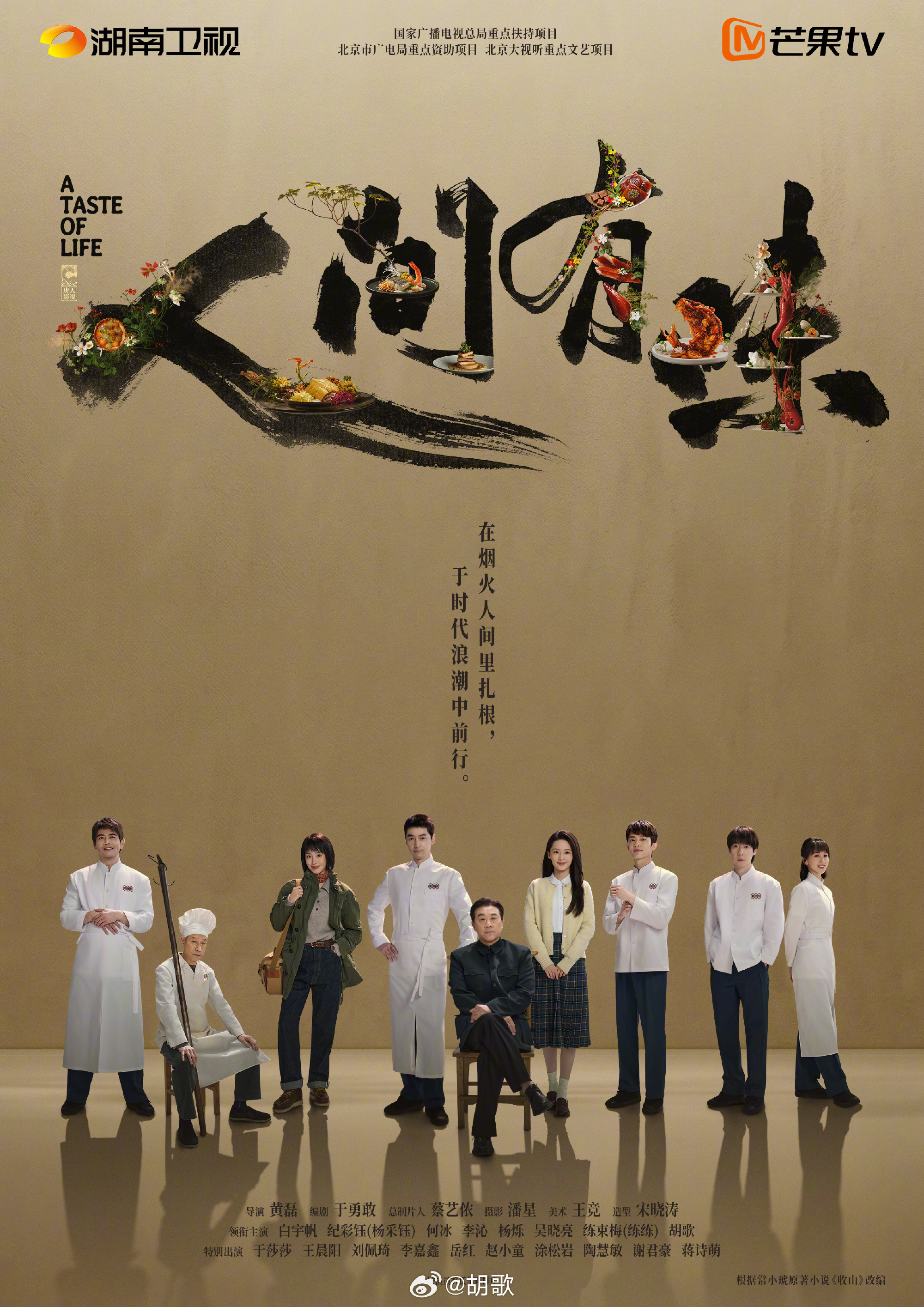
In the fandom economy of Chinese television, the order of names on a poster is not a design choice — it is a ranking of power, negotiated by agents and defended by armies of fans. This week the industry's strange arithmetic produced one of its more instructive moments: Hu Ge, one of the most decorated actors of his generation, appeared eighth in the billing of a new ensemble drama, and the internet promptly asked what it means.
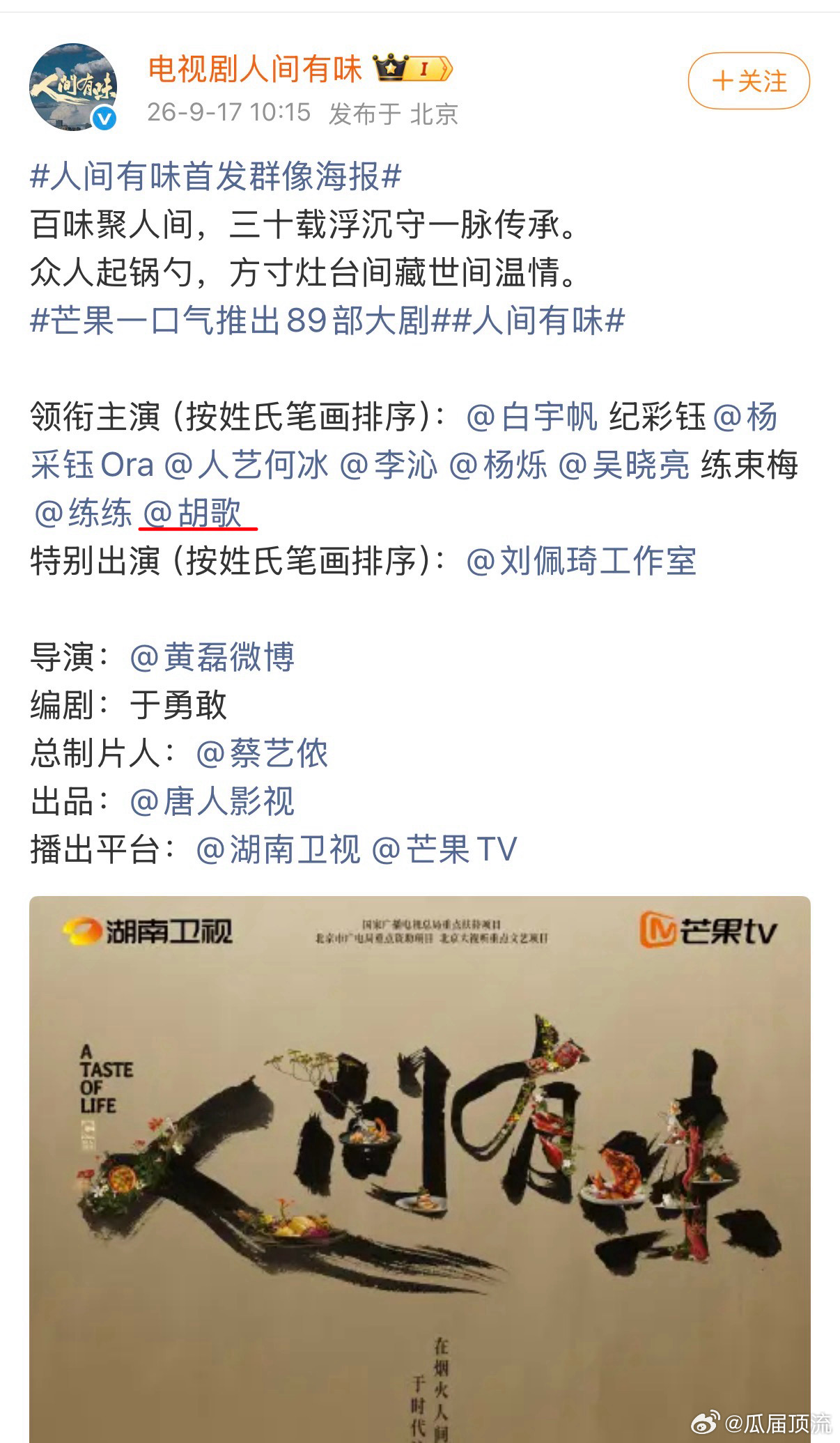
The drama is "A Taste of Life" (人间有味), a period series from Hunan TV and Mango TV announced this week as part of a slate of 89 upcoming dramas. Hu Ge stars as a chef, and his own post about the show — a group poster of eight cast members, some in chef's whites, against a beige studio backdrop — collected more than 16,000 likes without a word about billing. In the poster's credit block, though, his name comes eighth — last of the eight credited leads, behind Bai Yufan, Yang Caiyu, He Bing, Li Qin and the rest of the ensemble. The hashtag "Hu Ge got billed eighth" (胡歌被排到了第八位) began trending within hours.
The production had anticipated the fight. Its cast announcement states that names are listed by the stroke count of each actor's surname — one of the standard diplomatic formulas Chinese productions use when several stars share a poster and nobody will concede first position. Ensemble dramas that span a protagonist's lifetime, as this one does, face the problem in its purest form: everyone is playing the same man at a different age, so whose name leads?
What made the trend interesting was the direction of the argument. The loudest voices were not Hu Ge's fans demanding a higher slot, but onlookers praising his indifference. "An actor with real ability doesn't care whether he's billed eighth in the promotion," one widely liked comment ran. "Nobody watches billing — what they watch is the acting. Some people fight tooth and nail to be the sole male lead, and the only thing it achieves is to make them a joke." The barb was aimed at unnamed rivals, but the sentiment — that billing obsession has detached from any viewer reality — was broadly shared.
The episode is a window on 番位 (fanwei), the billing-order convention China borrowed from Japanese talent agencies in the 2010s, under which first position carries contractual weight and fans treat a demotion as an insult to be avenged — review-bombing dramas, chasing brands off campaigns, fighting other fandoms over a fraction of a second of screen time. The site has written before about how little screen time it can take to set this machinery off. Productions now fight back with technicalities: dual leads, separate posters, billing "in order of appearance" — or stroke counts.
Hu Ge's own position in the industry makes the eighth slot easier to laugh about. He has spent two decades moving from idol dramas to art-house film, and his caption this week — coming "from the smoke of the kitchen" — read like a man selling the show, not the hierarchy. Whether a lesser star could afford the same serenity is the open question the hashtag left hanging.