Huawei's Next Flagship Is Certified as a 5G Phone — Openly, This Time
China's telecom filing database lists Huawei's unannounced Mate 90 series as a '5G digital mobile phone' — the first time since US sanctions gutted the company's chip supply that its own filing says the quiet part out loud. One well-followed engineer argues the label change marks the end of a deliberate gray zone.
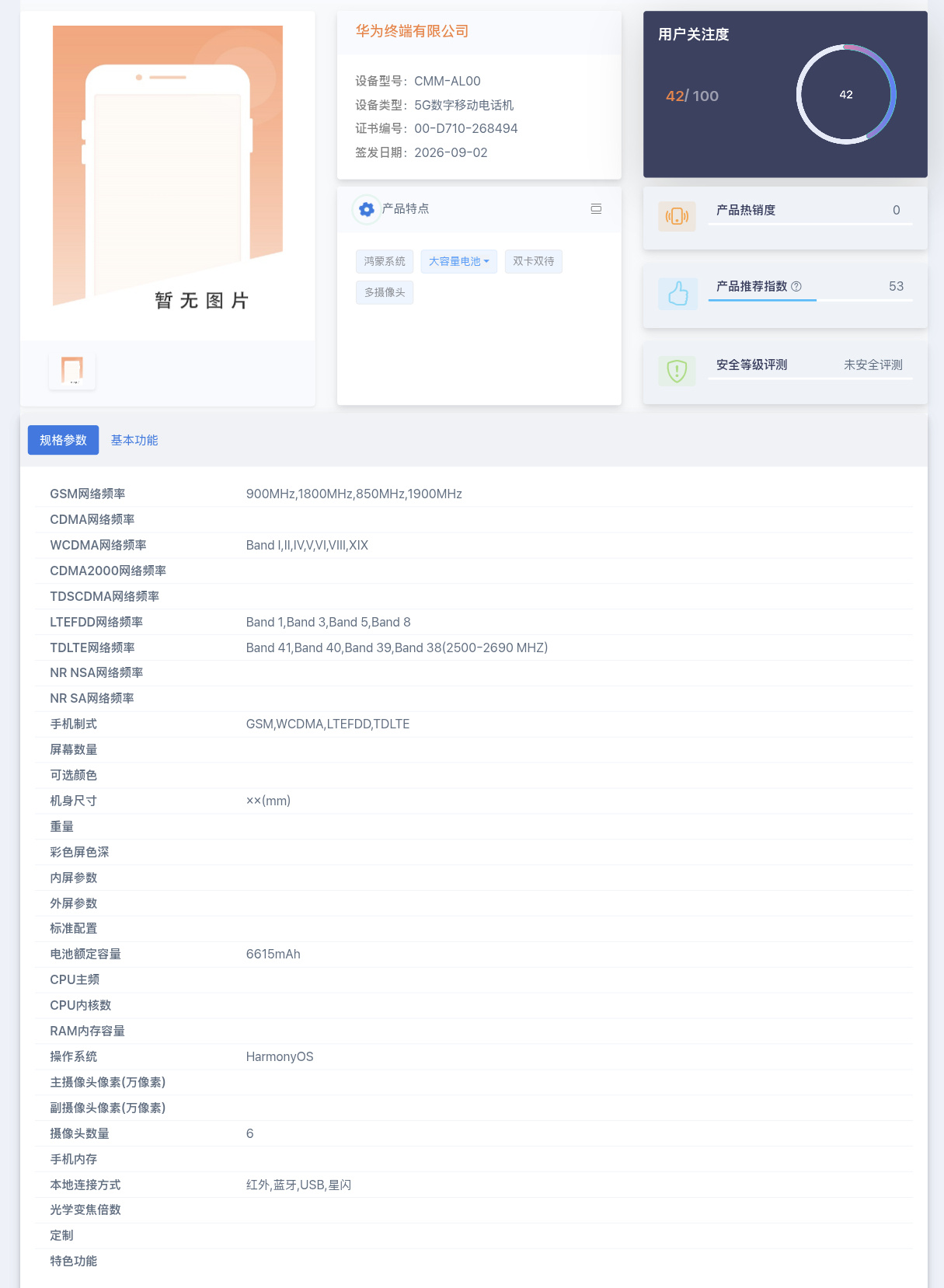
Huawei has not launched its next flagship phone yet, but the Chinese government's certification database has already said something about it that the company spent years avoiding: the filing for two unannounced devices, models CMM-AL00 and CMM-AL10, describes them plainly as "5G digital mobile phones". The listings went live on September 2, and within a day the leak was a top thread on Zhihu, where users read it as the final act of one of the sanctions era's stranger rituals.
The backstory matters. When Washington cut Huawei off from advanced chips and Google software in 2019–20, its phones lost genuine 5G capability, and the company's filings stopped claiming it. Then in 2023 the Mate 60 arrived with a domestically manufactured Kirin chip that delivered 5G-class speeds — while its regulatory paperwork conspicuously still said nothing about 5G. Reviewers ran speed tests; the company stayed silent. The ambiguity was widely read as insulation: an official "5G" label would have documented, in a government filing, exactly which foreign suppliers made the network stack possible, exposing any still-American components to US legal reach. Huawei sold the Mate 60 as, officially, not a 5G phone at all.
The new filings drop the pretense. The leaker Digital Chat Station (数码闲聊站), whose certification-database screenshots circulated widely, reads the devices as the Mate 90 Pro series: HarmonyOS, six cameras, and a 6,615-mAh battery — enormous by global standards, and a sign of where Chinese flagships are heading. But the line everyone screenshotting cared about was the device type.
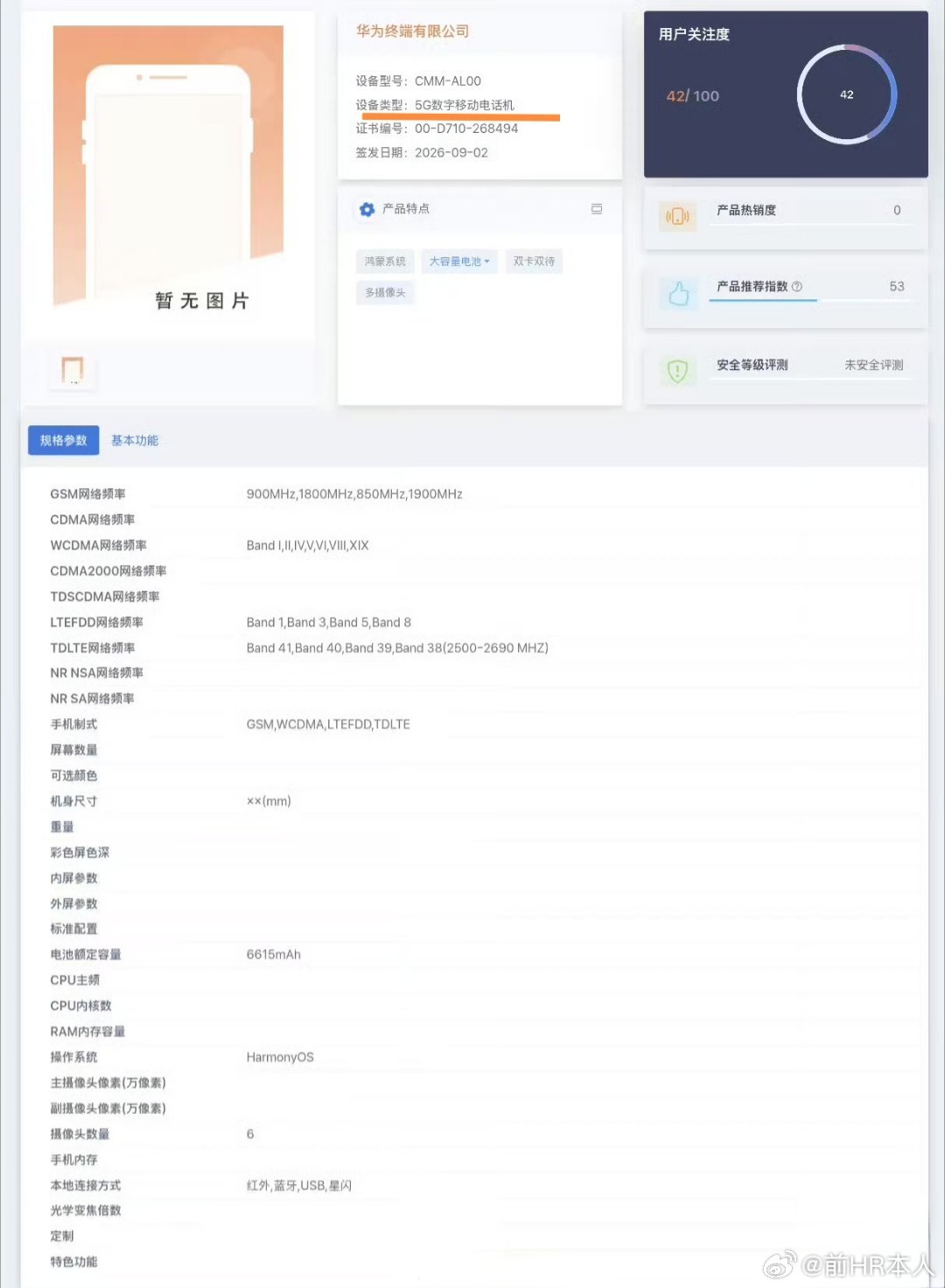
The timing lands in a market Huawei is already squeezing: this week it raised prices across its phone range alongside Xiaomi and Honor, as memory and chip costs climb — meaning the Mate 90 will arrive costing more, with an openly declared capability its predecessor could only demonstrate.
For an international reader the filing is a small line in a database; in Shenzhen it reads as a victory lap. Three years after US officials described Huawei's chip ambitions as a dead end, the company's next flagship will advertise on a government form the very capability the sanctions were designed to remove. Whether the "5G" line means a fully domestic network stack, or merely one Washington can no longer object to, is the question analysts will be arguing about until the phones take the stage — expected within the month, in the same September window as Xiaomi's own launch event.