Pang Dong Lai, China's Cult Supermarket, Posts 19.5 Billion Yuan in Eight Months
Yu Donglai, founder of the supermarket chain Pang Dong Lai, published his company's sales dashboard on Weibo: 19.5 billion yuan in eight months, up 27 percent. In a cautious consumer economy, China is reading it as a verdict on how business could be done.
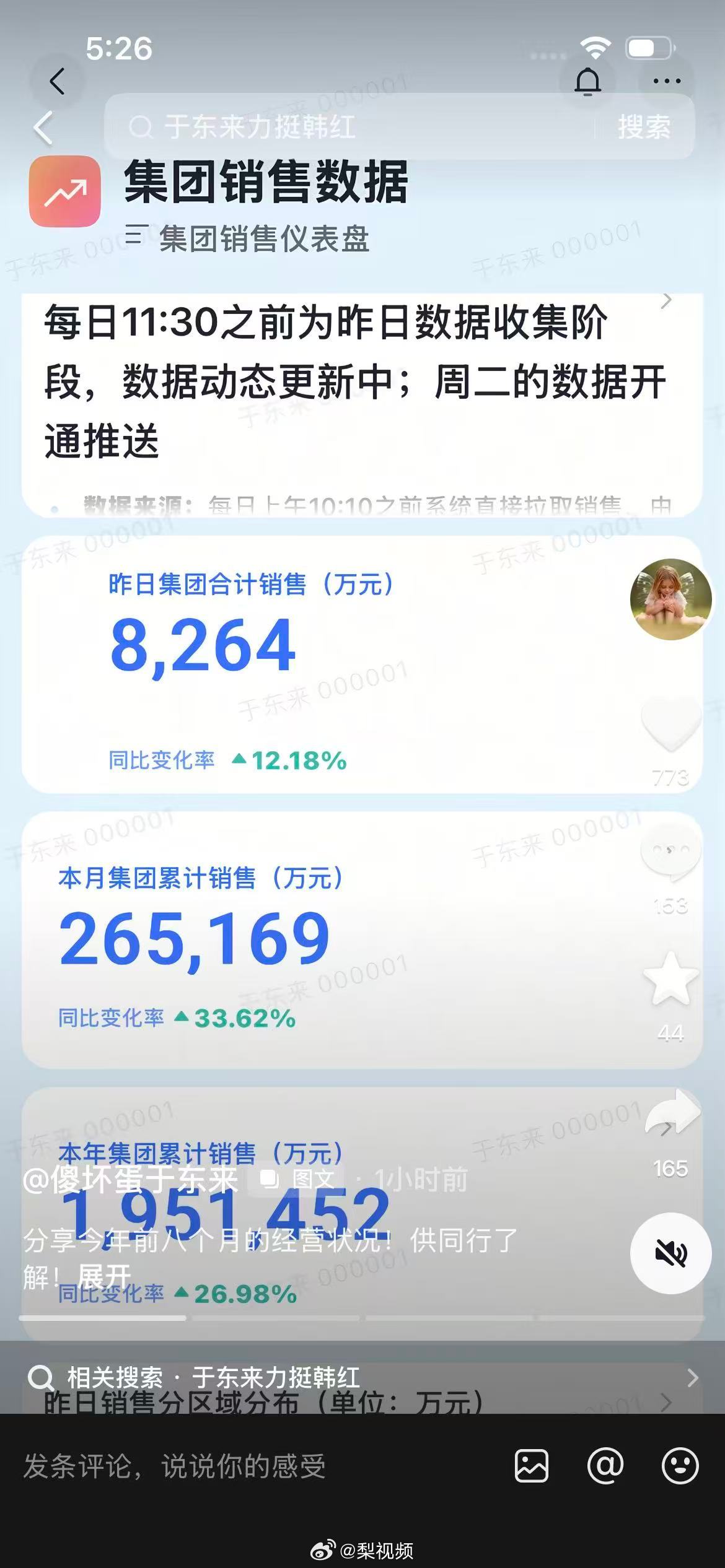
Most Chinese retailers guard their sales figures like state secrets. Yu Donglai, the founder of the supermarket chain Pang Dong Lai, posts his on Weibo. On Monday he shared a photograph of the company's dashboard: 19.5 billion yuan (about $2.7 billion) in group sales for the first eight months of 2026, up 27 percent from a year earlier, with August alone up nearly 34 percent (Pear Video). Within hours the numbers were on Baidu's trending board.
The growth is striking precisely because the rest of the picture is so grey. China's consumers are spending, but cautiously — trading down, delaying purchases, favoring the cheap over the beloved. Juewei, the country's biggest braised-snack chain, has just reported its third straight first-half revenue decline (a slide we covered here). Against that backdrop, a supermarket union in a prefecture-level city in Henan growing at 27 percent looks less like retail and more like a referendum.
Pang Dong Lai runs roughly a dozen stores, nearly all in Xuchang and Xinxiang, cities outsiders would struggle to place on a map. Its fame rests on two commitments that sound almost theatrical in China's grocery sector: radical generosity to customers — unconditional returns, honest labels, staff paid to notice things — and radical profit-sharing with employees. Starting wages at the chain exceed those of many office jobs in the same cities, and stores close on days the company simply declares should be days off. Shoppers travel across provinces to tour the stores; tours of a supermarket are a category of trip that barely existed before.
The Weibo discussion under Yu's post is less about the number than the question it implies. "The performance is good, the wages are high, the products are decent — the only flaw is that it can't become a national chain," one user wrote. "Why is it that no other supermarket is willing to learn from this model?" (read the thread). Others answer the question themselves: copying Pang Dong Lai means cutting the owner's margin to pay for someone else's bonus. "Why does no one criticize Yu Donglai for making money?" one commentator asked. "Because he genuinely shares it with his staff. In Chinese business today that is scarce enough to look utopian" (a post drawing wide agreement).
There has, in fact, been learning — on the industry's side. Over the past two years Pang Dong Lai's team has been drafted in to "adjust" stores of struggling national chains, most prominently the supermarket giant Yonghui, raising wages and pruning suppliers in flagship locations. Those makeovers generate headlines and short-term queues, but the deeper experiment — whether generosity survives scale — is still running. Yu himself keeps the ambition deliberately small: the chain has declined to expand beyond Henan, and he has framed the company as a demonstration, not a franchise template.
Monday's dashboard is, in that sense, the point of the exercise. A boss who publishes his own numbers is making an argument: that the model works, that the margins can fund the wages, that frugal customers will still spend when they trust the seller. The next test is whether 27 percent growth in Xuchang can ever be made to mean something in the rest of the country.