Why China's Duck-Neck King Can No Longer Sell Duck Necks
Juewei, China's biggest braised-snack chain, has reported its third straight first-half revenue decline — the clearest sign yet that a frugality habit is reshaping what Chinese consumers buy, from 760-yuan herbal pills down to 9-yuan duck heads.
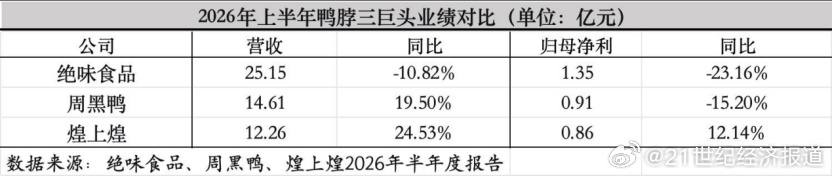
Juewei Food built a national habit out of duck necks — vacuum-packed, chili-oil slicked, sold by weight from red storefronts on pedestrian streets everywhere. This week the company known on Weibo as the "duck-neck king" (鸭脖一哥) filed a half-year report that read like an omen: revenue of 2.52 billion yuan for the first six months of 2026, down 10.8 percent year on year and the third consecutive first-half decline, with net profit down 23 percent and the steepest fall of all — 40 percent — in profit stripped of one-off gains. Operating cash flow swung from a 484-million-yuan surplus a year ago to a 182-million-yuan deficit, as the 21st Century Business Herald laid out in a post that drew more than 2,600 likes.
"Two or three small boxes and you're past 100 yuan"
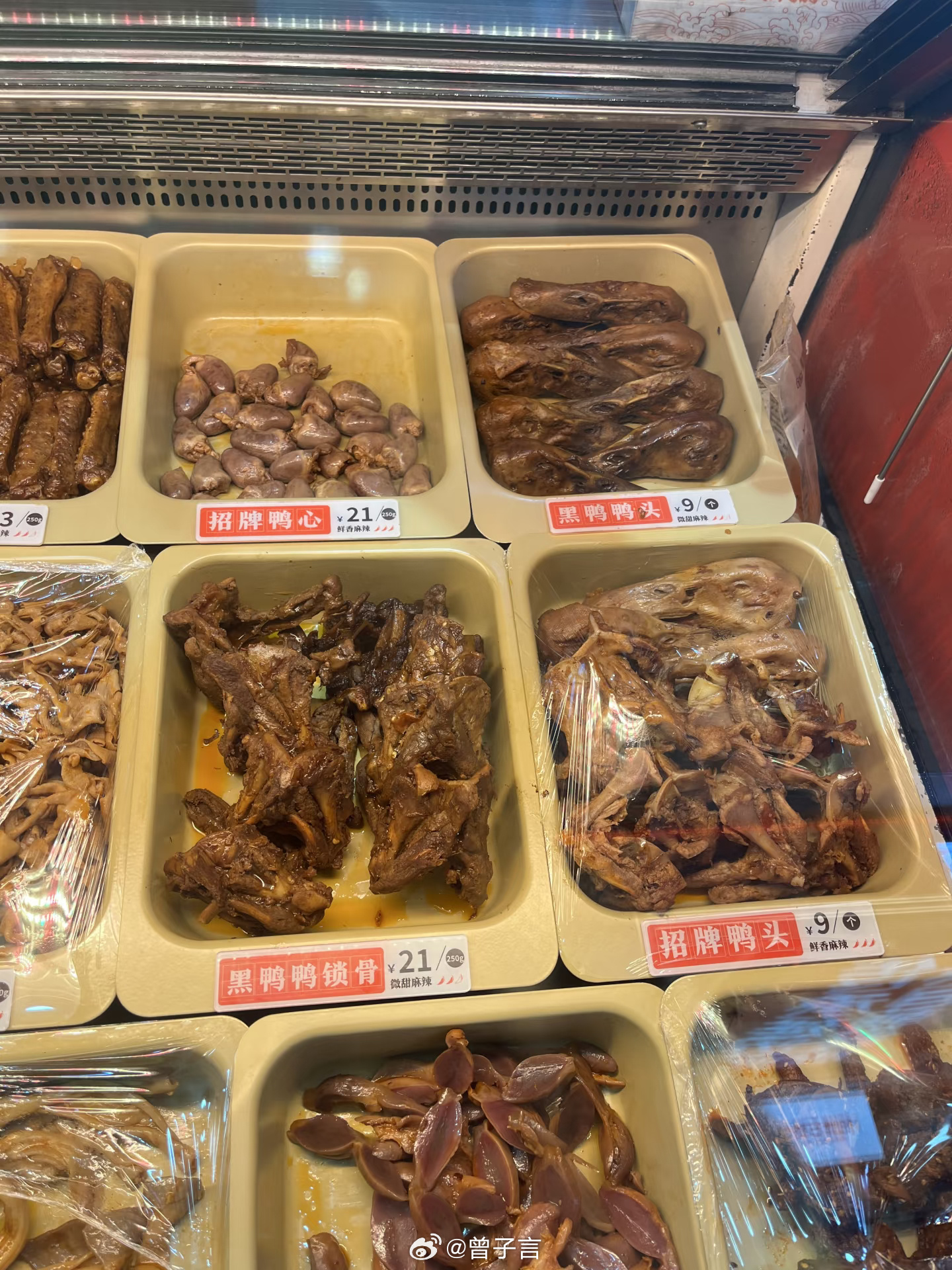
When the company's own hashtag asked why Juewei no longer sells, the replies converged on a single word. "It's mostly the price — two or three small boxes and you're past a hundred yuan," one user wrote, alongside photos of a refrigerated case with duck hearts priced at 21 yuan per 500 grams. "And braised-snack shops keep opening on every corner. It doesn't fit the health-minded mood, either." What began as cheap street food now lands, at franchised counters, as an impulse purchase that adds up faster than customers expect — just as rivals multiply and the snack itself sits awkwardly with the wellness habits of the middle-class customers the category chased for years.
The same squeeze is visible across the snack economy. Mixue Bingcheng, the budget tea chain that outgrew every competitor on volume, reported revenue up 2.3 percent at 15.2 billion yuan for the half-year, yet net profit down 14.7 percent — more and more stores, less and less money, as one summary put it. At the premium end the retreat is outright: Yuhe, an upscale bakery that once drew hour-long queues, closed its Beijing Daxing store on Monday, with outlets in Guangzhou, Shanghai, Shenzhen and Chongqing shutting one after another — the "golden age" of expensive bread, as the write-up had it, lasted two years.
Once you decide to start saving
The mood behind the numbers has a meme of its own. "Once you decide to start saving money (人一旦决定开始省钱): the phone plan goes, the body wash goes, the tissues go, the body lotion goes, the instant noodles go — and then you run into a few things that perfectly suit your taste, plus shopping-festival discounts," a post summing the genre up in one line put it, liked more than 1,800 times. The joke lands because it describes a deliberate habit rather than hardship: people are not starving, they are subtracting the small premiums — the 100-yuan snack box, the 40-yuan loaf, the branded everything — that the boom years priced in. It is the same recalibration we covered when Chinese men began abandoning leather shoes, and it reaches to the top of the market: Pien Tze Huang, the traditional remedy whose single pills famously traded at 760 yuan, is reported to be losing buyers too.
The starkest number in Juewei's report is not the sales slide but the cash flow: a company that spent the boom years opening stores took in 182 million yuan less than it spent running them in the first half. From 9-yuan duck heads to 760-yuan pills, no price point is immune — and the open question is which brands rebuild around the way people now spend, and which keep waiting for the old appetite to return.