Trump Expresses Optimism on US-China Relations Amid Trade and Climate Talks
In a recent video address at the World Economic Forum 2025 annual meeting, former US President Donald Trump expressed his optimism about the current state of US-China relations. Trump stated that he has been in communication with China's national leaders and believes that the relationship between the two countries is "extremely good." This statement comes amidst ongoing discussions about trade, tariffs, and global economic issues.
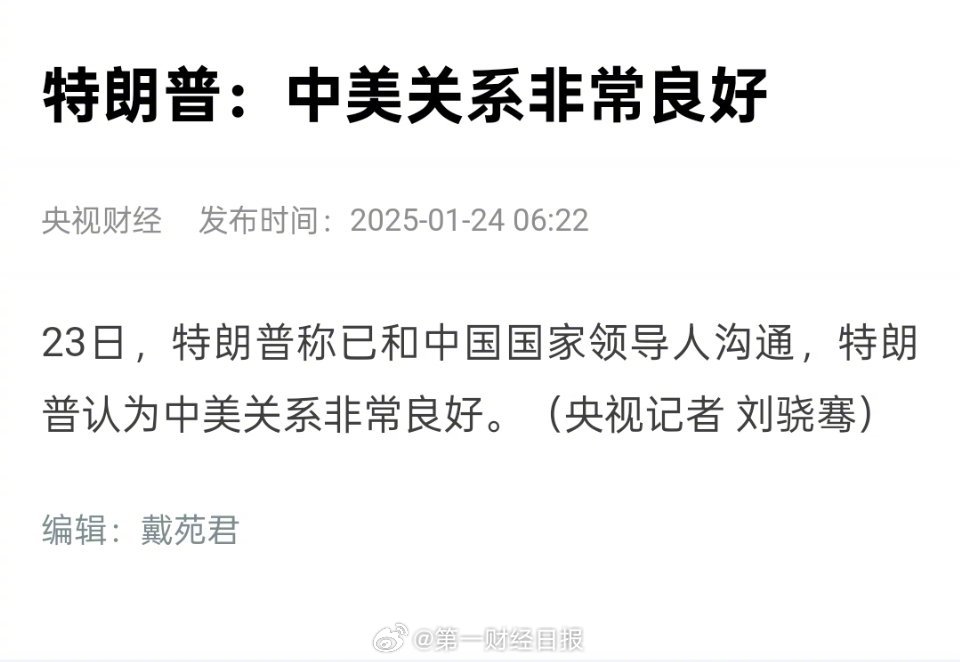
Trump's remarks suggest a positive outlook on the bilateral relationship, which has experienced its share of tensions in recent years. The former president's comments may be seen as an attempt to reassure investors and businesses about the stability of US-China relations, which are crucial for global trade and economic growth.
It is worth noting that Trump's assessment of US-China relations may not be universally shared, and some experts may view the relationship as more complex and nuanced. Nonetheless, Trump's statement reflects his confidence in the ability of the two nations to maintain a positive and cooperative relationship, which could have significant implications for global trade and economic policies.
The United States' withdrawal from the Paris Agreement has significant implications for the country's role in global climate governance. Despite President Trump's decision to exit the agreement, former New York City Mayor Michael Bloomberg has pledged to help the US meet its financial obligations under the accord. This move underscores the ongoing debate about the US commitment to addressing climate change.
By withdrawing from the Paris Agreement, the US is relinquishing its seat at the table in international climate negotiations, potentially ceding influence to other global powers like China. The agreement, which aims to mitigate global warming by limiting greenhouse gas emissions, has been ratified by nearly 200 countries. The US withdrawal may embolden other nations to follow suit, undermining the global effort to combat climate change.
Bloomberg's offer to support the US' financial obligations under the Paris Agreement is a significant development, as it ensures that the country can continue to participate in the United Nations Framework Convention on Climate Change (UNFCCC) and report its carbon emissions. This move is seen as a way to maintain some level of US engagement on climate issues, even as the federal government formally exits the agreement. In a surprise move, Bloomberg has announced that he will help the United States meet its financial obligations under the Paris Agreement, despite President Trump's decision to withdraw from the accord. Bloomberg, the founder of Bloomberg LP, the parent company of Bloomberg News, has pledged to donate funds to support the operations of the United Nations Framework Convention on Climate Change, which oversees the Paris Agreement.
However, the long-term consequences of the US withdrawal from the Paris Agreement remain unclear. The decision may lead to a loss of economic opportunities for American businesses in the clean energy sector, as other countries invest heavily in renewable energy and green technologies. Moreover, the withdrawal may damage the US' reputation as a global leader on environmental issues, potentially eroding trust among international partners and undermining the country's ability to shape global climate policy.
As the US navigates its exit from the Paris Agreement, it is likely that domestic actors, including states, cities, and private sector leaders like Bloomberg, will continue to play a crucial role in shaping the country's climate policy. While the federal government's withdrawal from the agreement is a significant setback, it is unlikely to mark the end of US engagement on climate issues. Instead, it may prompt a new wave of climate activism and innovation at the subnational level, as American cities, states, and businesses seek to maintain their leadership role in the global effort to address climate change.
In a recent address at the World Economic Forum 2025, President Trump emphasized the importance of American companies manufacturing their products within the United States. He warned that failure to do so would result in substantial tariffs, amounting to "tens of billions or even hundreds of billions of dollars." This stance is part of Trump's broader effort to incentivize domestic production and reduce the country's trade deficits.
Trump's proposal includes a significant reduction in corporate taxes for companies that choose to manufacture their products in the United States, down to 15%. This move is designed to make the U.S. a more attractive location for businesses, potentially boosting the economy and creating jobs. However, the implications of such a policy are complex and could have far-reaching effects on global trade dynamics.
The president's criticisms were not limited to companies that outsource production. He also targeted the European Union, accusing it of imposing excessively high tariffs and stringent regulations that contribute to significant trade imbalances with the U.S. Trump vowed to take corrective measures to address these disparities, signaling a potential escalation in trade tensions between the U.S. and EU.
Meanwhile, the announcement comes as the U.S. is navigating its relationship with China, which Trump described as "extremely good" following his communication with Chinese leaders. This positive assessment of U.S.-China relations contrasts with the trade tensions and disputes that have characterized their interaction in recent years. As the global economic landscape continues to evolve, the interplay between Trump's trade policies, including tariffs and tax incentives, and the responses of other nations will be crucial in shaping the future of international trade and economic cooperation.