Bought Back From France for 65 Million Yuan: Two Lost Volumes of China's Largest Encyclopedia Come Home
Two Ming-era volumes of the Yongle Dadian, the 15th-century encyclopedia of 11,095 volumes, surfaced at a French auction in 2020 and were bought back for 65 million yuan by a Zhejiang collector; they are now formally housed at the Hangzhou National Archives of Publications and Culture.
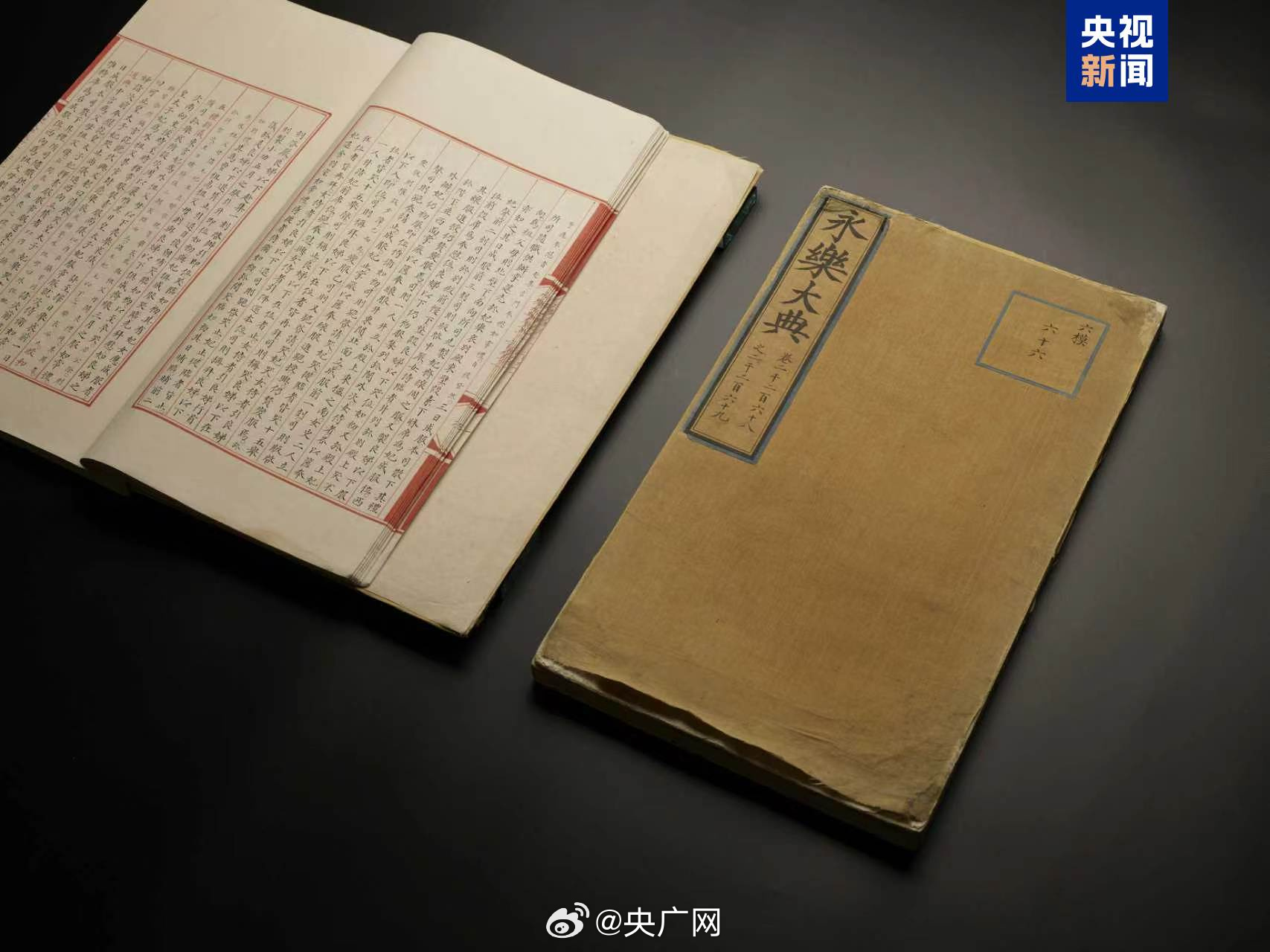
Two volumes of the Yongle Dadian — the largest encyclopedia the world had seen when it was completed in 1408 — have been formally placed in the Hangzhou National Archives of Publications and Culture, ending a journey that began when they surfaced at a small French auction house in 2020.
The surviving volumes of the Yongle Dadian are scattered across the world's libraries; of the original 11,095 volumes only a scattered handful survive, most outside China. The two now in Hangzhou are the "Hu" volume (chapters 2268-2269) and the "Sang" volume (chapters 7391-7392), Ming dynasty court copies from the Jiajing era. A Zhejiang private collector worked with experts in ancient books to bid from abroad, paying the equivalent of 65 million yuan, and after coordination among several government departments the volumes reached Shanghai in early 2022 — the story of the repatriation was revived on Baidu's trending board this week, where it carried a heat score above 7.8 million.
At the donation ceremony in June, Jin Liang, head of the Zhejiang Classical Documents Research Association, recounted for China Blue News how the deal came together over transpacific phone calls with the small French auction house.
The encyclopedia itself is the reason the sale mattered. Commissioned by the Yongle Emperor and finished five years later, it ran to 22,877 chapters in 11,095 volumes, about 450 million Chinese characters, assembled before Gutenberg set his first European page; China's state media introduce it as "the largest encyclopedia in history". Almost the entire run was lost to wars, fires and looting, with the Jiajing-era transcripts the only survivors. The tally of what was taken, and by whom, remains a live historical argument, which is why every volume that surfaces at auction abroad produces a scramble to bring it home.
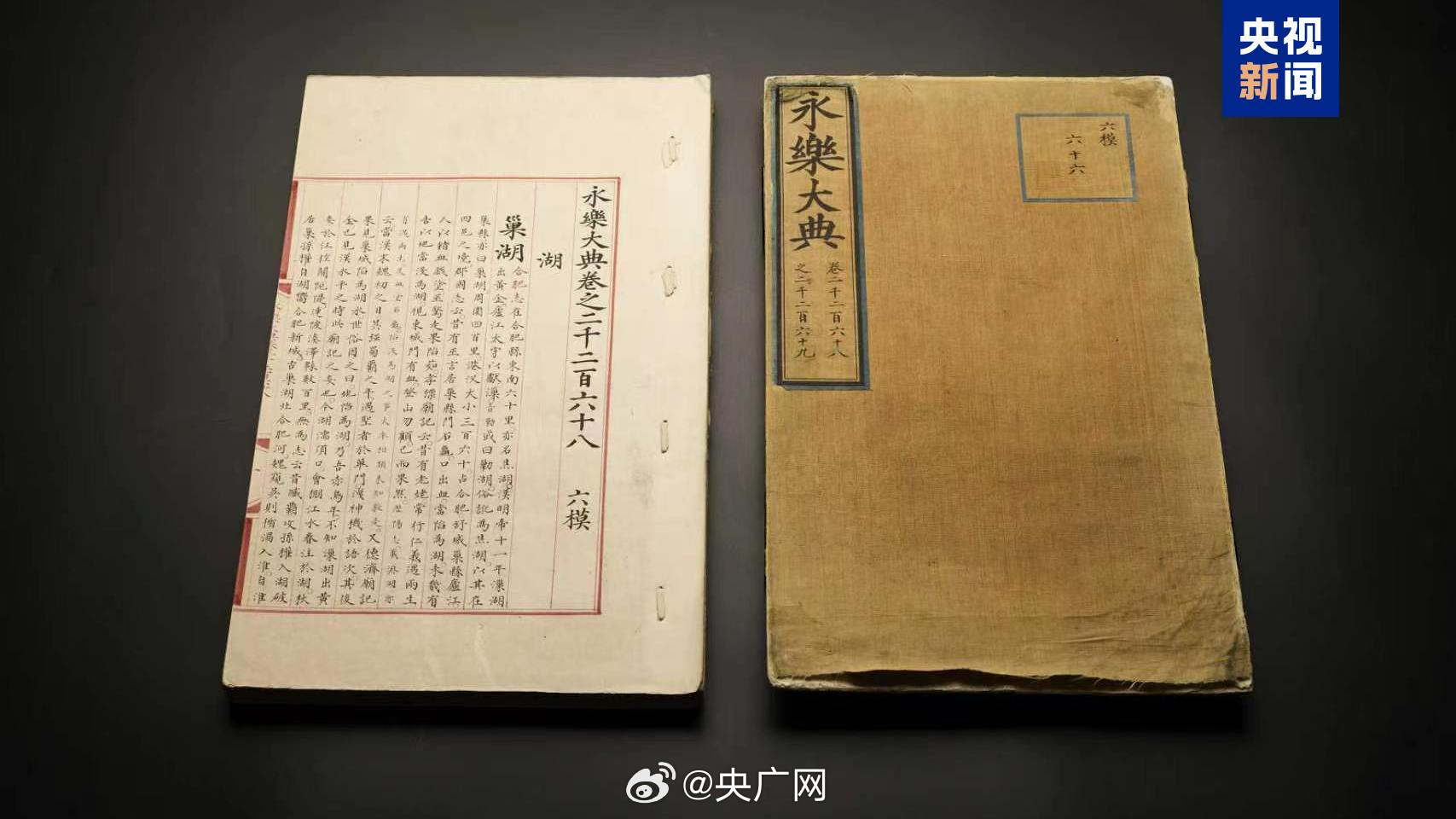
The revival of the story this week caught a particular mood. Baidu's board carried it alongside a commentary on "cultural dialogue across time and space", and readers filled comment sections with the observation that a private buyer's cheque — not a state museum's — had done the retrieving, a pattern that has become common enough in Chinese antiquities repatriation to have its own debate about the state's role.
The volumes are held in Hangzhou's national version archive, the repository built to house China's most important publications and manuscripts, and were shown in public at the June ceremony. The archive has not announced when they will go on regular display.