A Spanish Investor's Frugality List Tops Chinese Social Media as Consumers Rethink What Is Worth Buying
A machine-translated thread about what is worth spending on shot up Weibo this weekend, giving shape to a debate the country is already having: the money has not disappeared, it has got picky.
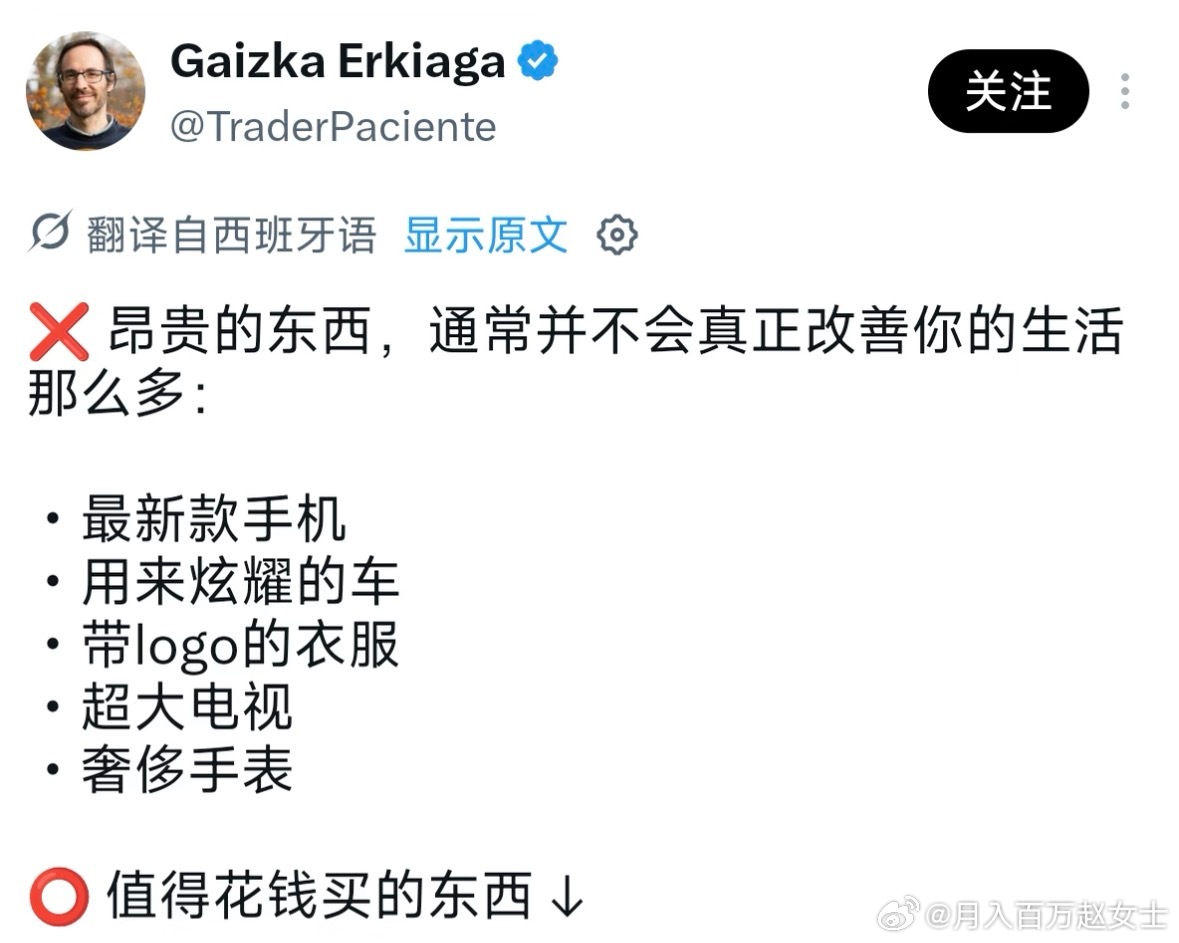
The list that ran up Chinese social media this weekend was not written by a Chinese economist. It began in Spanish, on X, as a thread by Gaizka Erkiaga, a verified finance poster: "Expensive things usually don't really improve your life that much" — the latest phone, a car bought to show off, logo clothes, a huge TV, a luxury watch — followed by the purchases that do. A good mattress and pillow, since you spend a third of your life in bed; decent shoes; health care bought before it becomes urgent; the tools you use every day; anything that buys back your time; skills; a financial cushion. A Chinese account reposted the whole thread in machine translation under one line of its own — 现在的消费需求越来越清晰了, "consumption demand is getting clearer" — and the repost was liked more than 12,000 times, carrying the phrase onto Weibo's trending board.
The phrase is doing real work. Its two meanings surfaced immediately in the quote-posts underneath. One car-market blogger put the harder reading first: many Chinese are not choosing to spend better, they simply cannot spend — mortgage and car loans weigh, expectations of income are unstable, and the money that remains is guarded. The second reading is the one the hotword itself celebrates: after years, as he put it, of being harvested by concepts and anxieties, consumers have started asking whether they actually need a thing and whether it is worth the price — and no longer pay just because a brand says they should.
The retail numbers the blogger cited point the same way. In the first eight months of this year, services spending grew 4.9 per cent — faster than goods. Sales of smart glasses rose 1.2-fold; home ECG monitors rose 75 per cent. The money, the argument runs, has not vanished: it moved to things a household can actually feel — health, tools, experiences — and away from the visible stuff.
That shift is now legible across the consumer economy, and this site has charted parts of it before: for the first time, Chinese are buying more mooncakes to eat than to give, collapsing the gift economy that used to carry the festival. Even the weight-loss jab debate has joined in — we followed last year's semaglutide users through the rebound, and the current Baidu framing is that "a single injection punctures the myth of self-discipline," a device-led shortcut replacing the old moral story about willpower. On the discussion boards the divide is blunt: one side calls this 消费降级, downsizing forced by the property downturn and thinner pay packets; the other calls it an awakening, the end of paying for a logo.
The Spanish thread's last translated line was the one Chinese readers quoted most: true luxury is not always owning things others can see — sometimes it is sleeping well, walking without discomfort, having time to study, and not panicking when an unexpected bill arrives. For the brands that built their business on the visible purchase, that is the uncomfortable line in the data: the wallet has not closed, but it has started itemising.