A 99% Share on the Deed Was Not Enough: Chinese Court Reworks the Rules of Divorce Property
A typical case published by China's top court holds that the shares written on a marriage-certificate-linked deed are not the final word in a divorce: a man who gave his wife 99% of a 9.75-million-yuan home keeps the house but owes her 500,000 yuan. The ruling lands in the middle of China's argument over marriage, property and trust.
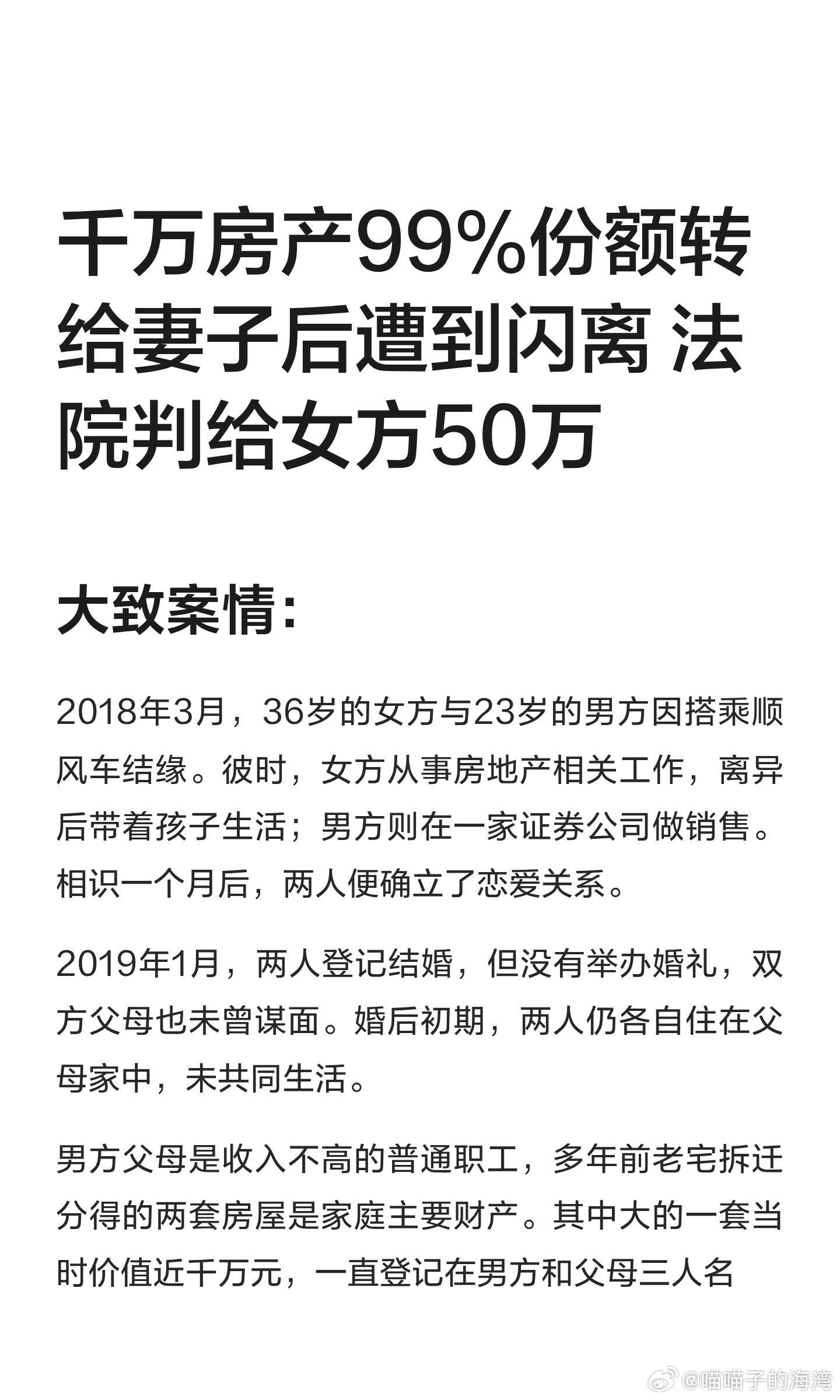
The arithmetic looked unanswerable. A couple met through a carpool app, dated for a month, married; during the marriage the husband registered 99% of a 9.75-million-yuan apartment in the wife's name; after about three and a half years of marriage — of which they spent only around six months actually living together, childless and with the two families barely on speaking terms — they divorced, and she sued for the flat on the strength of the deed. On September 1, the People's Court Case Database published what the courts decided, and it was not what the deed said. The case summary by Red Star News was read and shared widely.
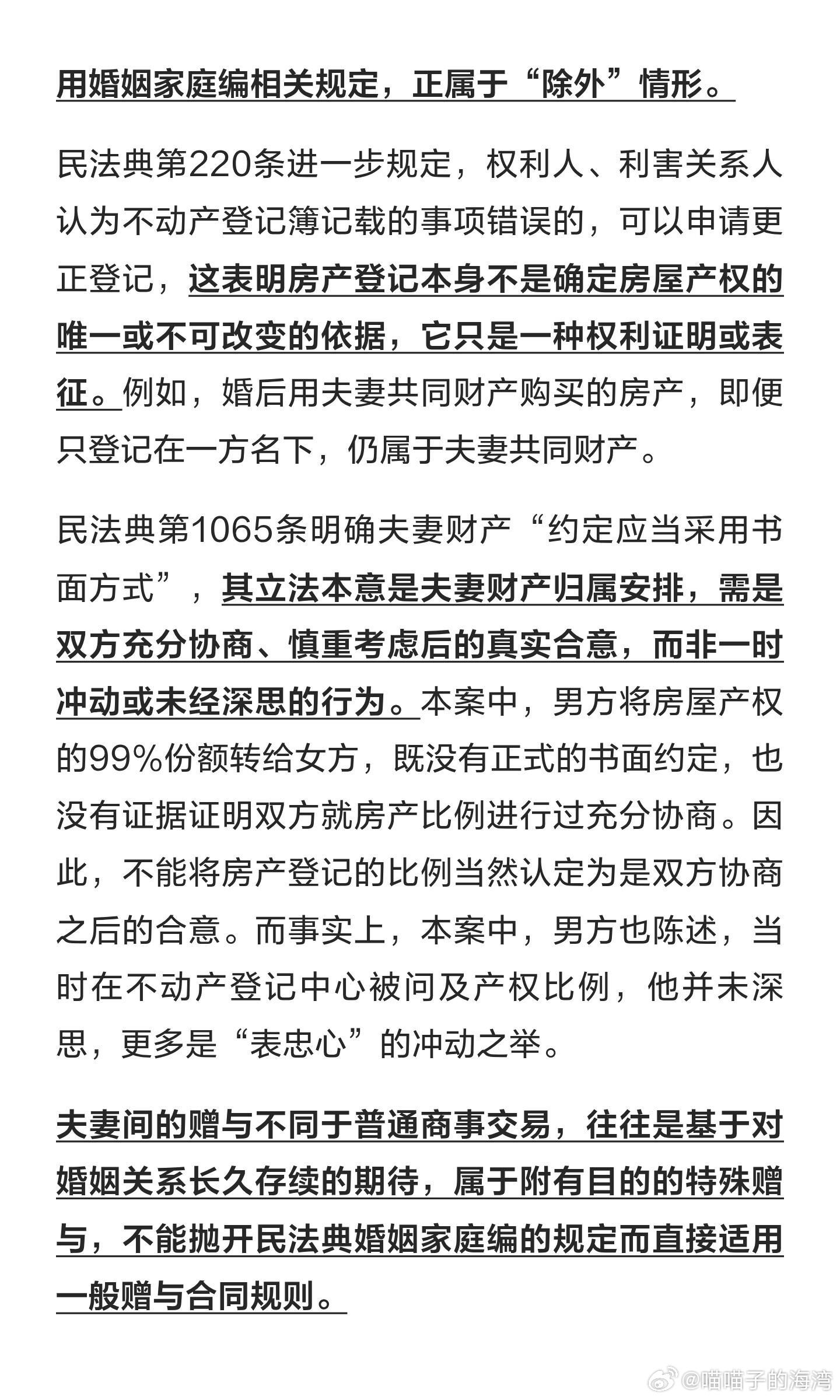
The house itself came from the husband's side: his parents' old home, demolished and replaced with this apartment, then given to him alone. The parents learned that 99% of it now belonged to a woman they had known for a year only after the fact — the son, the court found, had acted "without careful thought." When the marriage broke down and the wife invoked her registered share, two courts saw the same picture: a short marriage, no children, no misconduct by the giver, a gift that had signalled commitment rather than surrendered ownership. The apartment stays with the husband. The wife, whose reliance on the marriage included more than 100,000 yuan in transfer taxes, receives 500,000 yuan in compensation, a judgment the second-instance court let stand.
Courts arrived at this by a route an outside reader should recognise: substance over form. The registered share is "not the sole basis" for dividing marital property; what counts is where the asset came from, how long the marriage actually functioned, and what each side spent and forgone in reliance on it. The database frames the ruling as a warning that "adding a name" — the ritual by which Chinese couples quiet anxieties about who sacrifices what — does not guarantee a payout.
The case reached Weibo at the peak of an anxious season for marriage. Registrations have been sliding for years, and each new ruling about who keeps what is read as guidance for the next negotiation between families. Our earlier reporting followed a Hunan woman killed a month after filing for divorce, when the same question of trust in marriage was being argued with grief instead of property.
The calculation the courts performed — return the gift, but price the other side's reliance — struck commenters as workable. "At least it's fair to both of them," one wrote. The rules of the institution, not the paper that records it, now do the dividing.