Nepal Mudslide Toll Passes 900 Dead as Nearly 100 Chinese Nationals Remain Missing
Nepal's disaster authority now lists 903 dead and 4,247 missing from the August 26 glacier-collapse flood, and China's Foreign Ministry says nearly 100 Chinese citizens are among the unaccounted-for, as Chinese tunnel experts join the search.
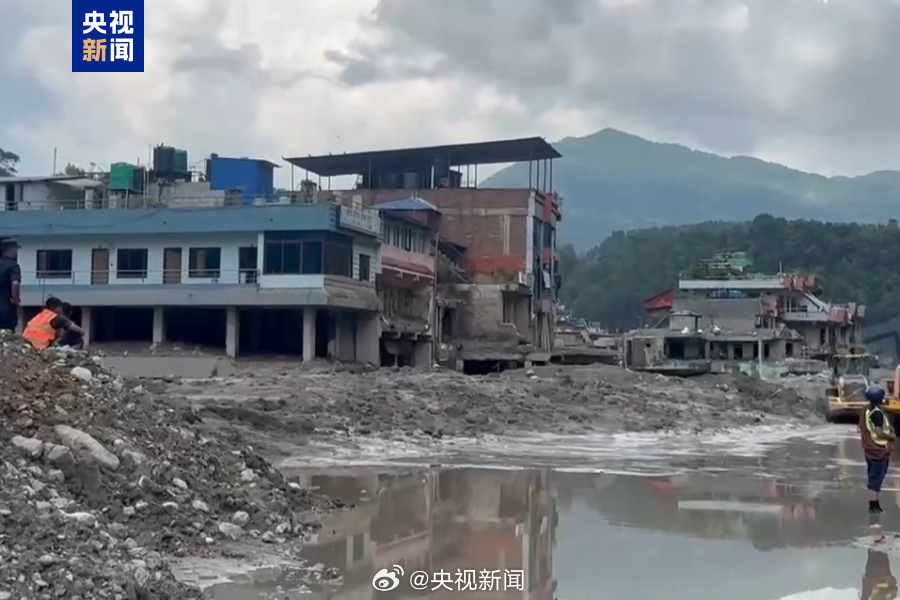
Five days after a glacier collapse sent a torrent of rock and water down a Himalayan river valley, the count of the dead keeps rising. Nepal's disaster-management authority said on Monday morning that 903 people are now confirmed dead and 4,247 remain missing from the August 26 mudslide — a toll that has nearly doubled in confirmation since the weekend, and a missing list that dwarfs it, as CCTV News reported in a post shared thousands of times. The disaster straddles the border: the same flood that devastated villages in Nepal's Rasuwa county buried China's Gyirong port, the main road crossing between the two countries, on the Tibetan side.
Nearly 100 Chinese nationals unaccounted for
The missing are no longer only Nepali. At the Foreign Ministry's daily briefing on Monday, spokesperson Guo Jiakun said nearly 100 Chinese citizens remain missing in the disaster zone on the Nepali side of the border, and that a team of Chinese tunnel experts has arrived to assist the search — specialists in the rock-and-water engineering that this valley's road and hydropower projects demand. Everyone the embassy has been able to reach had been moved to safety by Sunday noon, the ministry said; the search is now for those never contacted.
On the Chinese side of the border, more than 60 rescuers who trekked overland into the destroyed port have combed roughly 40,000 square meters twice, according to state media, and the site remains a scene of bent steel and deep mud, as our earlier coverage described. The confirmed dead there include border officers and workers at the crossing; a handful of the young officers first listed as missing have since been found alive, though others have not.
Ten seconds and four warnings
One story has gripped readers on both sides of the border. As a wall of mud and water bore down on a school in Rasuwa county, headmaster Dawa Di ordered 900 students up to higher ground — seconds before the flood hit. In the minutes before, he had received warnings from four separate people, one from a town directly upstream; he suspended classes on the strength of those messages alone. At least 69 schools across the district were destroyed or damaged.
His story sits beside a harder question now being argued out on Chinese platforms: Nepal's local government had issued an evacuation notice, but some residents assumed the rising river was an ordinary monsoon flood and stayed. A widely-followed Zhihu thread is asking what kind of warning system could close that gap — between a notice issued and understood. The headmaster's four phone calls were the difference for 900 children; for the 4,247 still missing, no such call came, or came too late. The search continues in a valley where the debris field itself remains unstable.