Unitree's Stock Has Halved Twelve Days After Its Blockbuster IPO
Unitree, China's first pure-play humanoid-robot stock, has fallen below half its first-day high of 1,100 yuan, erasing about 219 billion yuan in market value — the result of a float structure that let institutional investors cash out from day one.
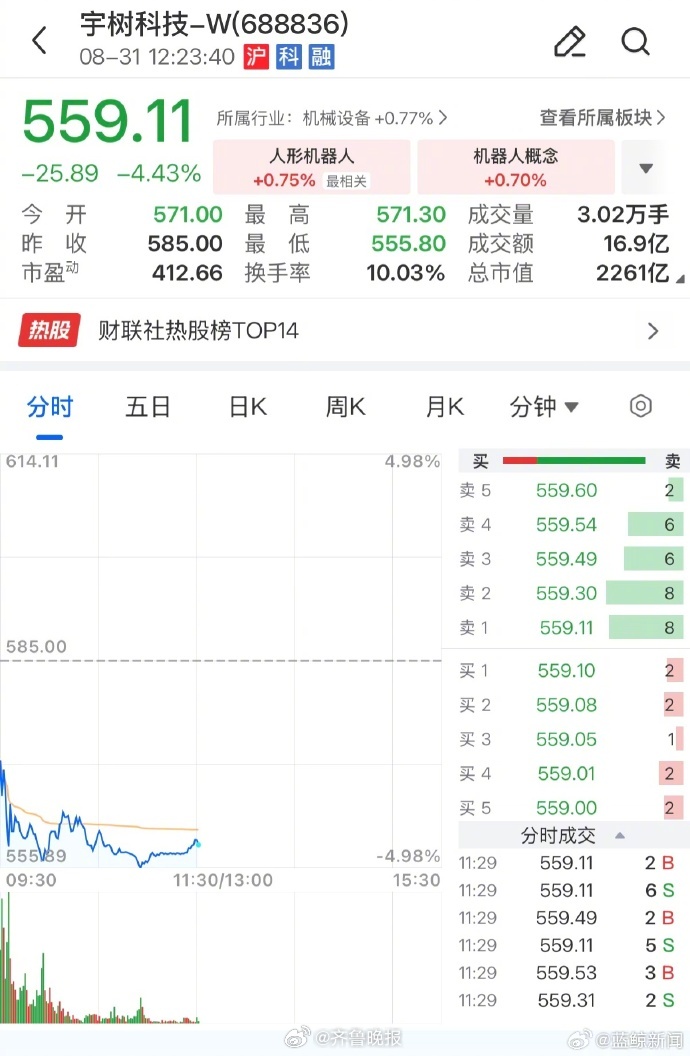
Twelve days after the most eagerly awaited Chinese stock listing of the year, the ticker tells a sobering story. Unitree Technology, the Hangzhou robotics firm celebrated as China's first pure-play humanoid-robot stock, fell as low as 555.8 yuan on Monday — less than half of the 1,100 yuan it touched on its August 19 debut. By midday the shares stood at 559.11 yuan, down 4.43 percent, valuing the company at 226.1 billion yuan and erasing roughly 219 billion yuan from its first-day peak, as the Qilu Evening News reported from the trading floor's screens.
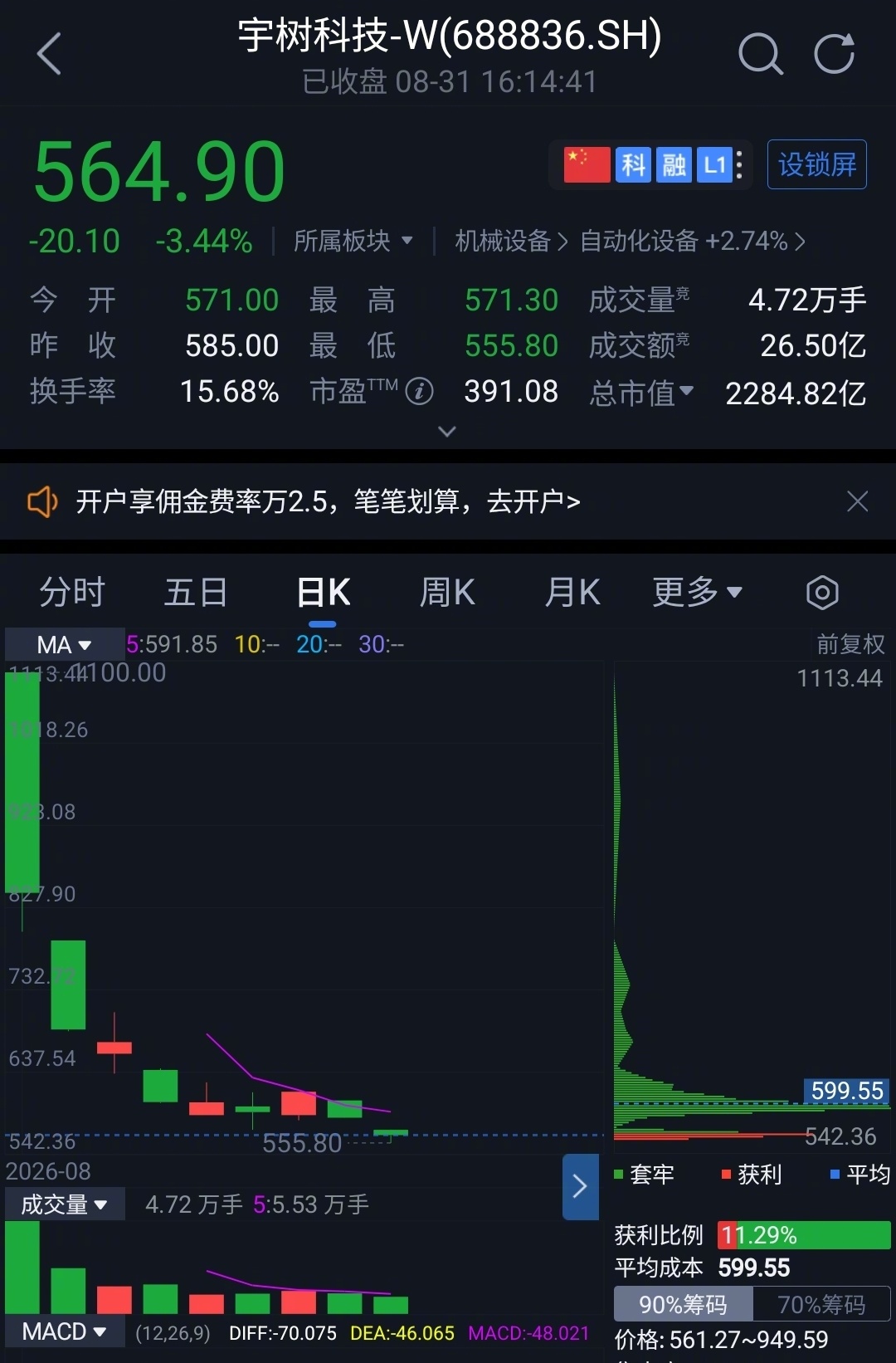
The first stock of the humanoid era
The listing was meant to be a milestone for an industry China has been promoting as its next great export. Unitree's robot dogs went viral years ago galloping through consumer demos; its humanoids have since run a 400-meter dash, opened their own "robot Olympics" and drawn cheers from Elon Musk — all before the IPO. When the stock opened at 1,100 yuan on day one, giving it a market value of 444.9 billion yuan, it instantly became the bellwether for China's whole humanoid sector, and the correction began almost immediately: within four trading days it had slipped behind the American challenger Figure AI in market value.
Monday's slide turned that correction into a verdict of sorts, and Baidu's trending board supplied the question everyone was asking: who sold at the top? The answer, according to analysts the list cited, was built into the float. Nearly 70 percent of Unitree's tradable shares were held by institutions allotted stock off-exchange before the listing, and about 90 percent of that stake was free to sell on day one — so much of the early "float" was smart money waiting for an exit. Their selling met a price that had anticipated years of humanoid adoption that has not yet happened; the company's revenue today rests mostly on robot dogs for researchers and hobbyists, not the mass humanoid market.
Even after the halving, Unitree is valued at more than 200 billion yuan — a number that prices in a future the factory floor has yet to deliver. The fall does not settle whether China's humanoid bet is real; the engineers in Hangzhou were not the ones trading at 1,100 yuan. What it does show is who was left holding the first version of that bet — and, with the market cap still above many established carmakers, how much of the story the stock market has already paid for in advance.