A 13-Day Break With No Make-Up Classes: Chinese Universities' Holiday Lists Go Viral
Screenshots ranking which Chinese universities get a 13-day continuous break around Mid-Autumn Festival and National Day — and which must pay the days back with make-up classes — have gone viral, reviving the annual argument over the 'tiaoxiu' system that borrows weekends to manufacture China's golden weeks.
Every late September, China's internet performs the same ritual: it compares holiday schedules, and somebody loses. This year's edition is a viral compilation titled "Universities with a 13-day break, summarized" — screenshots listing, province by province, which schools give students the full stretch around Mid-Autumn Festival and National Day without requiring them to repay a single day, and which are already holding make-up classes.
[The arithmetic of a golden week]
China's statutory National Day holiday is three days; Mid-Autumn adds one. The week-long block most of the country actually gets exists because the government moves adjacent weekends into the span — and the displaced rest days come back as Saturday or Sunday workdays, a mechanism known as "tiaoxiu" (调休), literally "adjusted rest." Universities run the same arithmetic against class calendars, and each school sets its own. The results diverge sharply: the circulating lists show Jiangsu campuses marked "no make-up days," "only two adjusted days," or "12 straight days off," while Hebei's column annotates 25 schools, several reading "13 days continuous, no make-up."
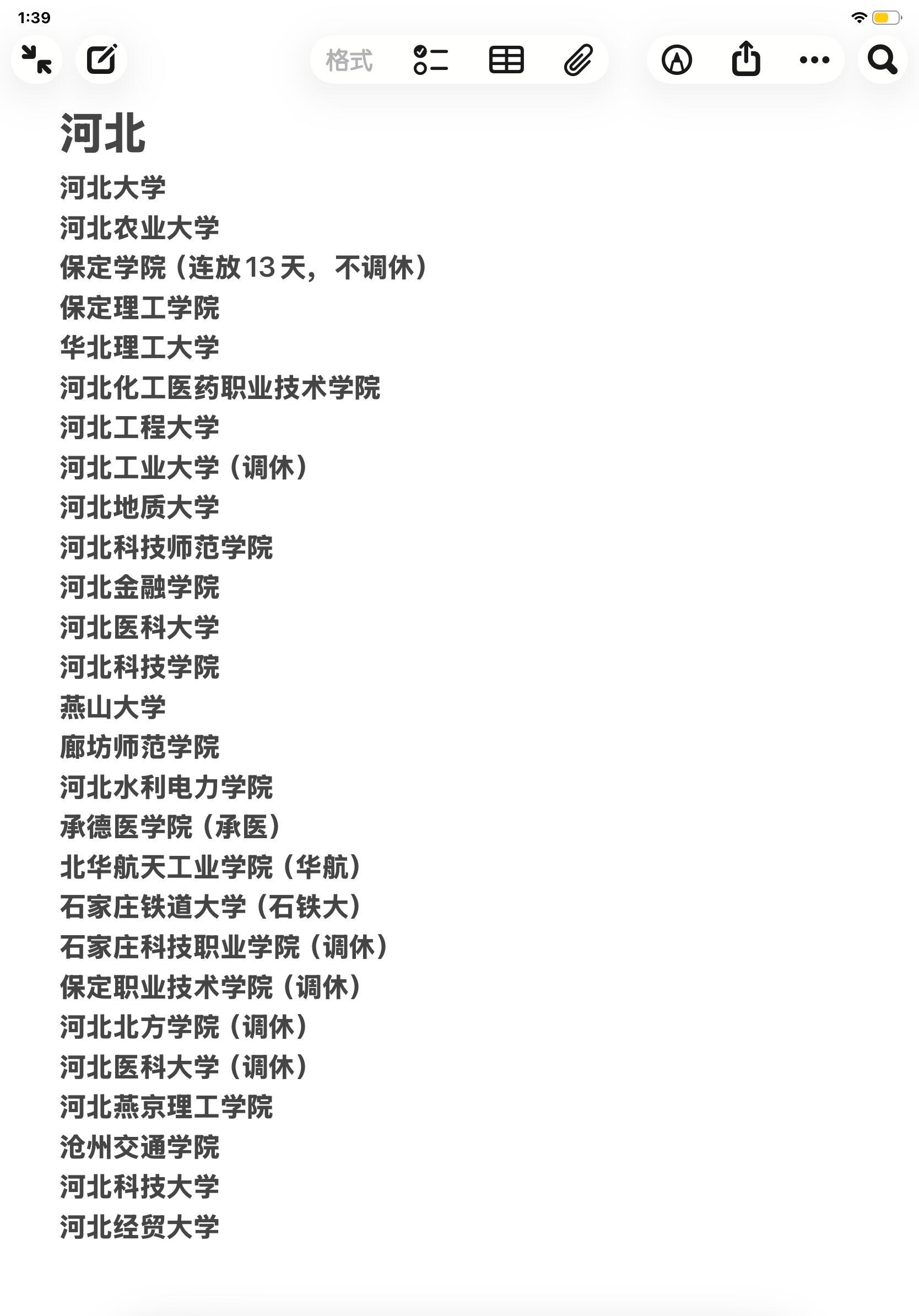
For students on the wrong side of the ledger, the list is salt in the wound. "Why isn't my school among them," one posted alongside the compilation — "not only are we not getting 13 days, we're already making up tiaoxiu classes."
[Why the system breeds resentment]
Tiaoxiu is one of the most durable grievances on the Chinese internet. The manufactured super-holiday concentrates rest into blocks long enough for travel — border authorities in Shenzhen already forecast peak cross-border crowds for early October, as Hong Kong media previewed this week — but it does so by erasing normal weekends, which means a "seven-day break" is partly a loan. Surveys and trending arguments against the system resurface every holiday; the administrative appeal of a long uninterrupted block has never quite overcome the arithmetic of the payback Monday.
The university lists give the argument a scoreboard. A 13-day stretch with no repayment reads, to students elsewhere, as proof that the make-up classes were never inevitable — that some administrators find the calendar room when they look for it. The compilation updates through the comments as users add schools, which may be why it keeps traveling: it is not just a ranking, it is evidence for the defense.