Why China Envies Shenzhen's Supermarket School Uniforms
As pupils nationwide returned to school, Shenzhen's uniform system went viral again: one design for the whole city, sold in supermarkets for a few dozen yuan, no school in the middle — and the rest of China asking why it can't copy the model.
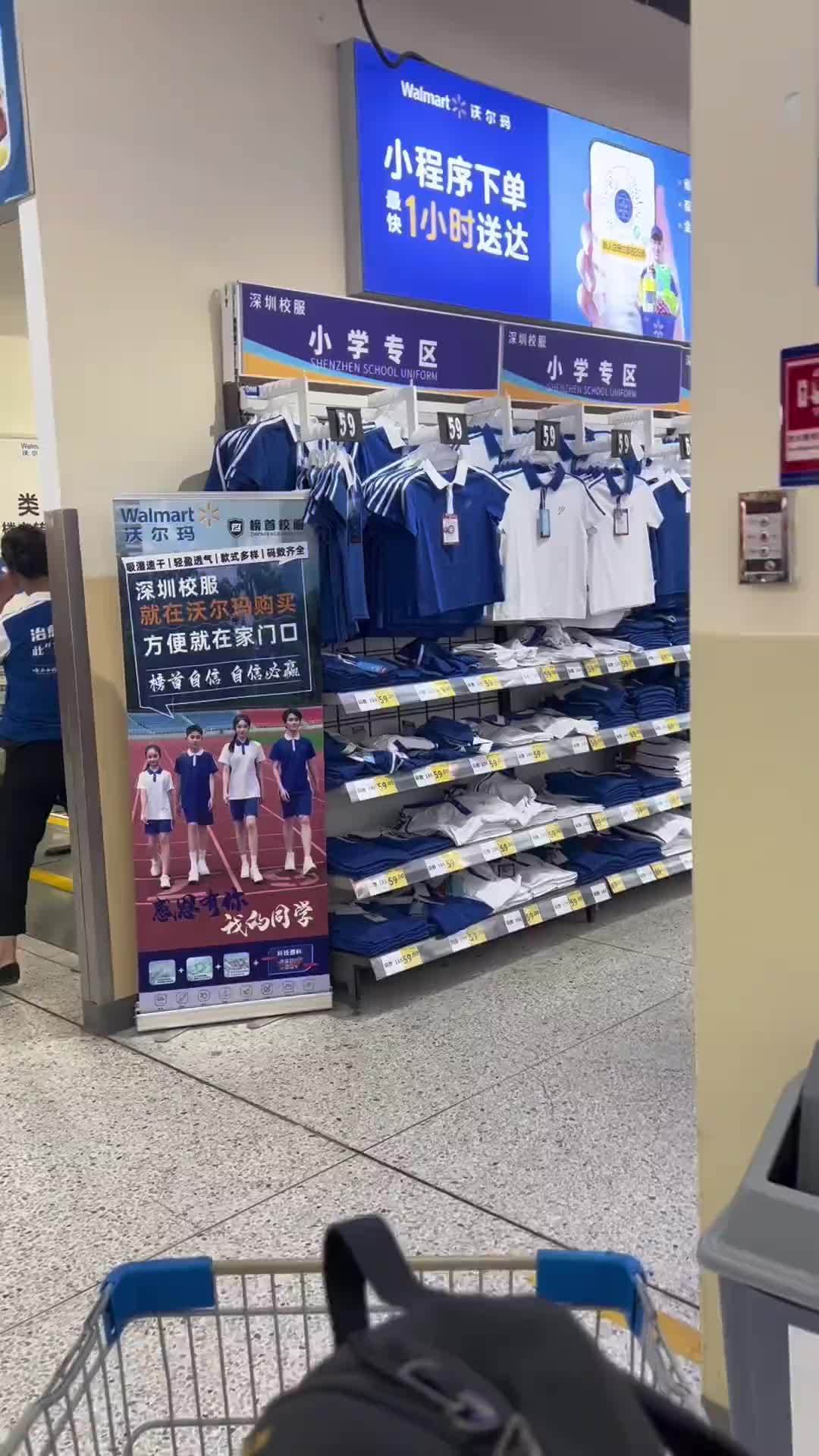
On a shelf at a Shenzhen Walmart this week sits a stack of blue-and-white school uniforms priced at 59 yuan — about eight US dollars — alongside a sign offering one-hour delivery by mini-program. As pupils across China went back to school, this small fixture of Shenzhen life went viral nationally, under hashtags translating roughly as "Shenzhen school uniforms are actually great" and "Shenzhen school uniforms: just go buy them at the mall yourself."
The envy is about the system, not the sewing. In most Chinese cities, uniforms are ordered through each school, typically from a supplier the school designates, and the arrangement has long drawn complaints about price and quality. Shenzhen runs on a different model: the whole city shares one uniform design for public schools, and any licensed shop can sell it. Parents buy it the way they buy a raincoat — at a supermarket, a department store, or online, without the school acting as intermediary. "The style is unified city-wide and you buy it at the mall yourself," one widely shared post put it. "So why don't principals across the country copy Shenzhen? Why can't school uniforms anywhere else work like the Shenzhen model?"
The kit itself has a fan base. Screenshot comments circulating with the posts read like reviews of a beloved product: "Almost thirty, wearing it every day — wore it to the office in the rain." "My family bought a few sets in first year of middle school. Now the child is a college junior in another province, and still wears them every day." The blue-and-white design has become a marker of Shenzhen identity, the kind of thing people who moved away keep in the wardrobe. The trending hashtag even borrowed the meme "zhen xiang" — literally "smells so good," internet shorthand for conceding that something you doubted turns out to be excellent.
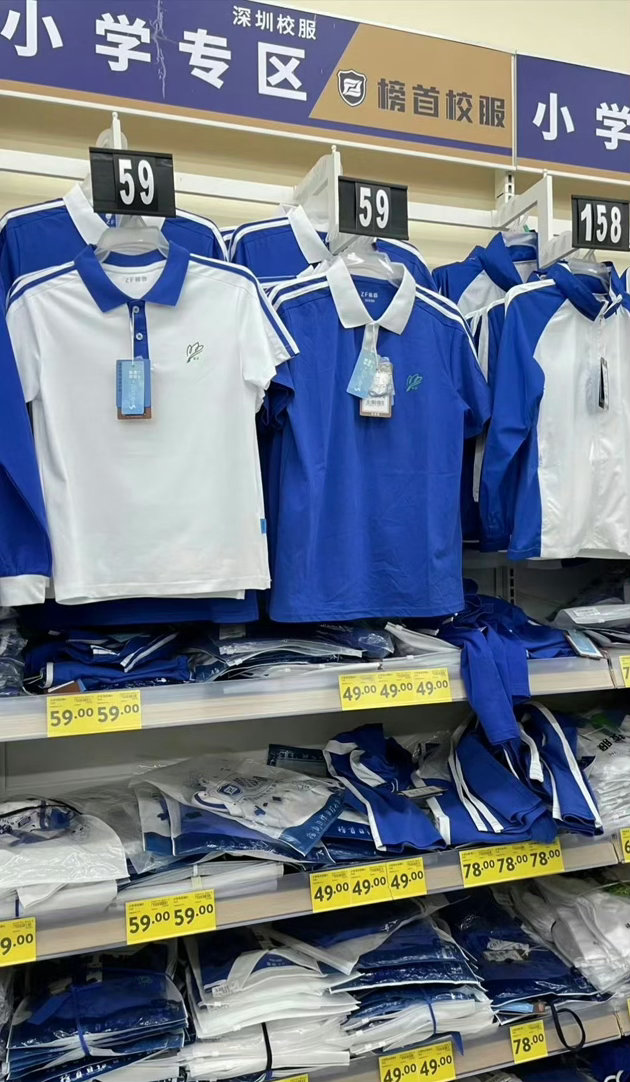
Quality is part of the story. Local broadcaster Shenzhen TV reported that this year's white fabric added a new hard requirement for "anti-see-through" material, one of the detailed specifications the city sets for its suppliers. Prices on the rack ran from 49 to 78 yuan for primary-school sizes, cheap enough — as the hashtag noted — that uniforms get cycled into everyday wear and handed down rather than retired.
The deeper argument, in the commentary that carried the story onto Baidu's trending board, is about where the money flows. Shenzhen's model moves the purchase out of the campus entirely, letting competition between retailers hold the price down. And because every public school in the city wears the same design, no uniform signals which school — or which income bracket — a child belongs to, which commentators credit with weakening the one-upmanship that surrounds school gear elsewhere. It is not the only school-gate rule dividing Chinese feeds this term; several cities have lately written bans on phones in schools into law.
Whether the model spreads is the open question the posts kept circling. Shenzhen's arrangement needs two things at once — a citywide standard and an open retail market — and after years of trending every September, it remains what one commenter called the country's most envied school uniform.