China's First 'AI Agent Phone' Clears Certification, With ByteDance's Doubao Inside
Nubia's NaviX Ultra, the first phone built around ByteDance's Doubao assistant, has cleared China's final certification step — putting an 'AI agent phone' on shelves this month and setting up a test of whether AI-native hardware can sell.
On September 1, the phone that ByteDance has been quietly building toward received the last piece of paperwork it needed: Nubia's NaviX Ultra, which carries ByteDance's Doubao assistant as its core software, won network-access approval from the Ministry of Industry and Information Technology. With that, the device has completed the full compliance path — from registering its underlying large language model to clearing terminal certification — and the world's first phone marketed as an "AI agent phone" moves from concept to a mass-market product due in stores this month.
"AI agent phone" is the industry's new term of art, and the distinction matters. Where earlier "AI phones" bolted a chatbot onto an app drawer, the NaviX Ultra is designed around an assistant that is meant to operate the device: reading what is on screen, carrying out multi-step tasks across apps, acting on the user's behalf rather than answering questions. The phone itself comes from Nubia, a ZTE-backed gaming brand, while the intelligence is Doubao — the consumer assistant from ByteDance, the company behind Douyin and its international twin TikTok. The pairing puts one of China's three big AI labs inside a shipping handset months before anything comparable reaches Western shelves.
The reaction on Chinese social media says as much about the mood of the AI race as about the phone. Luo Yonghao, the entrepreneur whose livestream commerce career made him a fixture of Chinese tech commentary, wrote that three years into the AI revolution, the discussion was dominated not by the product but by the spectacle of giants colliding — and challenged the industry bluntly: if Chinese companies really have moved from copying Silicon Valley to exporting innovation to it, he asked, what is the wait? Another commentator noted how fast the ground shifts under such launches: when Doubao's developer-edition software appeared, the model's integration with the phone's system drew genuine awe; by the time the production phone cleared certification, the same writer observed, Doubao had slipped off the benchmark leaderboards — and the internet had turned the assistant into a meme.
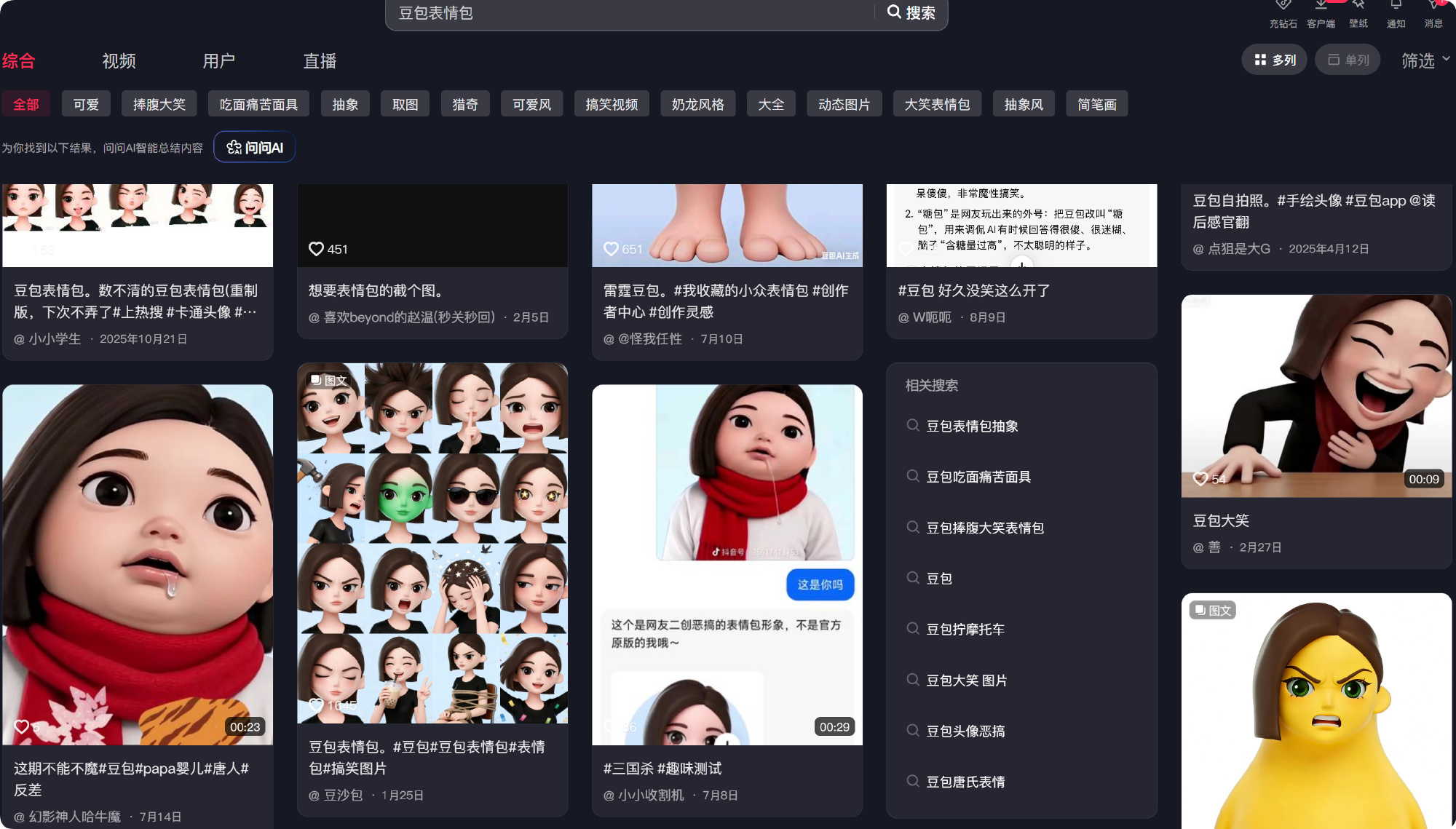
That last detail is the cultural footnote worth lingering on. The doubao phone assistant has spawned a family of sticker memes — a crying 3D baby in a red scarf, a grid of exaggerated expressions — traded across Weibo like any other pop-culture artifact. A product's reception in China now arrives in two registers at once: analyst skepticism about whether the model can keep up, and a meme economy that has already decided the assistant is a character.
Whether the device converts curiosity into sales is an open question — Doubao's flagship-model standing has faded against rivals, and phone shoppers have heard "AI" promises for three years. But the certification itself revises an outsider's picture: China's AI-on-device race has moved past demos, and the compliance state that governs it — model registration, then terminal approval — is part of how the fastest version reaches users. The launch also caps a season in which Chinese phone makers leaned on homegrown chips and new form factors to differentiate; an assistant with its own fan base is the next move in that sequence.