Miss Coco, a Taobao Shop With 20 Million Followers, Closed Overnight
One of Taobao's best-known women's-wear shops — 20 million followers, a 4.5 rating, 40,000 sales a month — shut down without warning, and its fans are asking how a store that big could be so fragile.
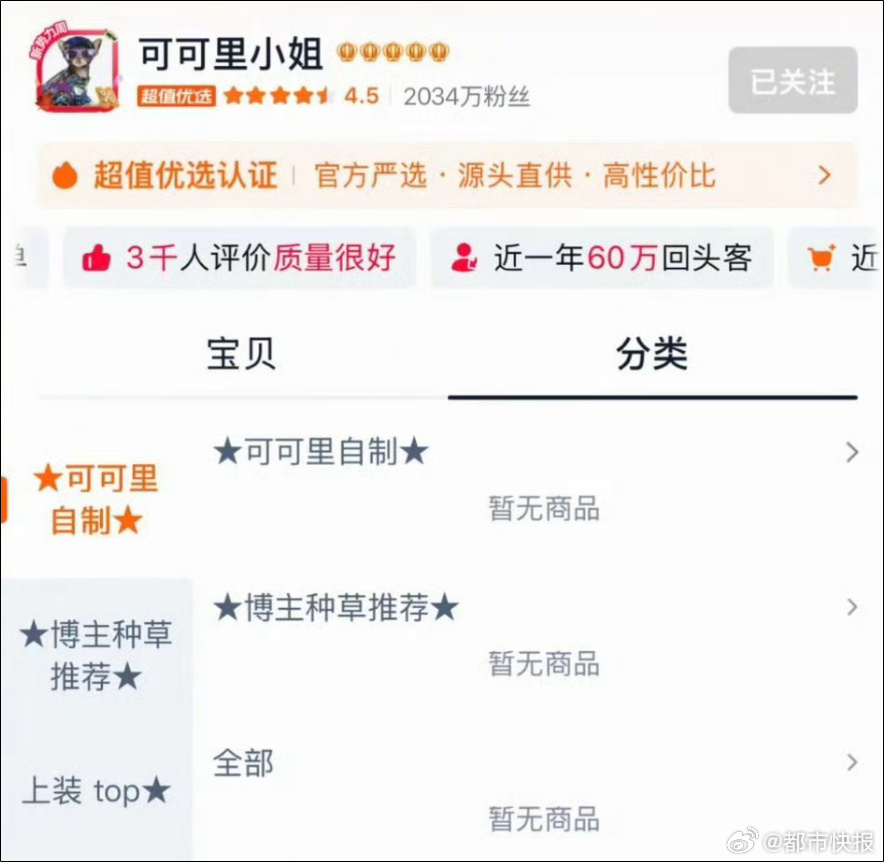
The store page still says 20.34 million followers and a 4.5 service rating. The category tabs, however, all read the same: "No items currently." On August 31, "Miss Coco" (可可里小姐), one of Taobao's best-known women's-wear shops, closed without warning — every listing pulled, the storefront unsearchable, reachable only through old order links. Customers who asked were told the shutdown followed a recent "operating adjustment" and that the shop would not reopen; even staff, the customer-service reply suggested, learned of it from a company notice.
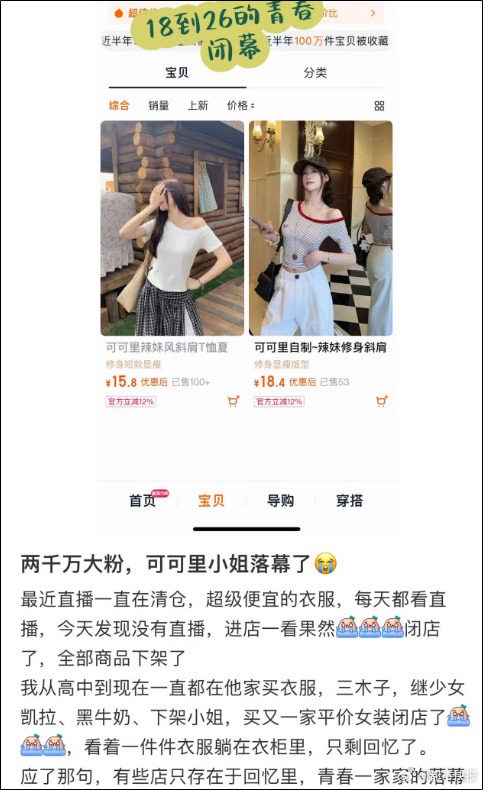
The numbers make the closure hard to parse. Miss Coco held Taobao's "five-gold-crown" rating, a seniority badge earned over years of transactions, and its own store data showed more than 40,000 items sold in the past month. The operator, a Guangzhou e-commerce company founded in 2018 with five million yuan of registered capital, has already been deregistered. For the shop's fans — many of whom posted order screenshots going back to 2017 and 2018, tops at 26.88 yuan, dresses under a hundred — the swiftness was the shock. "The shop I followed for ten years has actually closed down," one longtime customer wrote. Another comment that travelled widely: "From high school to university I bought my clothes there. If a shop with this many fans can't keep going, that's frightening."
What happened is the question the industry press has been picking at, because a shop this size should not be fragile. The answer the commentary keeps returning to is that in Chinese online women's wear, scale and traffic are no longer protection. Influencer-run shops live on a treadmill of new styles and paid visibility, competing with white-label factories selling near-identical clothes at near-cost, while returns — free, and heavily used in women's wear — quietly eat the margin on every order.
The story has landed in a week when Chinese retail is having a broader conversation about price. It echoes a pattern the site has tracked before: a famous brand discovering that frugal, unimpressed consumers will simply walk away, whether the product is duck necks or dresses. Miss Coco's cheapest tops cost about the price of a milk tea, yet ultra-cheap is now the baseline of the market, not a moat.
The closure also ranked among the day's most-read business stories on Baidu's trending board, which framed it as the fall of an old-school Taobao institution. Whether Miss Coco reopens under new ownership is unknown; what is documented is that the operating company behind it no longer exists, and that a shop with more than twenty million followers has nothing left to sell.